
Sign in

Gurugram cops gear up, undergo training to implement three new laws from July 1

“The BNS 2023 consists of 358 sections, a reduction from IPC’s 511 sections, but with enhanced penalties and provisions,” police commissioner Arora

Updated on: Jun 23, 2024, 06:52:15 IST
Share
Share via
  • facebook
  • twitter
  • linkedin
  • whatsapp
Copy link
  • copy link

As July 1 approaches, the Gurugram Police have geared up to implement the new set of laws that will overhaul the existing Indian Penal Code (IPC), Code of Criminal Procedure (CrPC), and Indian Evidence Act. Over 4,500 police officers have undergone rigorous training by 379 master trainers from the state-level police training centres, ensuring that they are well-versed with the new legal frameworks, police officers aware of the matter said on Saturday.
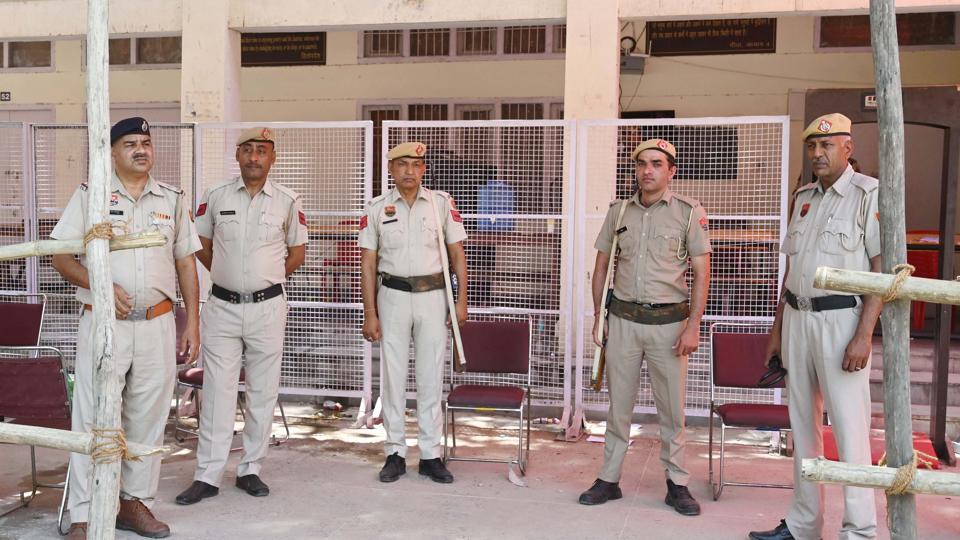
Gurugram, India-May 26, 2024: Haryana Police and Central Industrial Security Force (CISF) stand guard outside a sealed 'strong room' where electronic voting machines (EVM) are kept following Lok Sabha election of Haryana state at Government Girl College in sector-14, in Gurugram, India, on Sunday, 26 May 2024. (Photo by Parveen Kumar/Hindustan Times)

From July 1, all the three new laws — Bharatiya Nyaya Sanhita (BNS 2023), Bharatiya Nagarik Suraksha Sanhita (BNSS 2023 ) and Bharatiya Sakshya Act — will be implemented, they added.

Gurugram police commissioner Vikas Arora held a special meeting with police officers, deputy commissioners of police (DCPs), district prosecutors, assistant commissioners of police (ACPs) and station house officers (SHOs) and briefed them of the upcoming changes.

“The BNS 2023 consists of 358 sections, a reduction from IPC’s 511 sections, but with enhanced penalties and provisions, including community service for certain offences,” Arora said.

In BNS, the punishment duration has been increased for 33 offences, fines have been increased for 83 offences, and mandatory minimum sentences have been introduced for 23 offences, said officials.

Arora emphasised the need for a thorough understanding of these laws to ensure smooth and effective enforcement. “The police force have completed their training and is now ready to implement the new legal codes, marking a significant shift in the judicial landscape of India and in the district,” he said.

“BNSS contains 531 sections, compared to the 484 sections in CrPC, and introduces several new procedural requirements, such as mandatory video recording during searches and inspections by forensic experts for serious crimes,” he added.

The commissioner said that now rape victims can record their statements through any audio/video electronic communication, including mobile phones, under BNSS provisions. “Summons/notices and warrants will be served via email and in cases of habitual offenders, absconding criminals, organised crime, terrorist acts, narcotics-related crimes, illegal possession of weapons or ammunition, murder, rape, and crimes against state, there are provisions for handcuffing accused during arrest or court appearance under BNSS Section 43,” Arora said.

Police said that in cases of absconding criminals, trials can proceed in their absence, starting three months after the charges are framed. Courts must frame charges within 60 days of the first hearing and deliver verdicts within 30 days after the trial concludes. Judgments must be uploaded on the court portal within seven days, said police.

Gurugram police spokesperson Sandeep Kumar said that Arora advised all officers present in the meeting to thoroughly understand the challenges and solutions in implementing the new laws. “Instructions have been issued to emphasise the need for studying the special courses provided regarding these laws to ensure effective policing and conviction of offenders,” he said.

  • Leena Dhankhar
    ABOUT THE AUTHOR
    Leena Dhankhar

    Leena Dhankhar is Senior Editor and Bureau Chief, Gurugram, at Hindustan Times, where she has spent over 17 years chronicling the transformation of one of India's fastest-growing urban regions. From starting her career as a crime reporter to leading the Gurugram bureau, her journalism has been defined by investigative reporting, in-depth storytelling and an unwavering focus on public interest. Over nearly two decades, she has reported extensively across crime, politics, civic governance, elections, real estate, environment, courts, sports, education and entertainment, covering Gurugram, Faridabad, Nuh and Palwal. Her reporting has exposed several major scams and systemic failures, including insurance frauds, waste management irregularities, illegal arms manufacturing units in Nuh, illegal mining in the Aravallis, organised crime networks and governance lapses affecting millions of residents. Known for her investigative work and exclusive stories, Leena has reported on high-impact national issues, including the Nicaragua charter flight carrying Indian migrants that was turned back amid allegations of human trafficking, exposing the growing network of illegal immigration rackets. Her work has also focused on gang wars, prison administration, juvenile crime, women and child protection systems, the functioning of the Juvenile Justice Board and Child Welfare Committee, and environmental challenges such as pollution, waterlogging and deteriorating civic infrastructure. Beyond hard news, Leena has extensively documented Haryana's rich heritage, forests and wildlife, bringing attention to the state's historical landmarks, biodiversity, conservation efforts and ecological challenges through immersive reportage and feature writing. Her journalism has consistently gone beyond breaking news. She has documented Gurugram's rapid urbanisation through long-form narratives and enterprise reporting on issues ranging from pothole-ridden roads, flooding and waste management to the changing social fabric of India's Millennium City. She also writes widely read feature columns, including The Outsider, Changemaker, and Concern for Gurugram, profiling people, places and ideas shaping the city's identity. Leena is the author of Gurugram School Murder, published by Juggernaut Books, a deeply reported account of one of India's most high-profile school murder investigations. She is currently working on her second book, an investigative work exploring some of India's most significant scams and fraud investigations. Beyond print journalism, she has expanded her storytelling through public speaking and digital media. She is a TEDx speaker and has produced podcasts exploring Gurugram's transformation, civic challenges and untold stories. Her work reflects a commitment to narrative journalism that combines rigorous reporting with compelling storytelling. A law graduate with an MBA in Human Resources, Leena brings a multidisciplinary perspective to her reporting, particularly on governance, public policy and legal affairs. She has travelled extensively across India to pursue investigative assignments, often reporting from remote locations and conflict-prone areas in search of stories that matter.Read More