
 E-Paper



Gurugram’s garbage crisis linked to short-term collection contracts
MCG spent ₹22.5 crore on door-to-door collection and ₹12.5 crore on sweeping and other sanitation services between April 2025 and July 2026.

 Prefer HTon Google


Gurugram’s waste-management crisis is being compounded by the absence of a long-term contract for door-to-door garbage collection, with garbage continuing to pile up across residential areas, roads and vacant plots, locals say, despite the Municipal Corporation of Gurugram (MCG) spending nearly ₹35 crore on sanitation between April 2025 and July 2026.
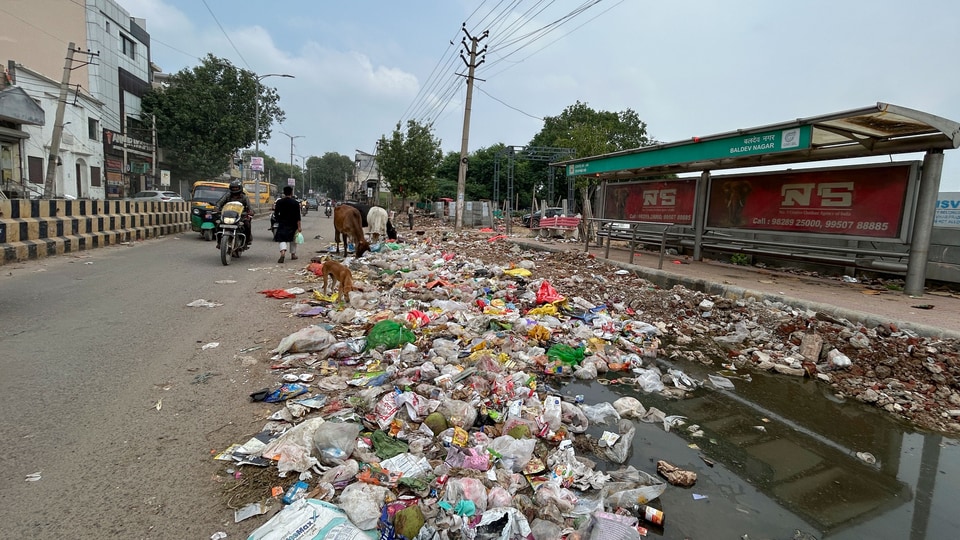
Officials said, ₹22.5 crore was spent on door-to-door garbage collection, with the remaining ₹12.5 crore spent on road sweeping and other sanitation services. MCG joint commissioner (Swachh Bharat Mission) Preetpal Singh said the short-term nature of contracts makes it difficult to establish a reliable collection system, as agencies hired for limited periods are reluctant to invest in garbage collection vehicles. The corporation consequently has to repeatedly pressure contractors to deploy adequate vehicles and manpower.
“Agencies working under short-term contracts are reluctant to purchase new vehicles. Vehicles are often deployed only when pressure is put on the agencies. Unless a long-term tender is issued and a stable system is created, the waste-management problem cannot be permanently resolved,” Singh said.
The corporation is now working towards a five-year contract for door-to-door garbage collection, with approval from the high-powered purchase committee expected by November. Singh said the system is likely to be streamlined once the contract is in place. “Once the five-year contract is in place, the majority of the issue will also be resolved, and the door-to-door collection system will be properly established,” he said.
Under the proposed system, MCG plans to replace tractor-trolleys with covered garbage collection vehicles, commonly known as compactors, to prevent waste from spilling onto roads and make collection more organised.
The payment mechanism is also expected to be linked to the quantity or weight of waste collected instead of primarily paying agencies for door-to-door collection. “This will create an incentive for the agency to pick up garbage wherever it finds it because every additional quantity collected will add to its weight and payment,” Singh said.
Short-term arrangements have also affected road sweeping. Singh said MCG had floated tenders and was preparing another tender for a more stable manual and mechanical road-sweeping system.
The crisis has been compounded by the ongoing strike by sanitation workers. According to MCG, workers have not been working since August 7, while private agencies have been handling garbage collection during the strike.
Amit Jindal, president, RWA, Vipul Greens, Sector 48, said the persistent garbage accumulation reflected gaps in the collection system. “Residents pay for sanitation services but still see garbage on roads and around homes. Short-term contracts give agencies little incentive to invest in vehicles, manpower or better systems. MCG needs stable, long-term contracts with clear accountability,” he said.
Rajkumar Yadav, president, RWA, Sector 46, said the issue had become a daily concern. “Frequent changes in agencies mean no continuity or accountability. Residents need timely garbage collection, regular street cleaning and penalties for poor work. MCG must move beyond short-term fixes,” he said.
Gurugram has around 200 garbage-vulnerable points where waste is repeatedly dumped, but only around 30 to 40 have been closed, leaving most vulnerable to recurring accumulation. “Once the tenders are finalised and agencies come on board, things will improve. But the real solution is a long-term contract. Short-term arrangements cannot provide the stability required to manage the sanitation needs of a city like Gurugram,” Singh said.

Stay updated with all the Breaking News and Latest News from Mumbai. Click here for comprehensive coverage of top Cities including Bengaluru, Delhi, Hyderabad, and more across India along with Stay informed on the latest happenings in World News.


