
 E-Paper



Najafgarh Jheel: Haryana to submit environment plan to NGT next month
A year after the National Green Tribunal (NGT) sought an environment management plan from the Haryana government with regard to the Najafgarh Jheel (water body), officials of the environment department on Wednesday said that they are likely to submit a plan next month, when a hearing in this matter is also scheduled


A year after the National Green Tribunal (NGT) sought an environment management plan from the Haryana government with regard to the Najafgarh Jheel (water body), officials of the environment department on Wednesday said that they are likely to submit a plan next month, when a hearing in this matter is also scheduled.
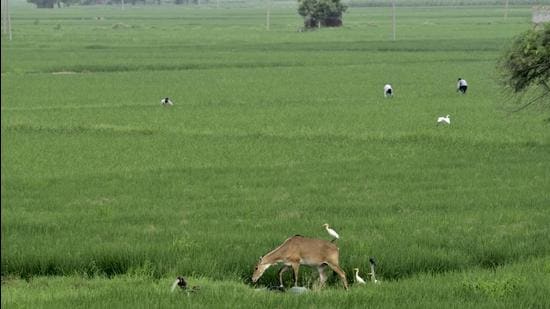
Officials from the environment department said that they are finalising the plan at present, after receiving reports from the agencies concerned.
RK Chauhan, the joint director of state environment, said, “We have received reports from the technical and engineering committees formed to study the matter and the environment management plan will be ready by the end of this month. We have proposed some biodiversity management plans like treatment of water, controlling the chemical oxygen demand (COD) and biological oxygen demand (BOD) levels of the water, and designated the fisheries department to enhance the ecology of the area.”
On September 17, 2020, the NGT, hearing a petition filed by the Indian National Trust for Art & Cultural Heritage (INTACH) for protection of the water body, said, “In view of the fact that there is a large transboundary water body which partly falls in Delhi and partly in Haryana, it will be appropriate that an environment management plan is prepared jointly by the State of Haryana and NCT of Delhi.”
Delhi had submitted a draft plan earlier this year, which focused on objectives like restoration of wetland habitat, removal of invasive species, efficient treatment of sewage received within the wetland and maintenance of diversity of biota within Najafgarh Jheel, among other objectives. The green court is scheduled to hear the matter next month.
As per the orders of the NGT, the Haryana government was supposed to submit the environment management plan within three months from the hearing, i.e., by December 2020. However, due to technical procedures like identification of area that falls under the ambit of the lake and monitoring by technical committees, the submission of the environment management plan got delayed.
The seven-square-kilometre Najafgarh Jheel is an important water body for Gurugram as it acts as a large aquifer to recharge groundwater. Many creeks in the Aravallis flow into the Najafgarh Jheel, which is further carried to the Yamuna river. The lake is located in a natural depression in southwest Delhi, close to the Gurugram-Rajokri border on National Highway-48. It is fed by the Najafgarh drain, which has a sizeable catchment area in Gurugram. A portion of the lake falls in Haryana.
On Wednesday, officials said that the Haryana State Wetland Authority is likely to meet next week under the chairmanship of the chief minister to take a decision on declaring the lake a wetland.
“There are a lot of issues that need to be looked into, like acquiring private land around the lake before declaring it as a wetland. Experts are also exploring how a dam can be constructed around the lake so that water flowing into the lake does not flow back into the Gurugram city during peak monsoon. All these issues will be discussed in the meeting before taking a final decision,” an official from Gurugram, requesting anonymity, said.
In August 2020, chief minister Manohar Lal Khattar said that the government was considering the construction of check dams (bundhs) around the lake to prevent flooding of around 5,000 acres of agricultural land located in its vicinity.
Stating that he was aware of the problems faced by villagers, Khattar had said, “Activities are ongoing at the state level to resolve the issue. The deputy commissioner has submitted the report to the state wetland authority. Under this, technical and financial subcommittees have been formed. Also, the plan is to build a dam on the slope side of the lake to stop water from inundating the agricultural land.”
Stay updated with all the Breaking News and Latest News from Mumbai. Click here for comprehensive coverage of top Cities including Bengaluru, Delhi, Hyderabad, and more across India along with Stay informed on the latest happenings in World News.


