
 E-Paper



New policy allows industrial clusters in agri zones
The prime reason for framing this policy is that many prefer to set up industrial units in agriculture zones or outside the controlled areas due to high plot costs in industrial estates


The Department of Town and Country Planning (DTCP) has announced a new policy to facilitate the setting up of industrial clusters and factories in agriculture zones across the state, officials said on Wednesday.
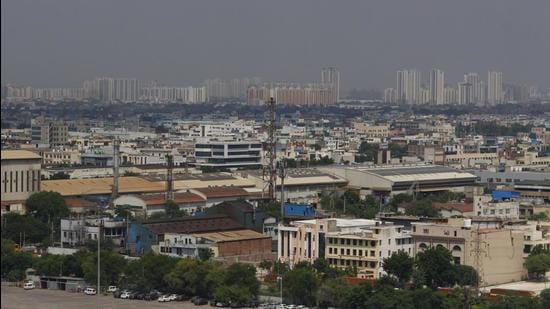
Developers and owners of such units will need to pay change of land-use (CLU) fee and external development charges, calculated on the basis of the zone, a notification issued by Makrand Pandurang, the director of the town and country planning department, on July 30 stated.
The prime reason for framing this policy is that many prefer to set up industrial units in agriculture zones or outside the controlled areas due to high plot costs in industrial estates developed by the Haryana State Industrial and Infrastructure Development Corporation (HSIIDC) and Haryana Shahari Vikas Pradhikaran (HSVP), the notification stated.
An order issued by Pandurang stated, “All cases related to grant of CLU permissions for setting up industrial unit/clusters in agriculture zones of hyper, high, medium and low category zones, towns be examined with aforesaid amendment.”
A senior DTCP official said that this policy would ease the way business is done in the state as industry owners can simply plug and play their unit in a plot developed in a cluster, which can be done by a developer or a large company developing warehousing or infrastructure. “If an MSME [micro, small and medium enterprises] owner does not want to get into CLU permissions and other such issues, he/she can simply buy a plot in such a cluster and start work. The rate of plots in such zones would also be lower,” the official said, wishing not to be named.
In Haryana, the urban areas in and around Manesar and Gurugram are classified as hyper zones, while the Faridabad-Ballabgarh complex, Panchkula, Kalka, Pinjore Gual Pahari-Balola Bandhwari complex in Gurugram district, Sonepat-Kundli urban complex and Panipat are classified as high-potential zones.
According to the new norms, the minimum and maximum area for setting up an industrial cluster or warehouse range between two acres and 25 acres, depending upon the category of town. The minimum size of an industrial unit has been fixed at 0.5 acres and the cluster also must have an approach road of 18 metres. For individual units, the minimum area ranges from 0.2 acres to five acres. The industrial clusters or units must also be located at a distance of at least one kilometre from the urban areas of Gurugram.
DTCP officials said that a sinking fund for the creation of infrastructure would also be created and owners or developers will have to pay external development charges to the department. A rebate would be given to the property owners depending upon the zone in which they set up the industry.
Manmohan Gaind, the vice-president of Manesar Industries Welfare Association, said that this policy would be of immense help to industries provided the government also provides requisite infrastructure. “The rate of plots in urban areas is high and industry needs land at a reasonable cost. The catch is that electricity, roads and other facilities must be assured,” he said.
Industry owners also said that getting CLU permissions should also be made easier.
JN Mangla, the president of Gurgaon Industrial Association, said that financial incentives to industries, tax rebates and benefits on a par with the industries in Himachal Pradesh and Uttarakhand should be given. “If the right amount of fiscal incentives are given, the industry will move to backward and rural areas and help generate revenue and employment,” said Mangla.

Stay updated with all the Breaking News and Latest News from Mumbai. Click here for comprehensive coverage of top Cities including Bengaluru, Delhi, Hyderabad, and more across India along with Stay informed on the latest happenings in World News.


