
 E-Paper



No payments till all garbage is cleared, MCG tells pvt agencies in Gurugram
Also, these agencies will have to submit satisfactory reports from the RWAs first and only then their bills, said officials of the civic body

 Prefer HTon Google


The Municipal Corporation of Gurugram (MCG) has decided to release payments to private sanitation agencies only after receiving a satisfactory report from the respective residents’ welfare associations (RWAs) , senior citizens and former councillors of a particular area.
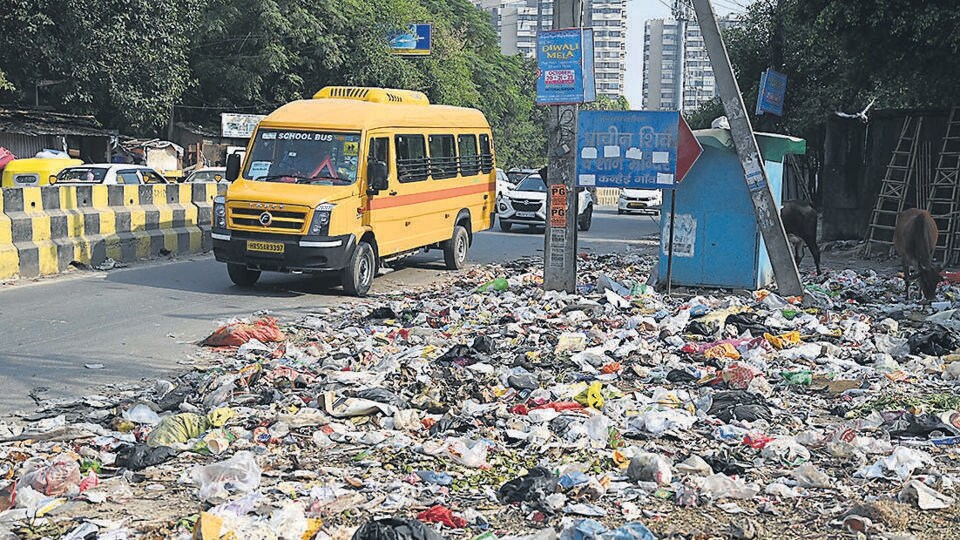
Also, these agencies will have to submit satisfactory reports from the RWAs first and only then their bills, said officials of the civic body.
Officials said once clearance is given by all three entities -- RWAs, senior citizens, and former councillors --the MCG will release payment to the firms. This step, officials said, was taken after continuous complaints from residents about irregular disposal of garbage across the city, including residential areas.
MCG commissioner PC Meena held a meeting with the representatives of seven agencies carrying out cleaning work and gave clear and strict instructions to improve the cleaning mechanism. He said negligence in work will not be tolerated and strict action will be taken against the errant agency.
MCG officials said they have sought RWAs’ help in monitoring private contractors in residential areas. They have directed the RWAs to keep a check on the cleanliness of streets, parks and public places in their respective sectors.
Meena said all agencies should ensure that they have deployed their entire manpower on the ground to clean their designated areas. “We have asked for a deployment plan from all agencies so that we know just how many workers are stationed in each area. That will make it easy for us to track their work,” he said.
The commissioner said it is mandatory to have the employee’s name, Aadhaar number and ESI and EPF details in the deployment plan. Agencies will provide the list of cleaners and machinery according to sector, colony and area, he said.
MCG officials said all agencies will ensure biometric attendance of their employees and the joint commissioner will also ensure that payments are made in proportion to the number of cleaners employed. “Under the rules, all agencies have to deploy 2,963 employees. Also, it is mandatory to get cross verification done from RWAs, former councillors, and senior citizens,” he said.
Naresh Kumar, joint commissioner, MCG, said they have been asked to take stock of the cleanliness system in their respective zones daily before reaching office. “The agencies who do not operate properly will be blacklisted. We are checking all areas and taking feedback from RWAs zone-wise. Also, we are clicking pictures of areas where garbage was found and the pictures are shared on the official group,” he said.
Neeru Yadav, a RWA member of Sector 23A, said the garbage has piled up in open grounds, parks and streets despite new agencies being hired for cleaning work. “We have made several requests to officials but they are not heeding our concerns. The situation is getting worse by the day, and the team says it can only visit twice a week. This is an impractical and they will have to cancel the contract with the new agency if the agency cannot manage the sanitation,” she said.
“Our men have been trying to lift garbage but the former sanitation workers assault our staff and intercept their vehicles. They are not letting our men work,”said one of the agency owners, adding that they have complained to police several times about this harassment.
The police are monitoring the situation and have asked the workers on strike not to create any disturbance or obstruct ongoing sanitation work, otherwise strict action would be taken against them, said a senior police officer familiar with the situation, who asked not to be named because he was not authorised to speak to the media.


