
 E-Paper



Palam Vihar residents survive in filth and neglect
Residents of Palam Vihar face severe neglect with poor infrastructure, overflowing garbage, and health hazards, alleging indifference from local authorities.


Crumbling road infrastructure, overflowing garbage dumps, foul stench all around, and poor civic maintenance — everything that residents of Palam Vihar are surrounded by. Repeated complaints of the civic neglect have been made by locals of the neighbourhood, but both Municipal Corporation of Gurugram (MCG) and Gurugram Metropolitan Development Authority (GMDA) have turned a blind eye towards the residents’ apathy, they have alleged.
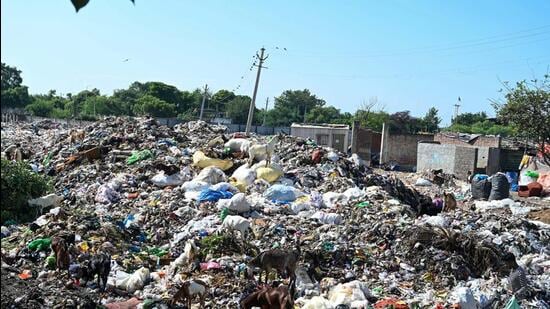
Palam Vihar — once a planned and peaceful locality and city’s one of the oldest residential areas — is now surviving in neglect.
Mounting garbage near temple
The most frustrating situation in the locality, residents say, are massive garbage dumps near a cow shelter and neighbouring temple. The area, they say, has become a permanent landfill — breeding mosquitoes, foul odours, and growing health risks. With garbage lying uncollected for weeks, mosquito breeding and air pollution have become major issues.
“This is not only a visual disgrace but a health hazard,” a gaushala worker lamented. “The stench and unhygienic conditions have made it impossible to work or even breathe properly. It’s shocking how the authorities have allowed such filth to accumulate next to a place of worship.”
The mountain of garbage lies barely a few metres from the temple and the shelter compound, where devotees gather daily. Residents have filed multiple complaints on the chief minister’s grievance redressal window and even the CPGRAMS portals, but the garbage remains uncleared for months. “The area is disgusting — I couldn’t even stand for 10 seconds to donate at the gaushala because of the unbearable smell. This is the state of a so-called Millennium City,” said Gaurav Sachdeva, a local.
Roads or daily chaos
Besides sanitation, residents are equally angered by the dilapidated condition of Palam Vihar’s inner roads. Deep potholes, waterlogging, and open drains have made commuting both unsafe and frustrating. Wrong-side driving has become a daily menace, and residents say there is no traffic enforcement in sight.
“Driving in Palam Vihar has become a daily risk,” said Garima Anand, who has lived in the area for over a decade. “There’s no accountability. Instead of improving basic infrastructure, corruption and negligence have left residents struggling even for essentials.”
Locals say several stretches — including internal roads connecting Palam Vihar to Bijwasan Road and Sector 23A — are in such poor shape that even ambulances and school buses avoid them. “We’ve complained countless times, but the authorities just patch potholes before the next inspection. It’s a cycle of short-term fixes,” another resident said.
Question on tax money
Residents say open burning of waste in the area has become a common concern now, adding to the already deteriorating air quality. “Every evening, the smell of burning plastic and rotting garbage fills the air. It’s suffocating,” said Kanika Batra, who lives near the temple.
“Garbage on the streets and broken infrastructure are not just inconveniences anymore — they are health threats. Children and elderly people are constantly exposed to disease and filth. Why are we paying taxes if our money never translates into basic civic care?”
Locals allege that civic and administrative officials have turned a blind eye to their problems. “It feels like we’ve been completely abandoned,” said Sumit Chandana, a resident and a daily commuter. “Wrong-side driving, open drains, garbage piles — and yet, no action. Are we supposed to risk our lives everyday while officials do nothing?”
Complaints, and no solutions
Many residents say they have reached out to the MCG and GMDA multiple times over the past year, but have received little more than acknowledgements. “Letters to local councillors and even the mayor’s office have gone unanswered. The system is broken — we’re fighting for basic dignity, not luxury,” said one resident.
On being asked about the situation, an MCG official said the civic body is planning to launch a cleanliness and repair drive in Palam Vihar soon. “We are aware of the situation and are coordinating with GMDA to address both waste and road issues,” the official said.
Pradeep Kumar, ward 4 councillor, said they are working to repair the roads on priority and they will also clean all the internal drains in the next three months to prevent waterlogging. “First patchwork is being carried out to repair potholes and damaged stretches. Once the weather improves, the MCG will take recarpeting of internal roads in the colony,” he said.
However, residents remain unconvinced. “Every time there’s media attention, we get promises of action. Then everything goes back to the same. Nothing changes,” said Gaurav Sachdeva.
Two Gurugrams, a hundred unkept promises
Palam Vihar’s visuals underscore the widening gap between New Gurugram, filled with luxury condominiums and gleaming towers, and the older residential sectors left to fend for themselves. While officials boast of smart city projects, residents in areas like Palam Vihar say they are living in neglect that rivals the worst of rural India.
“We boast about being part of a $4 trillion economy, yet our infrastructure doesn’t even match small towns abroad,” said a resident. “Blatant corruption and lack of accountability are destroying Gurugram’s image.”
Until authorities respond with concrete action, not just promises, Palam Vihar will remain a grim reminder that beneath Gurugram’s glittering skyline lies a story of civic decay and forgotten residents.
As Gurugram continues to market itself as a model for urban progress, residents of Palam Vihar say they are left in a situation where garbage piles grow faster than solutions.
“We don’t need slogans or promises,” said Sumit Chandana, looking at the garbage mound near the temple. “We just need our city to be clean, safe, and livable.”

Stay updated with all the Breaking News and Latest News from Mumbai. Click here for comprehensive coverage of top Cities including Bengaluru, Delhi, Hyderabad, and more across India along with Stay informed on the latest happenings in World News.


