E-Paper



Proposal to regularise services of 3,000 mosquito breeding checkers in Delhi
Proposal to recruit 3,112 DBCs as multi-task staff moved for final assent by the House of councillors

 Prefer HTon Google


New DelhiThe Municipal Corporation of Delhi (MCD) has moved a proposal to regularise the services of more than 3,000 domestic breeding checkers (DBCs)—who are public health department workers deployed to counter the spread of mosquito-borne diseases—which will subsequently meet the decades-old demand of the contractual workers.
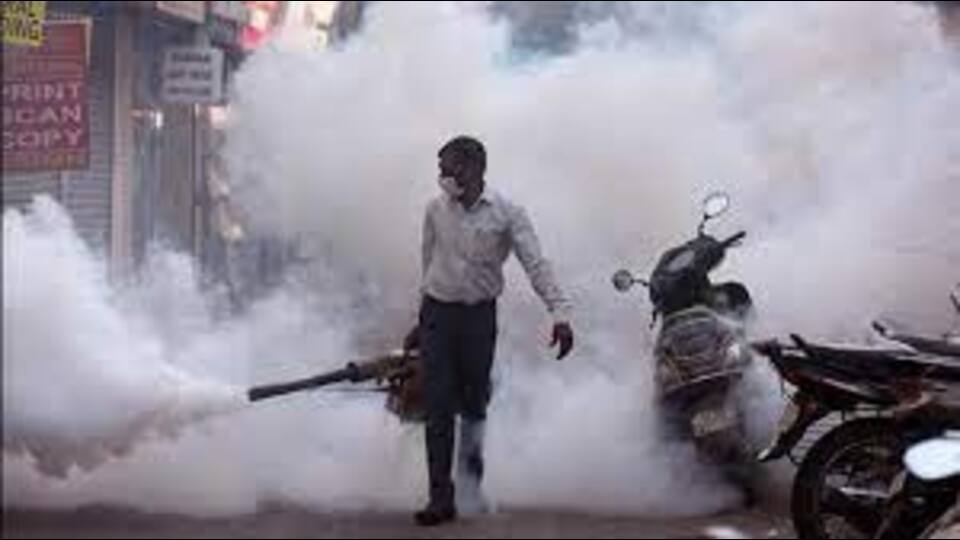
The proposal to recruit 3,112 DBCs as multi-task staff (MTS) has been moved for a final assent by the House of councillors, according to officials aware of the matter. Over the last few years, DBC unions have gone on multiple strikes, with the latest one being held in July this year.
The proposal said that manpower needs to be reinforced while giving importance to DBCs because vector-borne diseases are on the rise every day. “As such merging of the different regular field staff under Public Health Department like field worker, superior field worker, food hygiene beldar, well gang beldar as Multi Task Staff (PH) has already been done. Considering the importance of domestic breeding checking and other areas of work execution, there is a need to establish contingent manpower with regular posts so that the domestic breeding checkers are deployed against these posts,” the proposal said.
According to the proposal, the public health department plans to create 2,940 MTS public health posts in the department by abolishing vacant MTS posts under the general administration and engineering department. “...Apart from vacant 172 public health department posts, 2,940 MTS-PH posts will be created to deploy 3,112 DBCs to work exclusively for prevention and control of vector borne diseases,” the proposal added.
The temporary creation of DBC posts on an annual basis will be discontinued if the proposal is cleared by the deliberative wing.
A senior MCD official, requesting anonymity, said DBCs were first hired on a contract basis in 1996 on the recommendation of an expert committee. “Since 1996 their contracts have been extended from time to time. DBCs play a crucial role in preventing dengue, chikungunya, malaria and other vector-borne diseases,” the official said. DBCs are currently paid ₹18,187 per month according to the minimum wages fixed by the government.
DBCs conduct house-to-house inspections daily to check and destroy mosquito breeding sites in domestic items like coolers, overhead tanks, flower pots, tins, tyres, and junk material. They are also deployed by the civic body to create public awareness and distribute material on health education.
Devanand Sharma, who heads the Anti Malaria Ekta Karamchari Union, said people have grown old while working as DBCs but continue to face this annual uncertainty of whether their contracts would be extended.
“There are people who joined the profession in their 20s and they are now more than 50 years old. The work involves climbing rooftops and reaching inaccessible places but we are only paid minimum wages. If the regularisation as MTS is finally approved, it will bring some certainty to more than 3,000 families. We hope that our wages will increase and we get other benefits like normal employees,” he added.
BJP comment to be added here