
 E-Paper



Reporter’s Diary: Despite online outcry, Faridabad civic woes linger
Visit across flagged sites found no clean-up despite viral complaints. Irregular waste collection, patchy coverage and lack of timelines expose civic gaps.

 Prefer HTon Google


After weeks of civic complaints surfacing online, I went to Faridabad to verify what residents had been reporting and found a city where sanitation gaps are visible, persistent, and largely unaddressed on the ground.
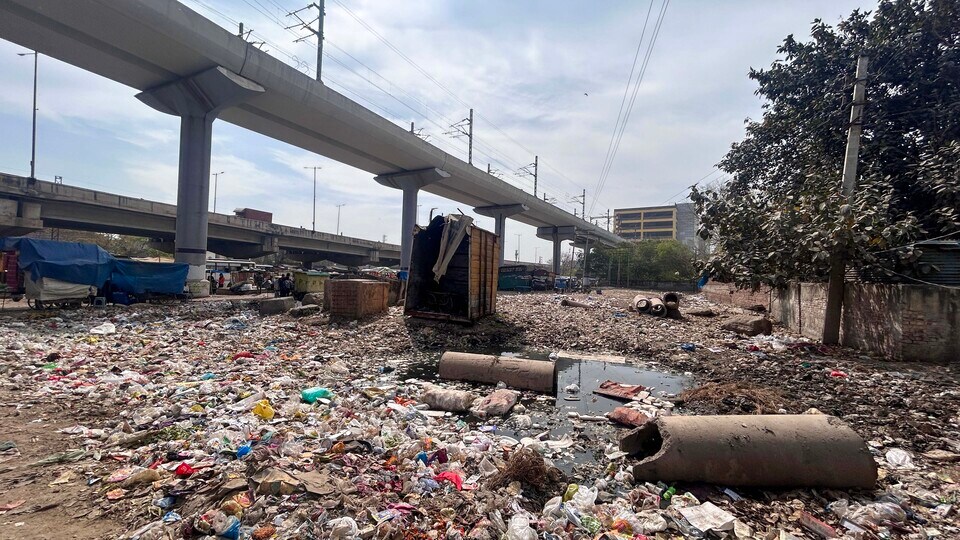
Over the past month, Faridabad has been trending in fragments on social media platform ‘X’, with videos of overflowing sewage, mounds of garbage, and repeated allegations of inaction. After a stream of requests and comments accusing journalists of ignoring the city, I went looking. At every location highlighted online, I saw no evidence of clean-up or intervention. Nothing had been done. While social media often amplifies outrage and pushes systems into action, here it was difficult to tell whether the noise was producing any real change or simply echoing into silence. This itself points to a reporting gap, the lack of measurable outcomes linked to public complaints.
The stench hits before the visuals do. Piles of waste no longer appear to be a temporary civic lapse but are a permanent feature of the landscape. Commuters are not surprised. If anything, they seem to have made peace with it.
At Sector 29 along Mata Amritanandmayi Marg, barely three kilometres from Amrita Hospital, one of Asia’s largest healthcare facilities, people walked past with covered faces, glancing at the filth only to quickly look away. “I have been commuting through this stretch for the past four to five years, but not once has the garbage been cleared properly. This is the state of sanitation here. How can anyone call it a ‘smart city’?” a commuter told me. Others nearby nodded, pointing to accumulated waste and clogged drains as long-standing issues rather than recent lapses. Yet there is little documentation of how long these conditions have persisted – another gap in reportage.
While observing the area, I noticed residents casually dumping garbage in the open. When I questioned one of them, he said, “No one is picking up garbage from our households, so what can we do? We cannot keep the waste inside our homes. We are helpless too.”
His response highlighted a systemic gap. Irregular collection leaves residents with few options, turning open dumping into a default behaviour. This exposes a contradiction that often goes underreported, where civic failure and public behaviour feed into each other.
At the Municipal Corporation of Faridabad, responses were inconsistent. Some officials casually promised to “look into it”, offering no timelines or specifics, reflecting an accountability gap. Others were more candid. “Our tender for door-to-door garbage collection has not been approved yet,” one official said. “Right now, the city relies on private vendors, who charge residents a fixed amount set by the MCF. Honestly, they are just covering 70-80% of the city. Once the tender is approved, the city’s sanitation situation will improve.”
This reveals a structural gap. Large parts of the city remain uncovered, yet there is no clarity on when the tender will be approved or what interim measures exist. There is also little publicly available data on service coverage, response timelines, or enforcement against lapses.
After hours on the ground, the pattern felt familiar. The same complaints, the same explanations, and promises that rarely translate into visible action. With civic lapses such as this, documenting these gaps becomes essential, not just what is visible, but what is missing – accountability, timelines, and a functioning waste collection system, even when it feels like shouting into the wind.
Mihika Shah is a correspondent with HT Gurugram, covering residents’ welfare, education, art and culture.


Stay updated with all the Breaking News and Latest News from Mumbai. Click here for comprehensive coverage of top Cities including Bengaluru, Delhi, Hyderabad, and more across India along with Stay informed on the latest happenings in World News.


