
 E-Paper



Reporter’s Diary: Faridabad’s endless chase to shut illegal dyeing units
HSPCB says it shut 100 units since 2023, but makeshift operations and unregistered firms make repeat offenders difficult to track.

 Prefer HTon Google


Some stories leave a lasting impression of how slow, outdated and exhaustive our urban governance systems are in tackling the rapidly growing environmental needs of metropolitan cities like Gurugram and Faridabad. While reporting on illegal denim-dyeing units in Faridabad’s informal settlements, I found that a wild-goose chase between enforcement agencies and dyers has continued since the early 2000s.
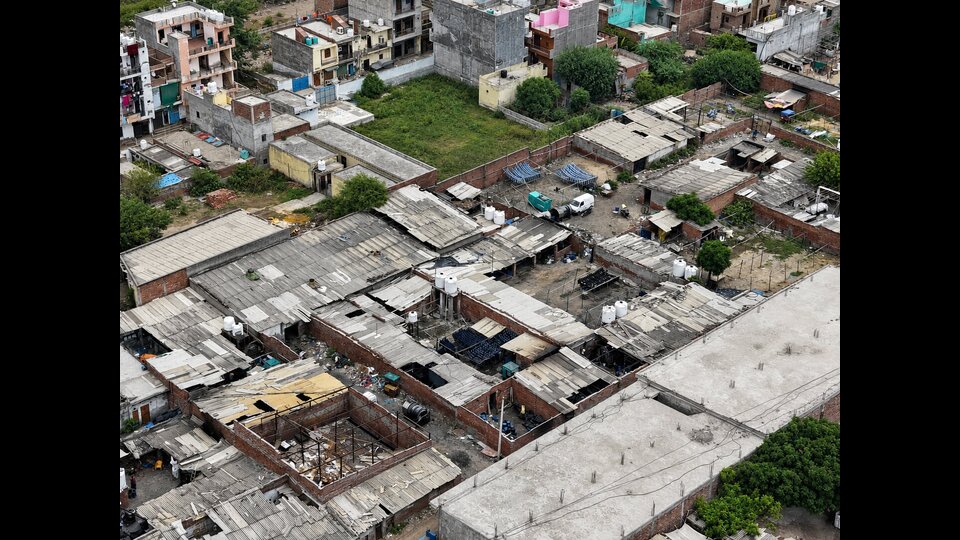
Multiple spot checks in July found that makeshift dyeing units without effluent treatment plants (ETP) had flourished over the years in the Neharpar region at Harkesh Colony, Mawai and Dheeraj Nagar, operating from the backyards of homes and other structures. Several had grown into full-fledged karkhanas equipped with boilers, tumblers and compressors, sustained by regular supplies of cheap denim for popular marketplaces across the national capital region.
The Haryana State Pollution Control Board (HSPCB) confirmed that only five companies had obtained its consent-to-operate (CTO) permissions in Faridabad. However, at least ten others were spotted operating, with freshly painted jeans hanging on rooftops to dry and effluents openly discharged through pipelines into already-turned tan-blue sewer lines along Pawai Road, Hanuman Colony.
The street-level challenges required a different approach. I relied on footage recorded from nearby high-rises to obtain an aerial view of the clusters and piece together a reality that was only a fraction visible from the ground. Narender Sirohi, an environmental activist who has been pursuing the matter for the past decade, said the same cheap denim products feeding demand in markets across the NCR could be traced back to units largely hidden from consumers who buy them.
“The authorities fail to distinguish between temporary seizures and conclusive action, through FIRs against repeat offenders, under the Air and Water Act(s) provisions,” Sirohi said.
Although HSPCB officials claim to have shut down 100 such units since 2023, repeat offenders continue to reappear in different localities because of the makeshift nature of their establishments, missing ownership records and unregistered firms operating from rented or unauthorised land. In 2025, the board managed to impose environmental compensation on only three units, citing what officials described as their “untraceability” and limited resources to track offenders.
As per HSPCB’s inspection reports, each unit discharges 8-12 kilolitres of effluent daily. Faridabad’s district administration now plans to form a joint committee of HSPCB and municipal authorities to permanently close the polluting units. HSPCB and MCF are also in the process of initiating action against lessors of premises used for illegal dyeing houses, officials added.
The difficulty of ascertaining facts made me realise that some stories are not found in records or another quote. Perhaps a story originates in a narrow lane, beside a drain or on a distant rooftop, and, along the way, before it is measured, cut and fitted into a page, the places it came from remain unchanged, carrying on long after.
Abhishek Bhatia is a correspondent with the Gurugram bureau, who reports on crime, pollution, traffic, and road safety.

Stay updated with all the Breaking News and Latest News from Mumbai. Click here for comprehensive coverage of top Cities including Bengaluru, Delhi, Hyderabad, and more across India along with Stay informed on the latest happenings in World News.


