
 E-Paper



Unauthorised Gurugram colonies get six-month regularisation window
The department of town and country planning has asked property owners, colonisers and residents’ welfare associations (RWAs) of these colonies to submit applications at the earliest, and avail the benefit, failing which the establishments will be sealed and demolished once the window closes on December 31 this year

 Prefer HTon Google


The department of town and country planning (DTCP) has started an exercise to regularise development, and create provisions for deficient infrastructure and amenities to around 100 unauthorised colonies which does not fall under the jurisdiction of municipal corporations and municipal committees in the district, following the directions of the state government, said officials on Friday.
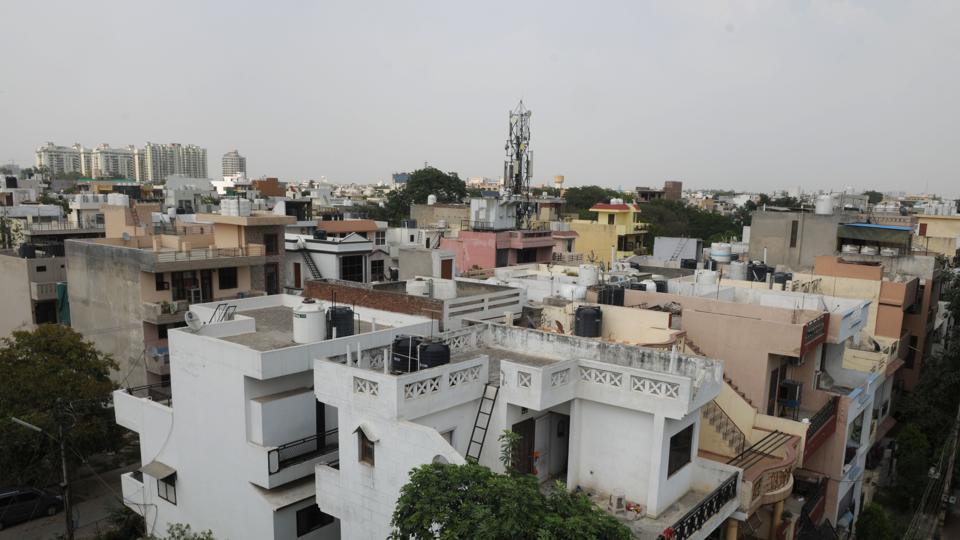
DTCP officials said that around 100 colonies in the district have deficient infrastructure under this policy, and the window for the same has been opened for the next six months. The department has asked property owners, colonisers and residents’ welfare associations (RWAs) of these colonies to submit applications at the earliest, and avail the benefit, failing which the establishments will be sealed and demolished once the window closes on December 31 this year. These colonies are spread over around 300 acres of land, officials added.
The development of these colonies will be regularised under the Haryana Management of Civic Amenities and Infrastructure Deficient Areas Outside Municipal Area (Special Provisions) Act, 2021. The policy under this Act was notified on July 19 this year, according to officials.
According to a notification issued by DTCP on July 19, a committee under the chairmanship of the deputy commissioner shall decide on providing deficient infrastructure to these colonies.
Amit Madholia, district town planner (enforcement), said that these colonies were identified based on notices issued to colonisers, plot owners, and legal action taken thereafter. “Not only colonies which have faced legal action, but also those which have not, are eligible for applying under the Deficient Services Act, only if those do not fall under the jurisdiction of municipal bodies,” said Madholia, who is also the committee secretary.
DTCP officials said that in case an applicant is a coloniser, the person will have to submit the proof of ownership, which includes registered sale deeds or sale agreements on stamp paper/power of attorney, farm jamabandi (consolidation) of the time when such a colony was sold/developed, the present jamabandi, and a list on plot holders. In case of an RWA, it will have to submit a valid registration certificate along with all these documents.
“Colonies developed on private land outside municipal limits do not have basic infrastructure, and people struggle due to lack of roads, drains, and sewage systems. This policy gives them an opportunity to come within the development and planning framework of the state government. We appeal to the stakeholders in all such colonies to come forward and submit their applications at the earliest,” said Narender Solanki, senior town planner, Gurugram.
The colonies, eligible to apply under the policy, have been put into four categories depending upon whether the built-up area is 25%, between 25 and 50%, between 50 and 75%, and between 75 and 100%, said DTCP officials.
“There is no minimum or maximum size fixed for colonies, but all the development should have taken place before July 1, 2022. There will be minimal development charges of 5% of the collector rate of vacant areas, and 10% of the collector rate for built-up areas or as decided by the government from time to time,” said Madholia.
DTCP, meanwhile, said that the committee will also hold meetings over regularisation of development and provision of deficient infrastructure regularly.


