
 E-Paper



Local heritage, communal harmony mark Muharram traditions in these UP towns
Muharram traditions are observed all across Uttar Pradesh but in a few ‘kasbas’ (towns), especially those in the neighbourhood of the state capital, they also present

 Prefer HTon Google


Muharram traditions are observed all across Uttar Pradesh but in a few ‘kasbas’ (towns), especially those in the neighbourhood of the state capital, they also present a picture of cultural symbiosis and unique rituals.
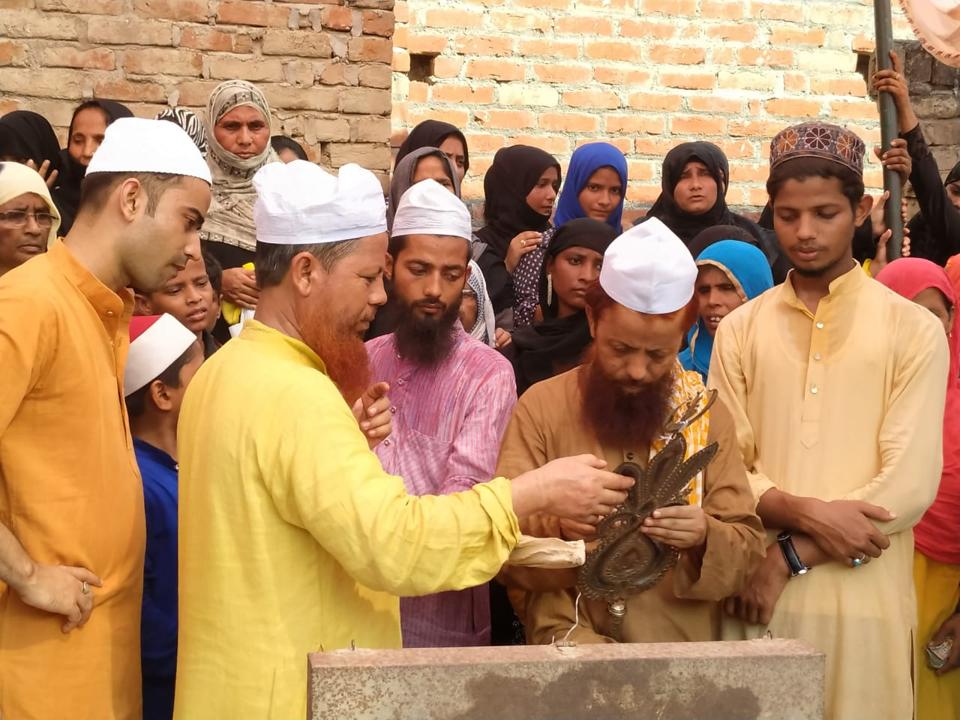
In these places, apart from Shia Muslims — who primarily mark the occasion to commemorate the martyrdom of Imam Hussain (grandson of Prophet Mohammed) and his 72 companions in the 7th century battle of Karbala (in present-day Iraq) — people from all castes, sects and faiths take part in the processions and local traditions.
The state capital -- known for its famed ‘Ganga-Jamuni tehzeeb’ -- also owns a distinctive tradition, as part of which ‘royal processions’ are taken out right from the first day of Muharram to the 10th. As a gesture of respect for their Shia Muslim brethren, Sunni Muslims and Hindus take part in large numbers in these processions.
A similar cultural syncretism is seen in these small towns -- not far away from Lucknow -- and their Muharram traditions. Here, we take a look at their customs that promote local culture and communal harmony.
Khairabad’s ‘Bawan Dandon ka Tazia’
Khairabad town in Sitapur district has a Muharram tradition not seen anywhere else. Its unique ‘bawan dandon ka tazia’ (a structure standing on 52 sticks) — the only one to be buried on the 11th Muharram — represents a shining example of communal harmony. Locals say these sticks represent the ‘mohallas’ (areas) of Shias, Sunnis and Hindus.
“Of the many traditions that this small town witnesses during the two months and eight days of Muharram, the ‘bawan dandon ka tazia’, also called the ‘budhwa baba ka tazia’ (old man’s tazia) is the most special,” says Mohammed Islam, an associate of the Roza Darwaza Ghazi Sahab Dargah here.
“People, irrespective of caste and religion, take part in the procession that dates back to the times of Hazrat Yousuf Khan Ghani who ruled Khairabad in the 12th century,” he said.
“People from neighbouring districts also take part in the procession. The march starts from Roza Darwaza Ghazi Sahab Dargah on the 10th Muharram and reaches Chowk area at around 4pm. Then it passes through mohalla Sheikh Sarai at 1 am when people of the management committee distribute goodies to people. Finally, the procession concludes at Karbala on the 11th Muharram. The tazia is prepared at the dargah. Twenty sticks are on the outer side, while 32 are placed in the interior of the tazia,” said Mohd Islam.
Mohan’s ‘Takht Juloos’
Mohan in Unnao district also has a unique ‘azadaari’ (mourning) tradition of taking out a ‘takht juloos’ (a traditional procession) in the memory of martyr of Karbala and son of Imam Hussain, Hazrat Qasim. The procession, among the oldest in Uttar Pradesh, sees participation from people not only from India but also from abroad.
Mohan is the only place in North India to have a dargah dedicated to Hazrat Qasim.
Mustafa Hussain, former chairman of Mohan, says, “It’s a unique procession. People come here for ‘ziarat’ (pilgrimage) of the holy takht, which has a fascinating history. It is believed that an associate of the Mughals had a dream about Hazrat Qasim in which is saw a particular spot. He began to look for this spot and on finding it, asked his labourers to dig it up. While digging, they found a takht, which the nobleman then sent to Mohan -- his native place. Dargah Hazrat Qasim is built over the spot where the takht was placed.”
Mohan also has the distinction of being one of the oldest centres of ‘azadaari’. “The Syeds from Iran initially chose four places to settle in India. These included Mohan and Bilgram in UP. Just a few kilometres from here is Nyotini town (in the same district), which also has a unique Muharram tradition with both Shias and Sunnis taking part in the procession,” says Hussain.
Bilgram’s ‘Kudarati Alam’
In Bilgram, a town in Hardoi district, the history of ‘azadaari’ dates back to the Mughal period. Badshah Hussain Wasti, eminent sufi priest and ‘sarparast’ (guardian) of the shrine of Syed Mohammad Sugra (which has thousands of followers across the world), says, “Although Bilgram has a long history, it is mainly known for its ‘Kudarati’ Alam (insignia), which is taken out during Muharram.”
“The history of Kudrati Alam is around 250 years old. A Sufi saint named Shahnutf-ullah went on Haj. While he visited the Holy shrine of Imam Hussein, he heard a voice that said ‘the Alam of my army is lying at this place’. Unable to find the location, the saint went back to the holy shrine where he had a dream that he would find the insignia the next day. And that is what happened. He found the Alam and the day was the 7th Muharram. The saint brought the Alam to Bilgram. Since then, on every 7th Muharram, the Kudrati Alam is placed for public viewing, allowing people to pay homage to the martyrs of Karbala,” Wasti said.
Shedding light on the historical importance of Bilgram, he said, “This town has been an important place even before Lucknow. Since the 13th century, it was inhabited by the Imamis (descendants of Syed Mohammad Sugra). Initially, the area was ruled by the Bharas (a local tribe). Due to their strong command over warfare techniques and their scholars, Imamis succeeded in making Bilgram their headquarters. Gradually, it became a centre of ‘azadaari’ as well. Besides the processions on the 6th, 7th, 8th, 9th and 10th days of Muharram, the ‘Chehlum’, ‘Bahattar Tabut’ and ‘Chup Tazia’ processions are also quite renowned and draw big crowds of ‘azadaars’ from far off places.”
Bilgram is also known for being home to several eminent scholars and personalities, including Allama Azad Bilgrami (scholar of Urdu, Arabic and Persian languages), Imad-ul-Mulk Bahadur Syed Husain Bilgrami (civil servant, politician, educationalist) and others.
Hindu-Muslim unity at Salempur
Situated on the border of Lucknow-Barabanki, Salempur witnesses people from across castes, religions and sects stand together every Muharram to commemorate the martyrdom of Imam Hussain.
“It’s a tradition that the people of Salempur have been observing for more than 500 years. The legacy is being followed since the time of the Lodhi dynasty (1451 to 1526),” says Syed Ahmed Sajjad who claims to be a 24th generation descendant of Sheikh Saleem, a celebrated warrior of the Lodhi dynasty.
“Sehikh Saleem from Delhi and settled here with his army of 24,000 soldiers and horses. Since then, Muharram has been observed in Salempur, which is named after him,” said Sajjad, who resides in a sprawling ‘quila’ (fort) spread over 60,000 square-feet. “The women’s ‘majalis’ here has over 200 participants, while the men’s ‘majalis’ is attended by more than 12,000,” he says.
“During Muharram, Hindu families here also join us in ‘azadaari’, setting a unique example of Hindu-Muslim unity,” he says, adding that people from all communities take part in the processions.


