
 E-Paper



CEC Gyanesh Kumar urges Uttar Pradesh voters to surpass West Bengal’s 93.7% voter turnout
Gyanesh Kumar also says that instead of being intimidated by accusations, the Election Commission accepts them as a challenge and operates with complete transparency

 Prefer HTon Google


With the state assembly elections due early next year, chief election commissioner Gyanesh Kumar on Monday called upon voters of Uttar Pradesh to surpass the 93.7 % voter turnout recorded in the West Bengal assembly elections held earlier this year.
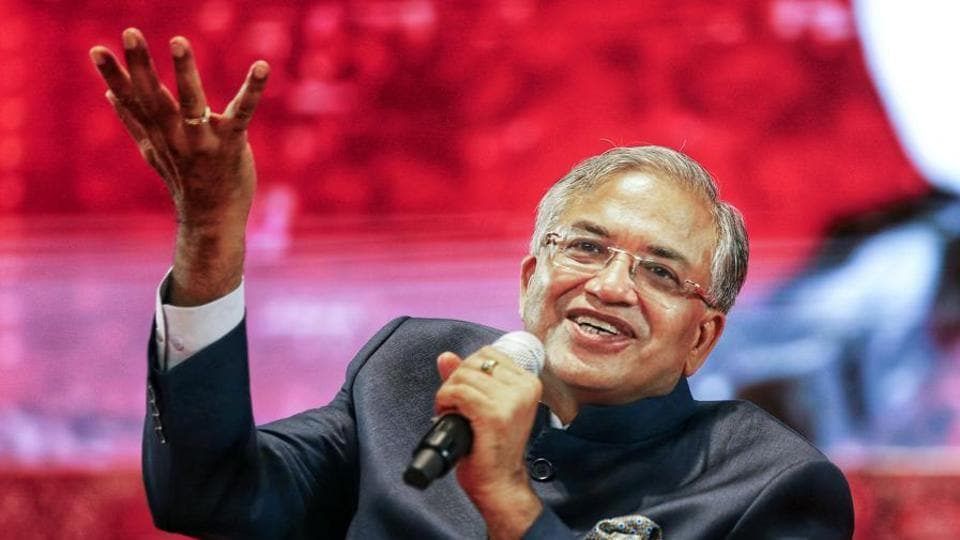
“The voters must demonstrate their enthusiasm by breaking this record in the 2027 Uttar Pradesh assembly elections,” he said.
Kumar was addressing a regional conference on Electoral Literacy Club (ELC) 2.0 and ECINET (Electoral Service Platform) as the chief guest at Indira Gandhi Pratishthan (IGP) on the first day of his two-day visit to Lucknow.
Uttar Pradesh had logged a voter turnout of 61.03% in the 2022 assembly elections much before the Special Intensive Revision (SIR) exercise. The 2026 West Bengal polls were held after the SIR in that state.
Uttar Pradesh’s final electoral roll published by the Election Commission of India (ECI) on April 10, 2026 saw 20.4 million (2.04 crore) names dropped under the SIR process.
The final electoral rolls have 133.9 million (13.39 crore) voters while the electoral rolls published on October 27, 2025 after a special summary revision had 154.4 million voters. The voter list in UP shrank by 13.24 %.
After SIR, the number of voters is lower than the size of the electorate in UP in the 2014 and 2019 Lok Sabha polls in the state, and the 2017 and 2022 assembly polls.
Kumar also said that instead of being intimidated by accusations, the Election Commission accepts them as a challenge and operates with complete transparency.
In the era of AI and deep fakes, if any election-related confusion or rumours spread, people should first check its source, he said.
“Elections in India are conducted strictly in accordance with the Constitution, laws and instructions issued by the Election Commission of India. The elections are conducted transparently, with concurrent audits of political parties, candidates and their representatives at all the stages,” he added.
Political parties and their booth-level agents (BLAs) also participate in the voting and counting process, he said. The BLAs audit the votes in collaboration with the ECI, he added.
Interacting with teachers and students from educational institutions across 20 Uttar Pradesh districts at the conference, Kumar said, “Section 3 of the Aadhaar Act states that it is not proof of date of birth, address, or citizenship. The criteria for becoming a voter in India are attaining the age of 18 and being an Indian citizen.”
Replying to a question by students, the CEC said, “Parliament will decide on One Nation, One Election. The Election Commission works according to the law and the Constitution. We hold elections in a state when the five-year period for polls is over.”
He also said it is not possible to conduct Lok Sabha, assembly, panchayat and municipal corporation elections using a single voter list in the country.
“Under the 73rd Amendment of the Constitution, every state has a State Election Commission, which can prepare voter lists for panchayat and municipal corporation elections according to its own rules and regulations. Consequently, unless the government makes any changes to this list, the Election Commission cannot conduct elections by drafting a single voter list,” he said.
He emphasised the need to familiarise students and young voters with India’s electoral system, democratic values, voter registration, voting and counting processes and ECI’s functioning.
“I have full faith in the youth and students. I am proud of the students’ thorough knowledge of the electoral process,” he said.
In a press statement, the ECI said with the tagline “Learn Democracy. Lead Democracy!” ELC 2.0 aims to encourage young and first-time voters to not only understand democracy but also to meaningfully participate and contribute to its progress.


