
 E-Paper



No law obliges Election Commission to meet MPs: The rules and practice behind INDIA bloc standoff
The ECI turned down a meeting with Opposition MPs at Parliament, citing protocol. The poll body can decide whom it hears, and where.

 Prefer HTon Google


The Election Commission of India (ECI) on Tuesday turned down a request from Opposition MPs to meet them at the Parliament House Annexe, saying its protocol allows such meetings only on its own premises. Police had earlier stopped the MPs as they marched towards its headquarters.
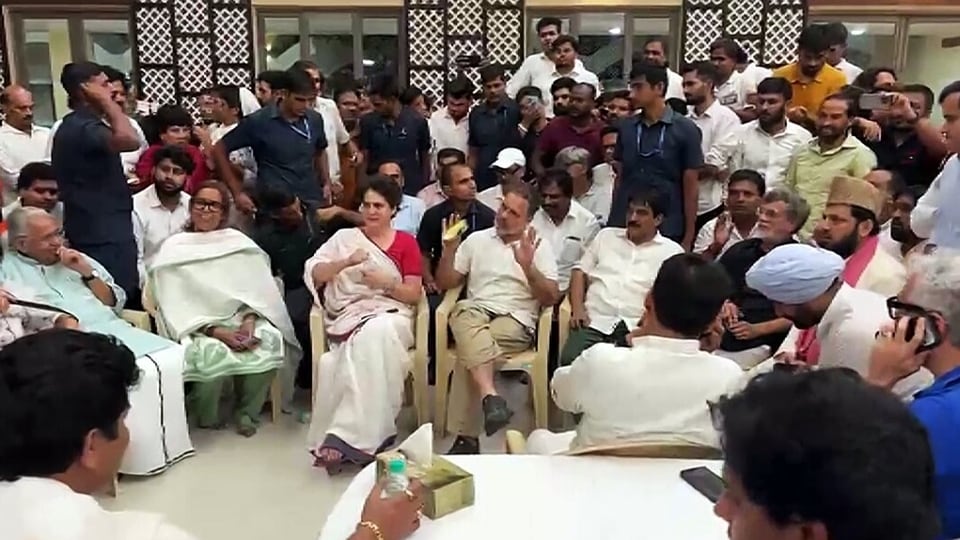
The ECI said it offered to send its senior-most officer to collect the MPs' memorandum instead, and that they declined.
No law obliges the commission to meet MPs or political parties, though by convention it routinely receives their delegations.
The MPs, led by Leader of the Opposition in the Lok Sabha Rahul Gandhi, were demanding the resignation of Chief Election Commissioner (CEC) Gyanesh Kumar over objections to the Special Intensive Revision (SIR) of electoral rolls and to changes to Form 6, which first-time voters use to enrol. Gandhi and Congress MP Priyanka Gandhi Vadra were briefly detained after a sit-in and released.
The law
No provision in the Constitution or the Representation of the People Acts of 1950 and 1951 obliges the commission to give a party, a delegation or a group of MPs an audience. Article 324 of the Constitution vests the "superintendence, direction and control" of elections in the commission, and leaves it to decide how, where and from whom it receives representations.
What practice looks like
The commission routinely receives delegations from recognised national and state parties, accepts memoranda on electoral rolls, the Model Code of Conduct and electronic voting machines, and gives parties appointments when they ask for them.
A poll body is expected to be even-handed between parties, and hearing their complaints is part of that, so turning away a large Opposition delegation outright may be unusual.
What ECI said about the march
In a press note on Tuesday, the ECI said it learnt through the media during the march that "some Members of Parliament wished to meet the Commission along with their delegation". It said that "till 4.00 PM today, no political party, through its representatives, had sought an appointment for a meeting with the Election Commission".
At around 4pm, Delhi Police told the commission that a delegation of MPs led by Rahul Gandhi wished to meet it and submit a memorandum. The commission was considering that request when a Delhi Police deputy commissioner told it that the meeting "was to be held with a group of 240 MPs and that the proposed venue was the Parliament House Annexe". The ECI said it "considered this request as unusual" and that it could not be accepted because, "in accordance with ECI protocol, such meetings are held only on the premises of the Election Commission of India".
The commission said it laid down a procedure for meetings with political parties in 2025. "All political parties had been informed of the same and they follow this procedure," the note said. Under it, a party, or a joint delegation of several parties, "seeks an appointment through its duly Authorised Representative", and the meeting is "held at a time mutually agreed upon by both sides".
The ECI said it proposed that "its senior-most officer on duty could be sent to the meeting venue to receive the memorandum", which "in itself would have been an unprecedented step". The MPs declined the offer.
"Any political party may, at any time, request for a meeting with the Election Commission," the note said, adding that the commission schedules a date and time "keeping in view the suitability of time".
Rahul Gandhi said more than 300 Opposition MPs had marched to meet the Election Commissioners, and questioned the police action against them. BJP Rajya Sabha MP Sudhanshu Trivedi disputed the figure and said the ECI's note showed the Opposition never intended to submit its memorandum.
It has happened before
On August 11, 2025, nearly 300 INDIA bloc MPs marched from Parliament towards Nirvachan Sadan to protest against SIR being carried out in Bihar. Congress general secretary Jairam Ramesh had written to the commission, asking that all the MPs meet it together.
The commission allowed 30 MPs on its premises, but the Opposition rejected the cap and called off the meeting. Police stopped the march near Transport Bhawan and detained more than 30 MPs, including Rahul Gandhi and Priyanka Gandhi Vadra, who were released later that day.


