E-Paper



Coal makes taste of Awadh endure as Old Lucknow food hubs retain sheen amid LPG challenge
One can easily smell coal while walking down the streets of the old city, including Aminabad, Akbari Gate and Hussainabad.

 Prefer HTon Google


Despite several food markets in Lucknow, the city of Nawabs, shutting down due to an alleged LPG crisis, the old city—the hub of Awadhi cuisine—retains its sheen, thanks to the use of coal. Lucknow was recently named a UNESCO Creative City of Gastronomy.
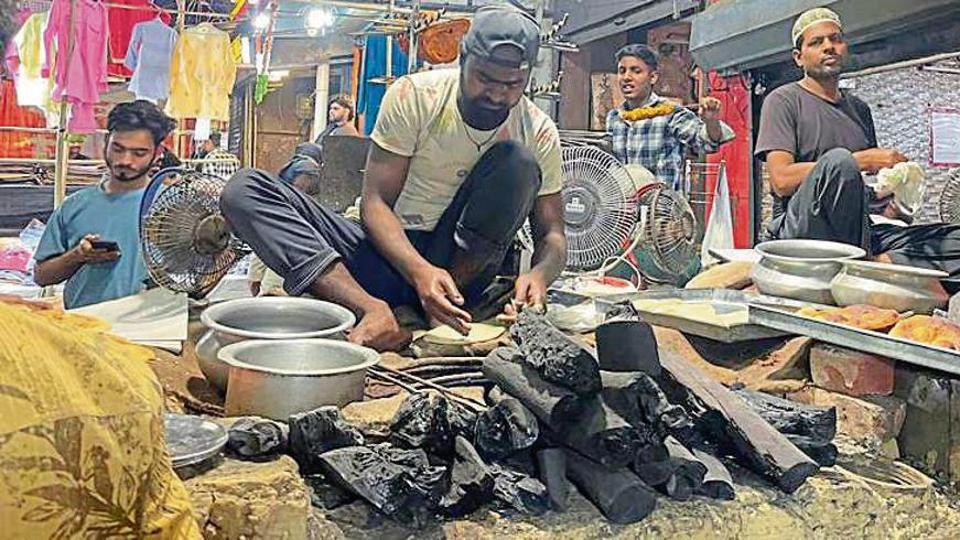
While many popular streetside markets like Chatori Gali have lost their charm, the old city is decked up, and buzzing more than usual due to Ramzan as Eid inches closer. One can easily smell coal while walking down the streets of the old city, including Aminabad, Akbari Gate and Hussainabad.
“90% of our food is cooked over a furnace which requires coal. We rely on LPG for only 20%,” said Md Junaid, owner of Raheeem’s Kulcha Nahari at Akbari Gate.
“Since 1890 when our shop opened, we have followed the old tradition which requires coal,” added Junaid.
According to Junaid, Awadhi delicacies like Kulcha, Nahari, and others are traditionally cooked over coal to achieve a specific, tender texture and subtle smoky flavour that modern gas stoves cannot replicate.
“We do have an LPG shortage. We will shift 100% to coal and wood in case of a crisis (continuing), but won’t shut down during Ramzan,” he added.
Another prominent food outlet, Shaaban Non-Veg Corner, is barely 50 metres away. It is also surviving on coal.
“Grilled items like chicken tikka, seekh kabab, roasted chicken, and our breads like kulcha, sheermal, rumali roti taste best because of the tandoor. Hence, we have always relied on the tandoor,” added Md Shabaan, the owner.
The road adjacent to the Press Club also houses multiple restaurants, including Dastarkhwan, and they are slowly shifting to coal and wood.
Aquib Mirza, manager of the outlet which sees hundreds of tourists, including foreigners, said, “Being synonymous with Lucknow’s famous cuisine, it is our responsibility to keep providing food and keep operating despite the crisis. We recently shifted to gas-based cooking after the LMC mandated that we stop using coal, a move we supported. Now, we are shifting back to coal and wood, and using LPG when required.”
He added, “The stock is sufficient for a week. By then, we expect normality and, if not, we have coal as an option as these foods are best (cooked) over coal.”
Similarly, over 50-60 shops in the Hussainabad area, which operate throughout the night, are unaffected by the LPG crisis as most rely on either coal-based grills, electricity-powered grills, or coal furnaces.
Meanwhile Md Adil, who runs the famous Irani dum tea stall at Hussannabad, said, “Dum tea requires gas because it needs slow cooking.”
“Coal and wood would ruin the flavour. However, for other food options, we have switched to an electric-based system,” he added.