
 E-Paper



Freestyle coach Shako insists on high-level training partners and longer camps
Georgian coach Shako Bentinidis boosts India's freestyle wrestling, emphasizing training discipline and exposure for Olympic success ahead of the Asian Games.

 Prefer HTon Google


In his more than three-month stint with India’s freestyle wrestlers, Georgian coach Shako Bentinidis appears to have learnt the art of survival in the Indian setup. He has added Hindi words such as “bhai bhai”, “namaste”, “pahalwan” and “dangal” to his vocabulary, which has made him popular with the wrestlers.
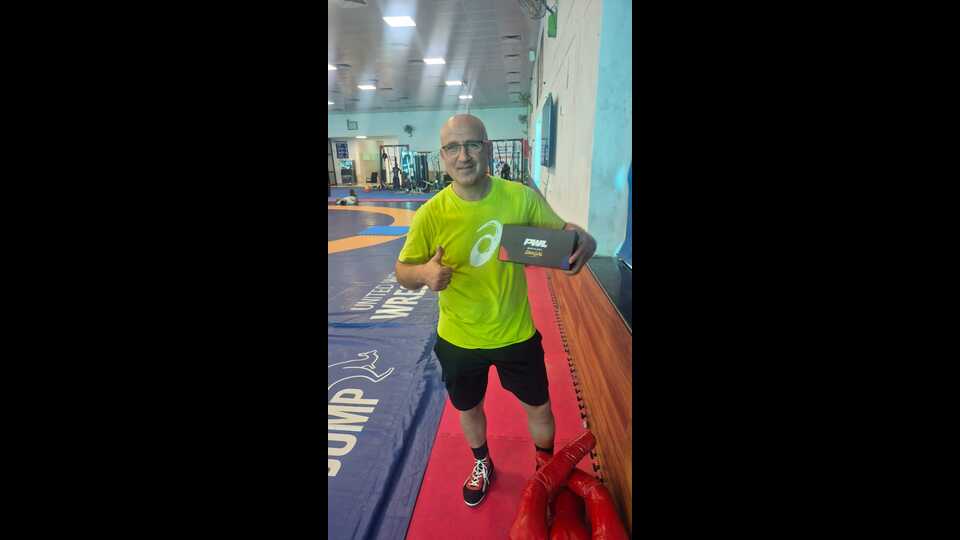
Shako is a different man inside the huge wrestling auditorium at the Sports Authority of India’s centre here. He is among the busiest and most animated figures in a crowd of 40-50 wrestlers who train there every day, alongside the Indian coaches and five-time world champion Gogi Koguashvili, the foreign head coach of India’s Greco-Roman team.
“I love speaking Hindi words, especially ‘bhai bhai’, as everyone here calls each other with this word and it looks quite easy for everyone,” Shako told HT before beginning the interaction in Lucknow.
Shako, who helped Bajrang Punia win an Asian Games gold in 2018, World Championships medals and the big Tokyo Olympics bronze, parted ways with him in 2021. He has returned to India now as coach of the freestyle team. He praises the current Indian team but stresses that more high-quality training partners and longer camps are essential if India is to convert its potential into consistent medals at the senior level.
Shako says the team had good preparation for the Asian Games. Indian wrestlers spent nearly a month abroad. The team first camped and competed in Armenia before moving to the Russian city of Vladikavkaz. Shako describes the city as having a “legendary” status for producing Olympic champions.
He feels training and competing at the same level as global contenders can change a wrestler’s mindset.
“When you compete at the same level, against the same level of competitors, it changes your mindset. It gives you the mentality of a champion,” he said.
He cites his work with Punia, whom he took to Russia four times, as an example of why repeated exposure to high-quality wrestling hubs is necessary. Domestic ranking events, he believes, cannot always provide a true measure of a wrestler’s international level.
Having spent around three months with the squad, Bentinidis is pleased with their wrestlers’ progress and character. He singles out Sagar Jaglan for his fighting spirit.
“Sometimes he loses, but he fights until the last second,” he said.
Shako believes Jaglan, who is still relatively young at the senior level will still need time to develop, while Sujeet Kalkal has already been competing at a high level for a longer period.
Looking ahead to the Los Angeles Olympics, Shako emphasises patience and smart workload management.
“We need to train very hard, but we also have to manage injuries and give them good competition experience,” he said.
The Indian freestyle lineup for Nagoya includes Olympic medallist Aman Sehrawat (57kg), Asian champion Sujeet Kalkal (65kg), U23 world medallist Sagar Jaglan (74kg) and Hangzhou Asian Games silver medallist Deepak Punia, who has now moved to 97kg.
For Shako, however, one issue stands out above the rest.
“There is a really big problem,” he said, referring to the lack of high-level training partners in India despite the country’s strong wrestling culture.
Many wrestlers travel to dangals or train in other setups, reducing the depth available at the national camp. Shako also draws a clear distinction between freestyle wrestling and dangal, pointing to differences in technique -- including leg attacks -- as well as the environment. Dangals are held outdoors in temperatures of around 45°C compared to indoor training at around 15°C.
He does not advocate an outright ban on dangals, but insists that discipline is essential.
“For the Olympic Games, it is not possible without discipline… I don’t have too many options with the wrestlers, so I need a little bit of discipline,” he said.
Shako wants all selected wrestlers to train together at the national camp, believing that stronger internal competition will raise standards and sharpen focus. He points to China’s model of consistently bringing its wrestlers together as a benchmark.
Without strong opponents within the camp, athletes can “become relaxed,” he said, affecting their competitive mindset.
His aim is to get Indian wrestlers to think beyond domestic nationals and trials and constantly visualise the international opponents they will face.
With the Asian Games beginning on September 19 in Nagoya, the unified-camp approach, combined with overseas exposure, forms the backbone of India’s preparation as the men’s freestyle team looks to return to the podium.
For Aman, who has moved between 57kg and 61kg this year, Shako has identified leg defence as a key area of focus.
“Best defence is attack. Aman must understand and focus on not giving his leg to the opponent,” he said.


