
 E-Paper



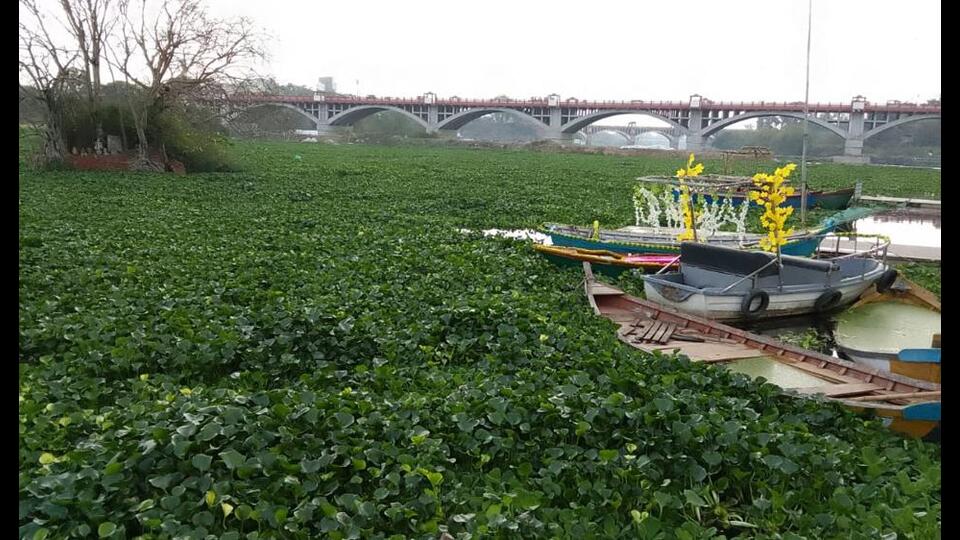
Gomti choked, water turns ‘green carpet’ near Kudia Ghat
Oxygen levels declining rapidly due to excessive growth of water hyacinth; work to remove weeds to start from March 2, says environmentalist

 Prefer HTon Google


LUCKNOW River Gomti, the lifeline of Lucknow, is gasping for breath as oxygen levels are declining rapidly due to the excessive growth of water hyacinth creating a ‘green carpet’ near Kudia Ghat. It will take approximately five days to clear the vast and dense carpet, when work begins with the assistance of Ecological Task Force established under the National Mission for Clean Ganga as part of the Namami Gange Project, said experts.
This project, aimed at cleaning polluted water bodies, is now focused on the Gomti to address the environmental crisis.
Venkatesh Dutta, an environmentalist and HoD at the School of Earth & Environmental Sciences (SEES), BBAU, expressed concern over the alarming situation at Kudia Ghat.
“I am surprised to see the massive accumulation of water weeds in the Gomti around Kudia Ghat. With the help of the Ecological Task Force, we have decided to remove these weeds as they pose severe threat to the river’s eco-system. Work on this will start from March 22, for which we have hired six boats. The task force has 40 jawans of Territorial Army and a battalion of the Gorkha Regiment to help us in taking out weeds from the river,” he said.
He explained that weeds are detrimental to water quality because they lead to a drastic reduction in dissolved oxygen levels, which can drop to zero.
“This oxygen depletion is fatal to aquatic life, causing irreparable damage to the river’s biodiversity. Not only this, water of the river is supplied to citizens and poor dissolved oxygen level can result in health hazards. Water weeds have spelt a doom for boatmen and tourists who are not able to explore the river through boat rides,” said Dutta.
On the environmental hazards, he said these weeds absorb nutrients and oxygen from the water, reducing water quality and potentially fostering harmful algal blooms. “As the weeds decompose, they consume more oxygen, leading to oxygen depletion, which can result in death of fish and harm other aquatic life. The dense growth of weeds also blocks sunlight, disrupting the growth of native aquatic plants and disturbing the natural food web. Additionally, weeds can obstruct water flow, increasing the risk of flooding and erosion along riverbanks. Furthermore, these invasive plants can displace native vegetation, degrading aquatic habitats and reducing the overall quality of ecosystems for fish and wildlife,” he added.
Ranjit Singh, heading the Swachh Paryavaran Sena, which organises river cleansing every Sunday, pointed fingers at the Lucknow Municipal Corporation, district administration, and the irrigation department. He said these departments have failed to address the pollution issues effectively, which has led to the river’s present poor state. “Immediate action is crucial for the Gomti and protection of the fragile ecosystem that depends on it,” he said.
Municipal commissioner Inderjit Singh said: “Gates of the Gomti barrage are being changed, so water was stopped by creating a bandha, which resulted in mushrooming of weeds. These weeds need to be removed and the LMC will cooperate in any effort to clean the river. Jal Kumbhi leaves, if mixed with cow dung, produce a perfect organic manure. We will try to dump these weeds into pits along with cow dung.”
An irrigation department official said, “Work on the barrage will soon be completed and water flow normalised.”


