
 E-Paper



India will be US$25 trillion ‘power house’ by 2050: Gautam Adani at IIM-L
Future will belong to those who maximise possibility, but never to those who play it safe,industrialist tells students


LUCKNOW India will be a USD 25 trillion economic “power house” by 2050 with the global centre of gravity shifting towards it, Adani Group chairman, Gautam Adani, said while addressing students at the Indian Institute of Management, here on Thursday. The industrialist also told them that the future will belong to those who maximise possibility, but never to those who play it safe.
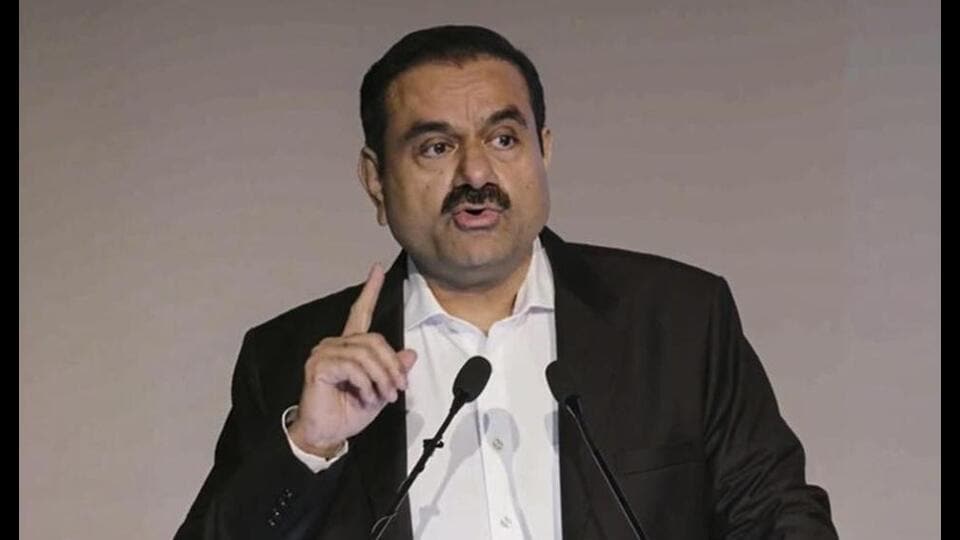
He shared a philosophy of choosing conviction over caution, consequence over comfort, creation over conformity and conscience over convenience to become a proficient leader in life.
Adani spoke about how he was discouraged at times, but his philosophy helped him make a mark across the globe.
“My journey taught me that the future never unfolds as neatly as it appears in classrooms. Instead, it is messy, uncertain and often brutal. Several unprecedented moments in life come where data is ambiguous, where business models break down and where the road ahead is unmarked. Every meaningful journey I have taken has always faced moments where my resources ran dry and my support systems failed, but my burning conviction stood beside me like a sword that made me believe that my bold dreams were worth the struggle,” said Adani.
He said real growth happens, not when the path is clear, but when one chooses to keep searching and walking – even when the destination seems beyond reach. “It is in those moments, when passion becomes your guide and purpose becomes your strength that you begin to walk – not with certainty but with faith. Not because the path is visible – but because the dream is,” he added.
Adani also shared how philosophy helped him at different stages of his life.
“I started off at the age of 16, by leaving my home in Ahmedabad and moving to Mumbai to work in the diamond trading business where I was exposed to risk, relationships and the power of global networks. In about three years, I returned to Ahmedabad to help manage my brother’s polymer factory where I understood the importance of scale, logistics and end-to-end supply chains. As India began to liberalise under Prime Ministers Rajiv Gandhi and Narsimha Rao, I saw a once-in-a-generation opportunity in a then supply-constrained market. I stepped into the trading business with the aim of building India’s largest trading house, which we achieved in three years. However, I did not own any physical assets. India was at the beginning of the infrastructure revolution which felt like an opportunity to me and I decided to build infrastructure and participate in India’s growth story,” he said.
He shared that he chose to build the port in Mundra, one of India’s largest marshlands in the Kutch region, which made some of the bankers laugh at him as Mundra had no access and industry.
“It was then that my first philosophy of conviction over caution came into existence because my conviction was not about asking bankers to fund a piece of land, but to fund a possibility no one had explored. Today, that marshland is India’s largest commercial port. I later went to Queensland, Australia, which brought my second philosophy, consequence over comfort to reality. India was short of good quality coal so, the project was not born out of ambition for coal but a consequence to provide India with better-quality coal and reduce carbon emissions, as well as to secure India’s energy independence,” he shared.
Adani also highlighted how he then faced a backlash from coal mines in Australia but combating all he then turned to Khavda where his third philosophy of creation over conformity came to being.
“Khavda was saline water under marshy land and our initial studies showed it to be impossible to build any stable structures on this land, but we planned 700-tonne wind turbines and declared that we would build the world’s largest single-site renewable energy park – spread over 500 sq km, generating 30 gigawatt green power. Until now, we have already commissioned the first 5 gigawatt of green power and are on our way to set a global benchmark in energy transition. Finally, came the hardest project of all – redeveloping the slums of Dharavi. It is not about laying bricks or yet another slum redevelopment project, but about rebuilding dignity for over 1 million people who helped build Mumbai,” he said.


