
 E-Paper



Keeping up with UP | Why Lucknawi food beckons one and all
The Uttar Pradesh capital joins a global list of 70 cities recognised for their culinary heritage and gets the ‘Creative City of Gastronomy’ tag

 Prefer HTon Google


Lucknow ke khane ki khushboo uski hawa mein hai’ (the aroma of Lucknow food is in its air). Few foodies would deny this.
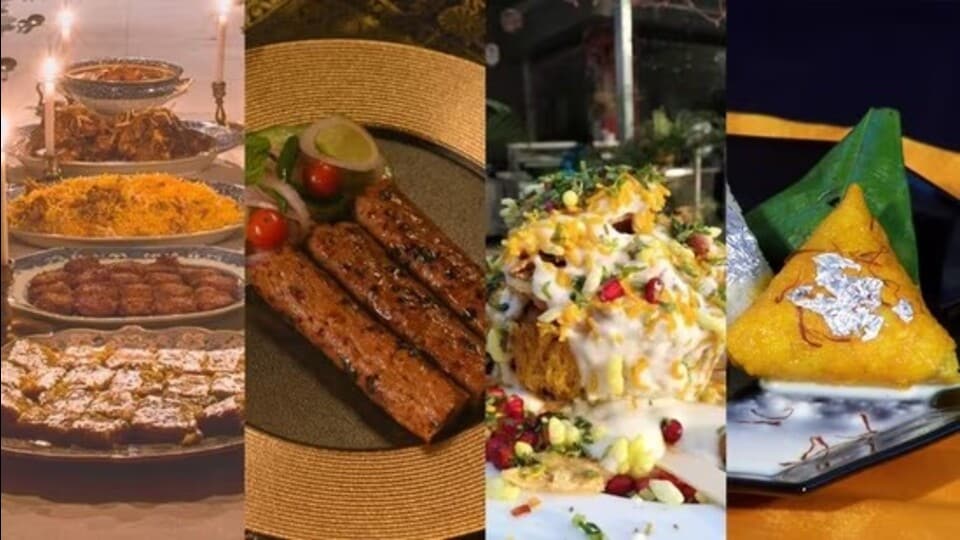
Much before Unesco named Lucknow as the “Creative City of Gastronomy”, a host of distinguished people from former prime ministers Indira Gandhi, Rajiv Gandhi and Atal Bihari Vajpayee to Bollywood stars, foreign diplomats and corporate honchos were drawn to the city by the fragrance of Lucknawi food for decades. And it’s not merely the kebabs that melt in your mouth, but also the yummy chaat and delicious sweets like makhan malai and malai paan.
What makes the Lucknow cuisine so unique is not only the special herbs or slow cooking on chulha, but also the fact that the food ingrains the city’s rich culture, history and heritage. As it is often said, “Lucknow ke khane ka mizaz kuch aur hai — nawabi bhi hai, Shahi bhi hai. Yahan khilane ka andaaz bhi hai aur khane ki tahzeeb bhi hai.’(It has a distinct character, it is both regal and royal)
Historian Ravi Bhatt says, “Awadhi food is a fusion of three cooking styles — Iranian, Mughlai and the local. Slow cooking, mild herbs and also ‘dum’ cooking makes it special.”
Dr Ammar Rizvi, a former senior Congress leader who joined the BJP in 2019, is known for serving authentic Lucknow food to dignitaries — politicians and diplomats — in small and big parties. He is also writing a book on the culinary journey of Lucknow.
He recalls, “Atal Bihari Vajpayee used to love chicken kebabs, shami kebabs, while Rajiv Gandhi enjoyed murgh mussalam, hot seekh and galawati kebabs. Indira (Gandhi) always appreciated Lucknow food as it does not have itra. She often used to say that itra is best used on clothes than food.”
He recounts how Indira Gandhi enjoyed some delicacies in Lucknow a few days before her assassination on October 31, 1984.
The then Prime Minister Indira Gandhi was visiting Lucknow to attend a session of the state Congress and stayed at Raj Bhavan. The then Uttar Pradesh governor CPN Singh asked Rizvi for two favours — he wanted a new quilt as the ones at Raj Bhavan were old. Rizvi says he had safely kept the quit with him till date with a note.
Second, the governor asked him to bring some non- vegetarian delicacies for a select group, which also included Rajiv Gandhi, as the cooks at Raj Bhavan could cook vegetarian dishes. She loved the food and even told a prominent leader from Kashmir to visit Lucknow for a special culinary experience at Ammar’s place saying, “I resist the temptation as I put on weight.”
Rajiv Gandhi left for Amethi the next day after telling Rizvi that he, along with Arun Singh, would love to have food at his official residence at 11, Gautam Palli and that he could invite Narain Dutt Tiwari and Vishwanath Pratap Singh also.
Rajiv Gandhi enjoyed the seekh kebabs and had two. He declined to take the third one despite insistence by Joshi who was serving the food.
Joshi’s persuasive words proved prophetic. Asking Rajiv to eat properly, he said, “You are going to become prime minister after a few days.” Indira had her last Lucknowi meal while Rajiv became PM after her assassination. Rajiv’s son Rahul Gandhi, now leader of Opposition in the Lok Sabha, also relished Aloo ki Tikki and butter chicken while BJP leader Smriti Irani, who created history by defeating him in the family stronghold of Amethi in the 2019 General Elections is also fond of Sharma ki Chat. The national president of the Samajwadi Party, Akhilesh Yadav is fond of both chat and sweets.
Others like late Congress leaders Narayan Dutt Tiwari and Moti Lal Vora used to love chat.
What makes the Lucknow food special?
Vir Sanghvi, former HT Editor and a great connoisseur of Lucknow food who writes a popular column Rude Food for the paper and has also authored a cookbook, says, “Lucknow is one of the world’s great food cities because of the mix of communities, cultures and cuisines. It’s hard to find another city anywhere in the world where the meats are cooked to such a high standard. And yet, it also has one of India’s most famous vegetarian cuisines as the home of chaat, which it has exported all over the world. Integral to its success as a foodie destination is its sense of history. Recipes can be centuries old and many of the chefs represent the seventh generation of masters of the kitchen.”
The overdue Unesco award was made possible by Roshan Jacob, the former Lucknow divisional commissioner.
She says, “We had created an inter-department platform for necessary data inputs but it was mainly about connecting to people... the many who since decades have been cooking and serving love in this city. Not just the big names and old brands but the familiar teashop next door and the vendors along the lanes and the bylanes.”
“In whatever small way, I am happy to have been part of branding this beautiful city and its beloved people. I hope to see it as a creative city of music too...given our rich tradition. It’s possible with some good documentation. I had tried to connect the tourism department to individuals and collectives in the city who run kitchens, source local food from families for their restaurants, the small joints in the food lanes, those who write and blog on food....so it was essentially the city putting it together for Lucknow. None of us individuals and departments can take credit. It’s the city’s own victory.”
Jayant Krishna, UP state convenor of INTACH, involved in the research for the project explains, “Lucknow is the second Indian city to be named Unesco city of gastronomy primarily due to the government efforts. As per Unesco, to earn this title, a city must demonstrate a deeply rooted gastronomic culture tied to its history and identity, a vibrant community of chefs and restaurants, a tradition of using indigenous ingredients, and the culinary know-how that have survived the test of industrialisation. Traditional food markets, local food industries, and festivals that honour its cuisine, are all essential to determining which cities make the cut. Sustainability is another key factor central to Unesco’s consideration.”
He adds, “Through several centuries of patronage by royal courts and cultural cross-pollination made possible by Lucknow’s composite culture, the city’s cuisine evolved in the 17th, 18th and 19th centuries. Bawarchis, khaansaamas and rakabdars in the Nawabs’ kitchens mastered the dum pukht technique (slow cooking) and an ensemble of subtle spice items like kebabs, biryanis, sheermal, kormas, ulte tawa parathas; and mildly sweet desserts like shahi tukda and phirni. Far beyond the royal courts, its bazaars like Hazratganj and Chowk remain a living testimony of street food, where generations of cooks have transformed royal recipes for commoners’ tastes.”
Home cooked food in demand
The authentic Lucknow food is cooked and sold by homes, encouraged by the increasing demand as well as support from NGOs like Sanatkada, which has been promoting city crafts, culture and cuisine for years at its annual event
Noor Khan, an educationist, is considered an encyclopedia on Lucknow arts, crafts and cuisine.
She says, “Undoubtedly, Sanatkada is the first organisation to showcase Awadhi food cooked by home chefs at its annual festival. The Lucknow bioscope also documented 100 street food stalls, not only the food that they serve but also their family histories. These were showcased at its local museum in Qaiserbagh, and about 25 of them have been on display at its virtual museum in partnership with Google Arts and Culture, and has also put together a book of home recipes, ‘Lucknowi Bawarchi Khane:Food From Lucknow Homes.”
The fact is many people fly into Lucknow during the Sanatkada festival to enjoy delicacies at the choicest street food stalls.
Asked if there is any dish that has become extinct. Noor says, “There is a dish called Anda Daana, which used to be the specialty of homes in Lucknow.
“Each single pea is skinned (the fine jhilli in which each pea is encased). This fine skin is removed, the peas lightly tempered, covered with a layer of eggs cracked over them, and gently steamed with salt and pepper. Because of the tedious process of skinning each pea, the dish has become the rarest of the rare.”
Former Unicef head in Uttar Pradesh, Niloufer Pourzand, said, “ As a guest of Lucknow and Lucknowites, I too grew to admire and appreciate its Awadh legacy, culture as well as those who keep it alive against all odds. A big part of this is India’s diversity and the noteworthy contribution of Moslem Indians, rulers and culture, of course. This UNESCO recognition underscores their valuable and tremendous talent and significance.”
The recognition came with hype as leaders from Prime Minister Narendra Modi, defence minister and Lucknow MP Rajnath Singh, chief minister Yogi Adityanath, former UP CM Akhilesh Yadav and several others tweeted to share their joy over the Unesco accolade.
After all, Lucknawi food beckons one and all — vegetarian and non vegetarian — in all seasons.


