E-Paper



Lko’s BNA showcases half-a-century of tales turbans told
Preserved by the academy, the display is set on the first floor of the academy and will continue till April 12 as a part of the BNA’s Golden Jubilee celebrations


Turbans, generally seen as just another clothing item, have donned an important place in the corridors of the city’s prominent theatre institute, Bhartendu Natya Academy, these days.
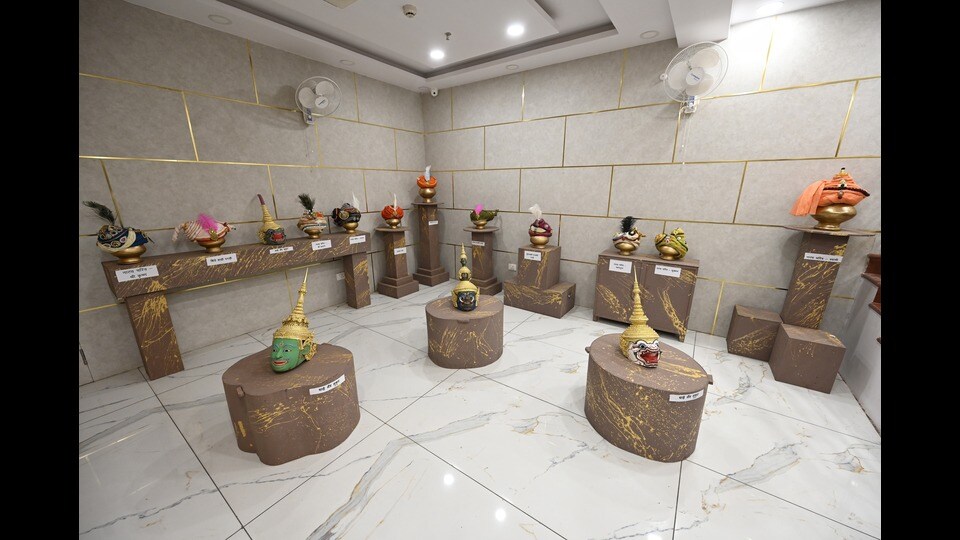
Once used to distinguish people from different parts of the country, the traditional headgear has today been reduced to ceremonial occasions like weddings, prompting authorities to bring them to the public in the form of an exhibition.
Preserved by the academy, the display is set on the first floor of the academy and will continue till April 12 as a part of the BNA’s Golden Jubilee celebrations.
“It is not just the script, dialogue delivery, lights or the set but just a turban can create a big impact on the visual appeal and how the audience perceives a character in the play.
The exhibition has a collection of 33 turbans from different eras and parts of the country, simultaneously showing the unity in diversity of the country. It also becomes a defining aspect of theatre and is crucial for adding authenticity for the audience,” said curator and faculty member at BNA, Deepak Soni.
He shared that he does not remember when he first began falling in love with turbans.
“I was born in Sikar (Rajasthan) where I was raised watching people don turbans daily. I learnt to tie a turban all by myself. The exhibition is important because once a character comes on stage, anybody in the audience will know who the person is playing without any dialogue.
“It depicted the achievements of each section of society, like the shells in the tribal turban showing small tokens from the king, received as a mark of respect when he visited his empire or a feather showing a respectable position.
However, the new generation is not informed about the varieties of turbans which made us bring the exhibition on display,” said Soni.
From Mauryan to Gupta, Maratha, Mughal, tribal kings, and region-specific ones—Bundelkhandi, Punjabi, Marwadi—one can find an array of turbans at the exhibition.
“The Marwadi turbans are made in a spherical form so that people in Marwad can safeguard themselves from scorching sun’s rays while also receiving air through the widened holes between the curves of the turban. These are made of about 22 meters of cloth, which can even help them tie their camels or get water from a well when they go out in the desert,” Soni added.
He then shared how the Maratha turban has a distinguished beak-like structure with twists and turns resembling a jalebi from inside which were once made only using Chanderi fabric. “The jalebi-like structure inside the turban was soaked with sandalwood oil or water which would provide relief from heat. There used to be as many turns as the wars won by the king,” he said.
Bipin Kumar, director, BNA, said the turbans preserved by the academy showcased a variety of styles and types from different periods, dynasties, and regions.
“This exhibition highlights the significance of the turban as a symbol of Indian culture, tradition, and pride. Costumes and stage properties hold special importance in theatre. Through their creative vision, art directors present these elements in a way that brings characters and narratives to life.
“Over its 50-year journey, the academy has not only enriched theatrical art but has also played a vital role in preserving India’s cultural heritage and passing it on to future generations,” said Kumar.
(BOX)
BNA comes alive with performances
LUCKNOW
The Golden Jubilee Theatre Festival at BNA witnessed two contrasting theatrical presentations on Tuesday, offering audiences a blend of suspense, emotion, and sharp social commentary.
The thriller “Ballygunge 1990”, staged at the Raj Bisaria Trust Auditorium, unfolded layers of mystery, love, and conspiracy, while the nautanki “Yeh Kaisa Insaf”, performed at the BM Shah Auditorium, delivered a strong critique of corruption within the justice system.
Directed by Atul Satya Kaushik and presented by Mumbai’s The Films and Theatre Society, “Ballygunge 1990” is set in the upscale Ballygunge area of 1990s Calcutta. Performances by Anup Soni, Priyanka Sharma, and Kunal Kaushik kept the audience captivated till the end.
In contrast, the afternoon presentation “Yeh Kaisa Insaf”, written and directed by Atamjeet Singh and staged by Vividh Seva Sansthan, used the traditional folk form of nautanki. Through the story of a corrupt Qazi’s court, the play highlighted how truth often succumbs to bribery and greed. Gagandeep Singh, Pankaj Satyarthi, Priyank, Abhijeet, Shreya, and Aditya delivered energetic and engaging performances.