
 E-Paper



Lucknow breathes cleaner air, but Charbagh most polluted
The PM10 levels recorded in the last two years were 604 ug/m3 (2020) and 556 ug/m3 (2021) while this year’s level was found to be at 396 ug/m3, says IITR study

 Prefer HTon Google


LUCKNOW Diwali this year saw lower levels of air and noise pollution in the city as compared to the last two years, but Charbagh was the most polluted area, as per the annual study by the Indian Institute of Toxicology Research (IITR) under the Council of Scientific and Industrial Research.
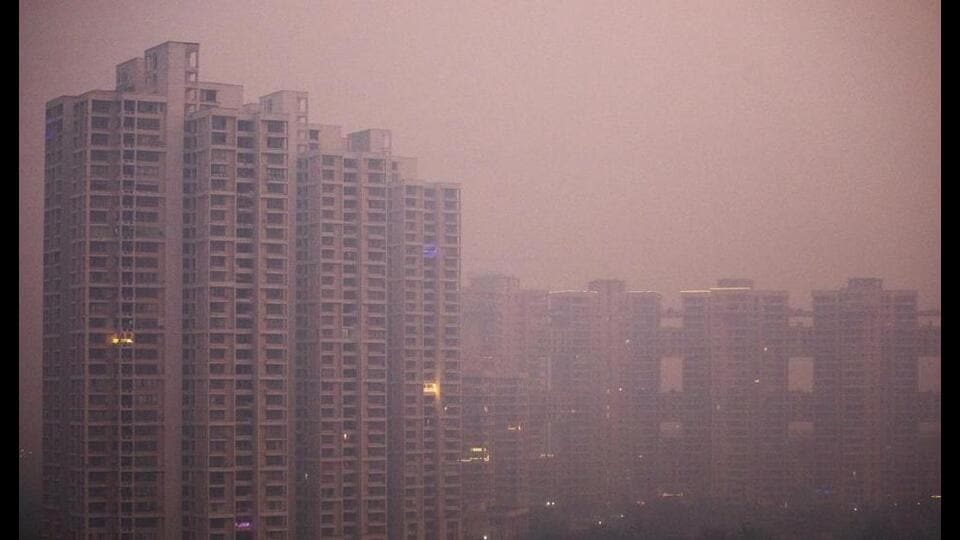
The PM10 levels recorded in the last two years were 604 ug/m3 (2020) and 556 ug/m3 (2021) while this year’s level was found to be at 396 ug/m3. The PM2.5 levels for 2020 and 2021 were 402 ug/m3 and 365.5 ug/m3 as compared to this year’s 279 ug/m3.
The study also revealed that particulate matter measured before, during and after Diwali this year far exceeded the national ambient air quality standards.
CSIR-IITR conducts this study every year after Diwali to determine the levels of air and noise pollution in India. For the air quality survey of Lucknow, four sites covering residential, commercial and industrial areas were taken into account, i.e., Aliganj, Gomti Nagar, Charbagh and Amausi.
Both the air and noise pollution levels were the highest at Charbagh this year on Diwali night – 509 ug/m3 (PM10) and 80.6 db(A). While the PM 10 and PM 2.5 levels did drop the night after Diwali, the levels still had not reverted to the numbers recorded earlier, the highest of which was recorded at 215 ug/m3 and 138 ug/m3 respectively, at Charbagh prior to Diwali. PM10 levels at Aliganj were 415 ug/m3, Gomti Nagar 384 ug/m3 and Amausi 275 ug/m3 on Diwali night.
In Lucknow, pollution levels rose by percentages above 100 from pre-Diwali night to Diwali night, and reduced by around 20% from the night of the festival to the following night.
The levels of sulphur dioxide and nitrogen dioxide, both of which are harmful, were within permissible limits on the night prior to and post Diwali, but had crossed the limits in Charbagh on Diwali night.
At 80.6 dB (A), the noise pollution level was the highest again at Charbagh on Diwali night, which was above the safe hearing threshold of 80 db(A). Aliganj recorded 79.8 dB(A), Gomti Nagar 80.4 dB(A) and Amausi saw the lowest level at 69.8 dB(A). Noise levels above 80 dB(A) are liable to cause temporary or permanent hearing impairment.


