
 E-Paper



Mangoes coming in 10 days but weather in U.P. spoils 90% yield, prices likely to be 50% higher
According to growers, extreme weather conditions during the early flowering season and poor quality of pesticides led to unprecedented damage to crop

 Prefer HTon Google


The scorching heat of summers has but one sweet reason to wait for: mangoes. However, there is news that will leave a bad taste in the mouth of lovers of the Lakhnavi Dussehri and other mango varieties in the state.
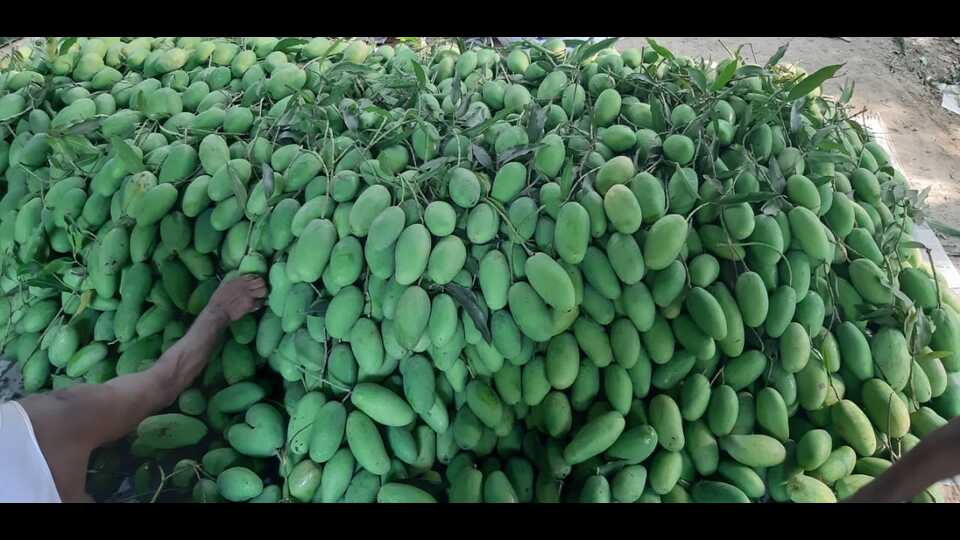
According to mango growers, the production of the King of Fruits has been reduced by around 90% this year in the largest mango belt of Uttar Pradesh – Malihabad – due to adverse weather conditions and repeated heat waves. They also blamed inferior quality pesticides for the mango crop suffering.
“Mango production is extremely low this year, possibly the lowest that I have ever seen. This is the first time in 25-30 years that March has had more heat than May-June, resulting in many flowers being damaged,” said Insram Ali, president, All India Mango Growers’ Association.
“The flowering season requires a moderate temperature of 30 to 35 degrees Celsius, but due to temperatures soaring to 40 degrees during the early flowering stage in the month of March and April, it has led to damages to the mango flowers,” Ali added.
He also said that mango production in Uttar Pradesh used to range between 35 and 45 lakh metric tonnes per year, but this year only 4-6 lakh metric tonnes is expected; as a result, mangoes will be sold at a very high price in the market. This will directly impact the various mango varieties, with none of them selling for less than ₹70-80 per kg, compared to ₹25-30 kg previously.
“Extremely hot weather during the flowering season wreaked havoc on the mango crop. Whatever little mangos that had grown, fell to the ground without ripening naturally. We’ve never seen anything like this before. I only have 10% mangoes which are fine and can be sold in the market. Due to the huge demand and shortage of supply, we are forced to sell them at a high rate,” said Naseem Beg, a mango wholesaler at Malihabad Crossing Market.
The association also stated that once it hits the market on June 14, the price could reach ₹100 per kg. According to Insram Ali, UP mangoes are exported to a number of countries, including Saudi Arabia, the United States, the United Kingdom, and Germany. This year, however, the state will be unable to meet domestic demand on its own.
Growers also blamed companies selling poor quality flower pesticides for the low yield.
Ali opines that extreme weather conditions should not solely be considered the reason for a drastically reduced mango production this year, but the companies selling poor quality pesticides. “This has affected at least 15% of the production. The medicine used in sprinkling on flowers has also affected the flowering quality to a great extent. Pesticides are sprayed on flowers that are susceptible to pests and insects. Unfortunately, those pests were not removed as the medicine quality was too poor, resulting in crop damage,” he complained.
He also blames the department of agriculture and farmer welfare and the state government for failing to check on these companies openly selling poor quality pesticides. This tends to affect all levels of the supply chain equally. “We have been complaining about the deteriorating quality of medicines to private companies. We have even raised these issues with the Centre and the state government bodies multiple times, and we have hardly been paid any notice,” he said.
But mangoes will be available in the coming 10-15 days. And because the yield is very less, the prices will be on the higher side. “There will be a shortage of the popular variety Dussehri along with other varieties including Chausa, Langda and Safeda,” said Ali.
Sharok Ahmed Khan, who owns a farm in Malihabad, expressed similar sentiments, stating that there is a very low production of mangoes, particularly Dussehri, which has the least chance of making it to the market this season, and even if it does, it will be exhausted by the end of June. “I own 10 acres of farmland which has the capacity of growing more than 1500 carts of mango (each cart has a capacity of around 10 kg), which is equal to 15,000 kg of mangoes. This time, we have been able to carry only 200 carts which is equal to 2000 kg.” However, he also mentioned that few of his farms have given a good yield which had zero productivity last year.


