
 E-Paper



Misdiagnosed for heart attack elsewhere, man saved from tumour at KGMU
On December 13, Dr Saumya Singh, additional professor of surgery, and her expert team at KGMU performed a complex three-hour surgery to remove the tumour.


An elderly man from Gonda, who had been wrongly diagnosed with a heart attack at multiple hospitals, found life-saving relief at King George’s Medical University (KGMU) in Lucknow, where a team of doctors identified and treated a rare abdominal 8-kilogram tumour that had been causing him severe pain for four years.
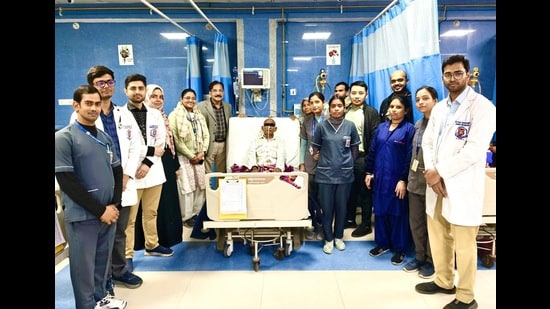
For years, the patient suffered from intense abdominal pain and bloating, but doctors at other hospitals misdiagnosed his condition as a heart attack.
However, upon being admitted to KGMU, detailed tests revealed the real cause: a massive abdominal tumor, causing internal bleeding and dangerously low haemoglobin levels. This misdiagnosis had kept the patient from receiving the proper treatment for years, but KGMU’s correct diagnosis not only relieved his suffering but also saved his life.
On December 13, Dr Saumya Singh, additional professor of surgery, and her expert team at KGMU performed a complex three-hour surgery to remove the tumour.
The tumour, originating from the left lobe of the liver, was highly vascular and twisted, complicating the surgery further. Despite the tumour’s entanglement with vital organs like the intestines, stomach, and duodenum, the KGMU team successfully removed it without harming any crucial organs.
After the surgery, the patient made an extraordinary recovery. He was able to walk and resume normal activities by the tenth day.
Dr Singh confirmed that the tumour was a cavernous haemangioma, an extremely rare condition with only 30 reported cases worldwide.


