E-Paper



On Basant Panchami, Agra remembers ‘people’s poet’ Nazeer Akbarabadi
Born in 1735 in Delhi, Nazeer came to Agra and lived in Noori Darwaza locality known for petha making. He was known as ‘Wali Mohammad’ initially but due to attachment with the city , he became popular as Nazeer Akbarabadi as the city of Agra was then known as ‘Akbarabad’. Till he breathed his last, Nazeer lived and loved the city despite not being well off. Religion failed to restrain his pen and what he wrote on Hindu or Muslim festivals and occasions including Holi, Diwali, Shab-e- Barat, as well as the mela (fair) of Agra is popular till date.

 Prefer HTon Google


Agra Come Basant Panchami (falling on February 14 this year) and Agra is reminded of its own ‘shayar’ (poet) Nazeer Akbarabadi.
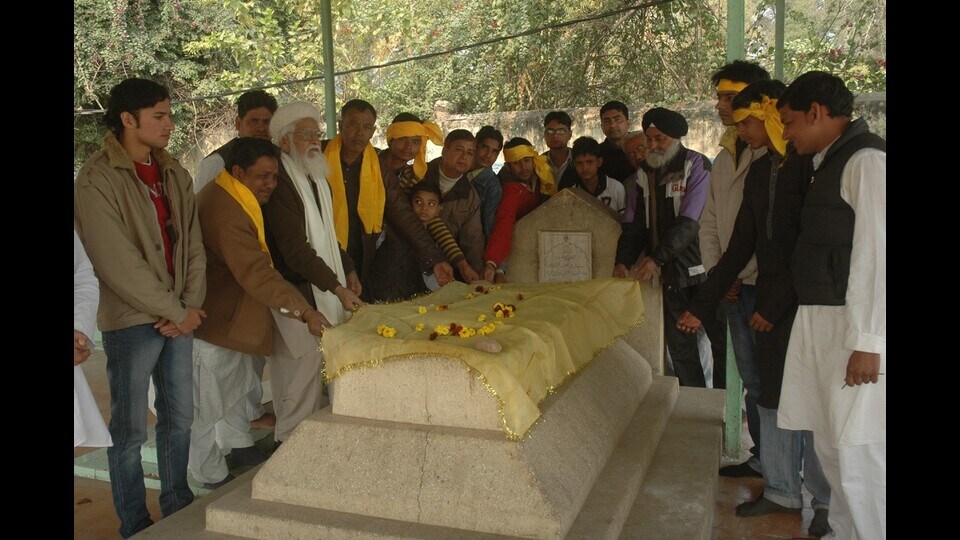
His charm and popularity transcended all lines of caste, creed and community and in 1930, when the Taj city was torn by riots, both Hindus and Muslims gathered at his ‘mazar’ on Basant Panchami to broker peace and interestingly, this meeting succeeded in ending communal violence in the city .
The tradition continues till today and citizens gather at the ‘mazar’ of poet in Tajganj area on Basant Panc+hami, to pay tributes to him and pray for communal harmony.
Born in 1735 in Delhi, Nazeer came to Agra and lived in Noori Darwaza locality known for petha making. He was known as ‘Wali Mohammad’ initially but due to attachment with the city , he became popular as Nazeer Akbarabadi as the city of Agra was then known as ‘Akbarabad’.
Till he breathed his last, Nazeer lived and loved the city despite not being well off. Religion failed to restrain his pen and what he wrote on Hindu or Muslim festivals and occasions including Holi, Diwali, Shab-e- Barat, as well as the mela (fair) of Agra is popular till date.
His admirers say that once driven by paucity of money, Nazeer Akbarabadi decided to move to Lucknow, being assured a livelihood, but he returned to Agra from Chalesar town as he was not able to see Taj Mahal beyond that point.
To prove his attachment with Agra, Nazeer Akbarabadi wrote: ‘ashiq kaho aseer kaho, Agra ka hai, mulla kaho dabeer kaho, Agra ka hai, muflis kaho faqeer kaho, Agra ka hai, shayar kaho Nazeer kaho, Agra ka hai’. Nazeer Akbarabadi was buried in Tajganj and his mazar is in Malko Gali area where there used to be a fair every year and the Agra civic body played host on Basant Panchami every year.
Equally respected by Hindus and Muslims, Nazeer stood for religious tolerance and served to restore peace in the city he loved even after his demise.
In 1930, there was communal violence in Agra. Those working for restoration of peace gathered and planned to take out a peace procession, as per Amir Ahmed, the former general secretary of ‘Bazm-e-Nazeer’ - an organisation formed in memory of the poet .
“The Agra residents, in turbulent times, gathered at the ‘mazar’ of Nazeer Akbarabadi in Tajganj area and walked down the localities dominated by both Hindus and Muslims and successfully brought an end to communal hatred,” Amir Ahmed said.
‘Since then, people gather at the mazar of Nazeer Akbarabadi on Basant Panchami and pray for communal harmony,” he said .
‘Nazeer was relevant in those days but is more relevant now because he stood for communal harmony, brotherhood and wrote on all that he came across as a common man. Even today, Agraites proudly claim they are residents of a city linked with the likes of Mirza Ghalib (who was born in Agra but shifted to Delhi) and Nazeer Akbarabadi who came from Delhi but died here,” said Amir Ahmed.
In 1954, celebrated theatre activist Habib Tanveer wrote and directed the play ‘Agra Bazar’ based on Nazeer Akbarabadi and his verses. The play was staged in market places besides theaters because it was based on Nazeer Akbarabadi, also known as ‘Jan-Kavi’ (poet of the masses).