
 E-Paper



Presiding officers call for minimum of 30 sittings a year
In his valedictory address, chief minister Yogi Adityanath welcomes the resolution, assures his government’s full cooperation


The 86th All India Presiding Officers Conference that concluded here on Wednesday gave a call “to create a consensus among all political parties” to increase the number of sittings of state legislative bodies to a minimum of 30 in a year to constructively utilise the time and resources for legislative business, strengthen parliamentary functioning and democratic accountability.
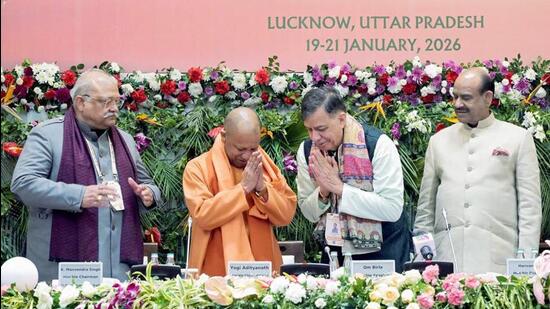
Lok Sabha speaker Om Birla, who was speaking to the media after the conclusion of the conference, said all the states have agreed with the resolution to make efforts to have at least 30 sittings in a year. This issue was reflected in one of the six resolutions adopted at the conference. A resolution to hold 60 sittings was adopted earlier too, he said.
“Efforts would be made to create an atmosphere to hold a minimum number of 30 sittings. Such a resolution, however, may not be binding,” he said.
On the first day of the conference on Monday, Birla, UP governor Anandiben Patel and Leader of Opposition in UP Vidhan Sabha Mata Prasad Pandey had expressed concern over shortening legislature sessions and suggested sessions longer enough to enable legislators to raise and debate issues.
Birla also said delegates from 36 presiding officers participated in the conference, adding that only the presiding officers from Manipur (under President’s rule) and the states approaching assembly elections could not attend the conference.
According to the resolution no. 2 adopted at the conference, increasing the number of sittings would help curb legislative pendency, improve the quality of discussions, enhance the role of elected representatives and reinforce public trust in democratic institutions.
“We, presiding officers, resolve to create consensus among all political parties to increase the number of sittings of our state legislative bodies to a minimum thirty (30) sittings in a year and to constructively utilise the time and resources for legislative business so that our democratic institutions are more accountable to the people,” the resolution said.
Chief minister Yogi Adityanath has welcomed this resolution, assuring his government’s full cooperation.
“The state legislature sessions must last for at least 30 days in a year. I welcome the resolution in this regard and assured full cooperation,” he said in his valedictory address.
The conference adopted five additional resolutions forming a comprehensive framework for legislative reform.
The opening resolution aligned all legislative bodies with India’s Viksit Bharat 2047 vision, with presiding officers pledging to conduct legislative business in a manner that contributes to achieving the national goal of becoming a developed nation by 2047.
Technology integration emerged as a key theme in the third resolution, emphasising the continuous use of digital tools to improve legislative processes and build effective connections between citizens and their representatives for meaningful participatory governance.
The fourth resolution reinforced the commitment to providing exemplary leadership to all participatory governance institutions, deepening and strengthening India’s democratic ethos.
The conference also focused on capacity building, with the fifth resolution committing to support parliamentarians and legislators in efficiently using digital technology while strengthening research support for more effective participation in legislative debates and discussions.
In a pioneering move, the sixth resolution called for creating a National Legislative Index to benchmark legislative performance using objective parameters. This system aims to foster healthy competition among legislative bodies while serving public interest with greater accountability.


