
 E-Paper



Push for solid waste management, roads in Lucknow Municipal Corporation’s ₹4,692.71-crore budget
Lucknow Municipal Corporation plans to strengthen door-to-door garbage collection, focus on development, develop model zones in all 110 wards

 Prefer HTon Google


The Lucknow Municipal Corporation on Sunday presented a ₹4,692.71-crore budget for the financial year 2026-27, focusing on solid waste management, road infrastructure, revenue augmentation and civic reforms, while proposing no new taxes or increase in existing levies.
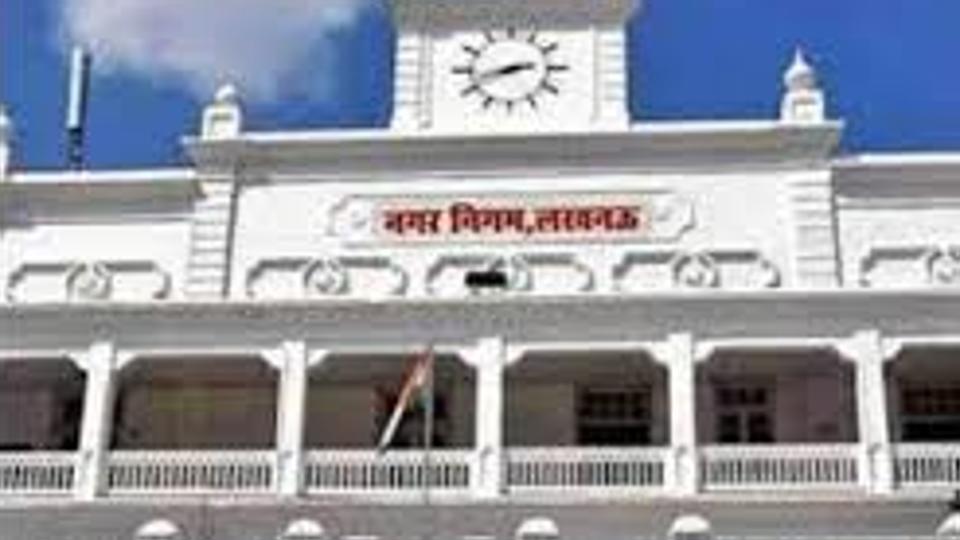
Mayor Sushma Kharkwal chaired the executive committee meeting at the civic headquarters and municipal commissioner Gaurav Kumar placed the budget before the House. Executive members and senior officials attended the meeting and discussed the proposals in detail.
The mayor announced that the civic body would present next year’s budget in its upcoming new office building.
₹300-crore allocation for solid waste management
The municipal corporation allocated nearly ₹300 crore for solid waste management, marking the highest sectoral allocation in the budget.
Officials said the civic body will strengthen door-to-door garbage collection, expand segregation at source, and improve scientific disposal of waste. The corporation plans to upgrade logistics, deploy additional machinery and streamline monitoring mechanisms to enhance cleanliness standards across the city.
The administration expects the allocation to address persistent complaints about irregular garbage lifting and to improve overall sanitation indicators.
₹271 crore for roads; limited outlay for drain cleaning
The budget earmarks ₹271 crore for road construction and repairs. The civic body said it will use the funds to ensure pothole-free roads, improve traffic flow and complete pending road projects in different zones.
However, the corporation allocated only ₹15 crore for drain cleaning despite recurring monsoon waterlogging in several low-lying areas.
Parks, lighting and civic amenities
The budget allocates ₹42 crore for park maintenance and ₹6 crore for painting and beautification of parks. The civic body plans to improve green spaces and public recreational facilities.
For lighting infrastructure, the corporation earmarked ₹16 crore for installation and strengthening of streetlight systems and ₹6 crore for repairs. It also kept ₹6.5 crore for procurement of lighting equipment and related materials.
The budget provides ₹5 crore for building repairs and ₹34 crore for new construction works under various civic departments.
Housing and infrastructure
The corporation allocated ₹40 crore for the multi-storey Aahna Enclave housing scheme. Officials said the project aims to provide structured residential development and generate revenue for the civic body.
Under the infrastructure fund, the corporation earmarked ₹180 crore for development works across wards. The administration plans to utilise the amount for roads, drains, community facilities and other essential civic projects.
The corporation also increased the allocation for model vending zones from ₹10 crore to ₹15 crore. It reduced the monthly rent for vendors from ₹5,000 to ₹3,000 to provide relief to small traders and encourage formalisation of street vending.
PPP model for vacant land
The mayor directed officials to conduct a survey of all vacant land owned by the corporation and prepare a list for development under the Public-Private Partnership (PPP) model.
She asked the municipal commissioner to form a special team comprising officials from departments concerned to prepare a comprehensive proposal outlining land use, projected revenue and development strategy.
The mayor said the corporation will review the progress every Saturday to ensure time-bound implementation. She also instructed officials to explore the development of banquet halls on vacant plots to create regular revenue streams.
Crackdown on illegal hoardings
The mayor ordered officials to remove all illegal hoardings within one week. She said unauthorised advertisements not only cause revenue loss but also pose safety risks and damage the city’s aesthetics.
She directed agencies holding contracts for unipoles, bus shelters and hoardings to clear pending licence fees within two days. She warned that the corporation will remove structures immediately if agencies fail to comply. Officials will launch a recovery drive to plug revenue leakages.
Model vending zones in all 110 wards
The corporation decided to develop model vending zones in all 110 wards. The mayor directed officials to identify suitable land parcels by March 30 and issue tenders in April. She set a three-month deadline for completion.
The move aims to provide organised spaces for street vendors and reduce encroachment on roads.
Boundary walls for cremation grounds;
municipal schools to be renovated
The mayor instructed officials to construct boundary walls for all cremation grounds on priority.
She also directed the comprehensive renovation of eight municipal schools, including infrastructure repairs, smart classrooms, improved toilets and better furniture. The corporation will build a new school in Kanha Upvan and construct 40 new anganwadi centres.
Additionally, the civic body will establish a modern library and digital learning centre to support students preparing for competitive examinations.
Tax rebates to encourage timely payment
To boost revenue collection, the corporation announced rebates on house tax and one-time user charges. Citizens who pay between April 1 and April 30, 2026, will receive up to 10% rebate on online payments and 8% on offline payments.
The rebate will gradually be reduced until June 30. The corporation will also offer a 10% concession on one-time user charge payments.
Congress corporator Mukesh Singh Chauhan criticised the LMC’s 2026–27 budget, calling it directionless and disappointing. He said the budget fails to increase allocations for development works and introduces no new schemes. He added that residents expected a clear roadmap for the city’s growth.
Civic body outlines its financial fundamentals
In its budget for 2026-27, LMC projected total income of ₹3,293.35 crore and total expenditure of ₹3,292.93 crore under the primary budget head, maintaining a near-balanced framework.
Under the revenue head, the civic body estimated income of ₹2,278.35 crore. This income will come mainly from house tax, water tax, advertisement fees, licence fees and other municipal levies. The corporation proposed revenue expenditure of ₹2,277.93 crore to meet recurring obligations such as salaries, pensions, road repairs, drain construction, fuel expenses, park maintenance and operation of gaushalas.
Under the capital head, the corporation earmarked ₹981 crore, which includes grants from the Centre and the state government, Finance Commission allocations and funds under major urban schemes. The civic body also kept ₹34 crore under the suspense head.
After adding an opening balance of ₹1,399.36 crore, the municipal corporation estimated the gross receipts at ₹4,692.71 crore. After income-expenditure adjustments, it projected a closing balance of ₹1,399.77 crore for the end of 2026–27.
₹405 crore to clear old liabilities
The corporation set aside ₹405 crore to clear pending payments related to old projects. Officials said the allocation will help settle dues of contractors and executing agencies and prevent delays in ongoing development works.
In a key revision, the corporation reduced the allocation for payments to executing agencies from ₹130 crore in the revised estimate to ₹100 crore in the new budget.
Jalkal department proposes ₹487 crore budget
The water works (Jalkal) department presented a separate budget proposal of ₹487 crore for 2026-27. The department projected ₹366.93 crore under the revenue head and ₹120.30 crore under the capital head.
The department manages drinking water supply and sewer systems in the city. Officials said they will strengthen online billing, improve recovery systems and modernise water infrastructure.
The budget includes ₹13 crore for water pipeline shifting to ensure timely execution of road projects. The mayor directed the department to complete pipeline relocation and road restoration simultaneously to avoid repeated digging.


