
 E-Paper



Raise human rights issue of Bangladesh globally: Akhilesh to Centre
Akhilesh Yadav urges the Centre to address Bangladesh’s human rights issues at the international level, highlighting its impact on India's security and foreign policy.

 Prefer HTon Google


Samajwadi Party (SP) national president Akhilesh Yadav on Monday talked about the majority and minority populations of Bangladesh and asked the Centre to raise it at the international level for the protection of human rights and underlined that “it is also a sensitive matter for India’s defence and internal security”.
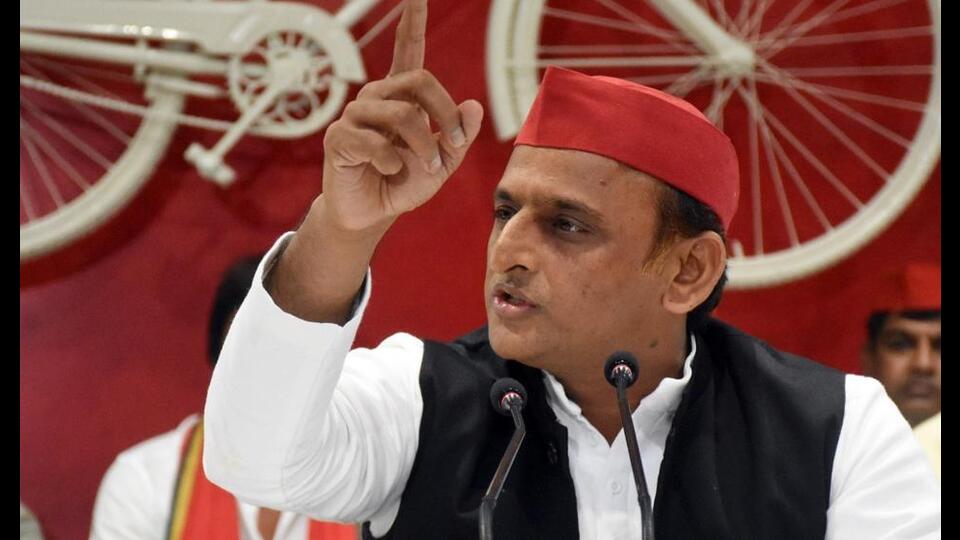
Hours before this statement, Akhilesh also gave an advice to the Centre on “foreign policy”.In a post in Hindi on X, he said: “None should be the victim of violence--be it the majority of Bangladesh or the Hindu, Sikh, Buddhist or any other religious minority. The Government of India must raise the issue emphatically at the international level for the protection of human rights. It also is a sensitive matter for India’s defence and internal security.”
Akhilesh’s statement came in the backdrop of the widespread anti-government protests in Bangladesh over a quota system in jobs leading to Sheikh Hasina’s resignation as the PM and fleeing the country.
Hundreds of people have died due to the protests in the violence-hit country. In another post earlier in the day, Akhilesh gave “foreign policy” advice to the Centre saying that any country using the conditions in another to fulfil its political designs within its borders weakens itself--both internally and externally.
While in the second post, Akhilesh directly mentioned Bangladesh and the Government of India, he did not mention so in the “foreign policy” post and hints towards the attacks on Hindus in Bangladesh being used by a section in India for political pitch.
In the first post, he also said while interference in another country’s affairs is not desirable, remaining a mute spectator when a neighbour is facing turmoil and violence is a failure of foreign policy.
“World history is witness that in different countries, violent mass revolutions, military coups, anti-government movements have been taking place for various reasons--right or wrong,” the SP chief wrote.
“In such a situation, only that country has been revived whose society, even in those turbulent times of powerlessness, has protected the lives, property and honour of its citizens by considering and protecting everyone equally without discriminating based on birth, religion, ideology, majority or minority of the population or any other political animosity or negative, constricted thinking,” he said.
“A thing to be specially highlighted is that history teaches that the power which uses the political conditions of another country to fulfil its political designs within its own country, weakens the country at both internal and external levels.”
He asked the Centre to activate its “mute foreign policy... collaborate with the global community and find meaningful solutions to the problems in a country with which India is culturally related”.
“The government which remains a mute spectator in such a situation should believe that it is the failure of its foreign policy that the conditions in the countries adjacent to it in all directions are neither normal nor favourable for it. This means that from the geopolitical point of view, there has been a big mistake in its foreign policy,” the SP chief said.
“Peace can be brought to the various troubled regions of the world only by binding a large geographical area with the thread of cultural neutrality, mutual understanding and brotherhood,” he said.


