
 E-Paper



‘Revitalising the lifeline’: Experts discuss roadmap to clean Gomti
Gomti’s pollution linked not just to environmental degradation, but also to public health, livelihoods, biodiversity and the future of coming generations, says STC chief executive officer


LUCKNOW The State Transformation Commission (STC), Uttar Pradesh, on Friday organised a state-level workshop titled, ‘Revitalising the Lifeline: Clean Gomti 2026’ to prepare a long-term and scientific roadmap for restoring the river. The event brought together policymakers, administrators, environmentalists, financial institutions and technical experts to deliberate on policy, funding and technology-driven solutions.
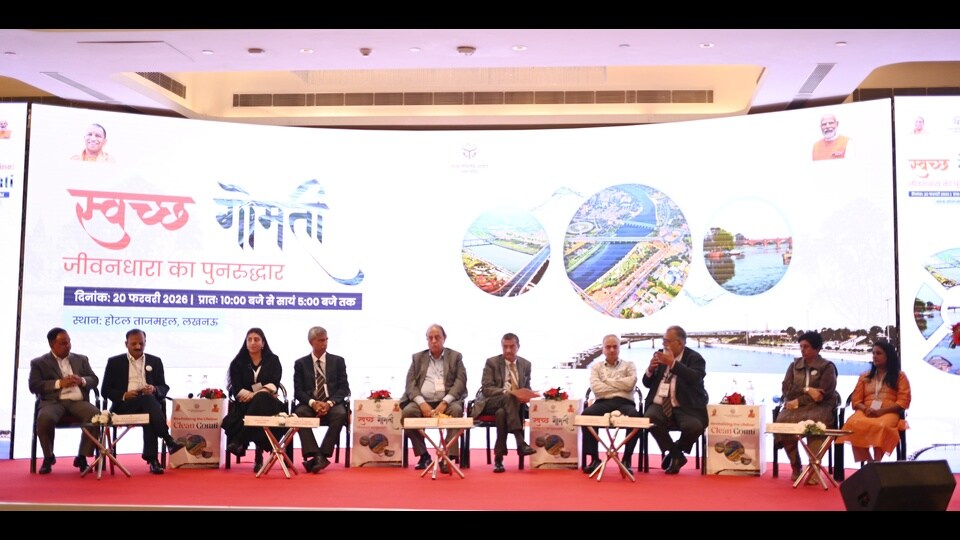
STC chief executive officer, Manoj Kumar Singh, said the initiative aims to build a coordinated and time-bound action plan under the guidance of the chief minister. He stressed that the Gomti’s pollution is linked not just to environmental degradation, but also to public health, livelihoods, biodiversity and the future of coming generations.
In the opening technical session, experts presented an assessment of the river’s present condition, highlighting low water flow, silt deposition, structural changes in the riverbed, encroachments and the direct discharge of untreated sewage through stormwater drains.
Officials noted that in Lucknow, mixing of sewage with rainwater drains remains one of the biggest contributors to pollution.
Environmentalist Rajendra Singh said cleaning a river requires sustained effort and public involvement, adding that infrastructure projects alone cannot restore ecological balance.
Raman Kant emphasised that effective sewage treatment is critical, stating that a large portion of pollution can be controlled if treatment plants function efficiently.
Financial experts discussed resource mobilisation through state and central schemes, CSR funding and public-private partnerships.
In his address, lieutenant general Anindya Sengupta, GOC-in-C, Central Command, highlighted the importance of military-civil coordination in environmental restoration. Referring to the Territorial Army’s ecological task forces, he said structured and disciplined ground efforts can significantly aid river rejuvenation and landscape restoration.
Participants, including representatives from the World Bank and other global agencies, underlined the need for an integrated institutional framework to ensure coordination among departments such as urban development, pollution control and panchayati raj.
The workshop concluded with the consensus that while government intervention is essential, behavioural change and citizen participation will ultimately determine whether the Clean Gomti 2026 mission succeeds in reviving Lucknow’s lifeline.


