E-Paper



BJP fields 8 candidates, SP 2 for RS polls in Uttar Pradesh; all set to sail through
This ensures all Upper House seats will be filled without contest, as the BJP showcases organizational strength ahead of upcoming Assembly elections.

 Prefer HTon Google


Turning the final day of Rajya Sabha nominations into a massive display of organisational strength, eight Bharatiya Janata Party (BJP) candidates filed their papers at the Vidhan Bhawan on Tuesday. With the opposition Samajwadi Party (SP) opting to field only two candidates, all 10 Upper House seats from Uttar Pradesh are now poised to be filled without a contest.
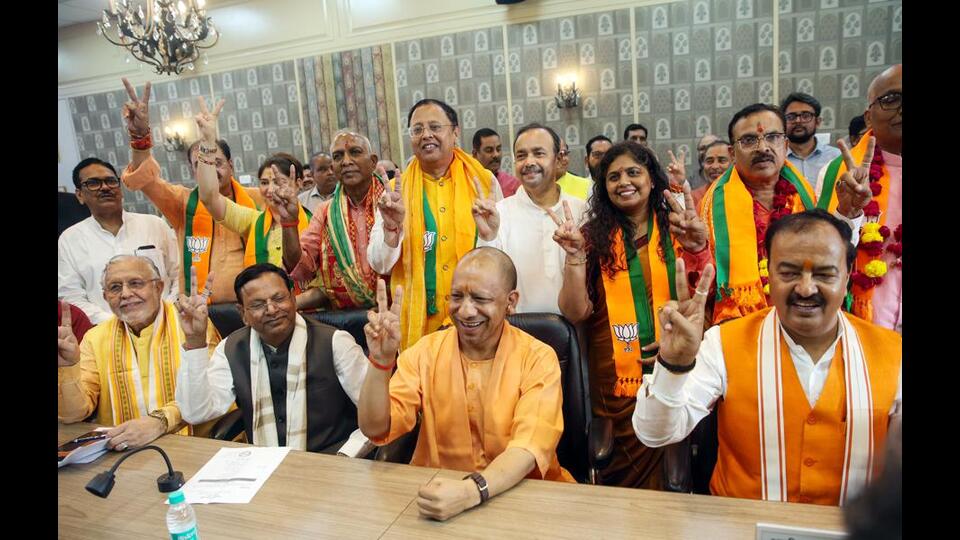
Chief minister Yogi Adityanath, deputy chief ministers Keshav Prasad Maurya and Brajesh Pathak and state BJP president Pankaj Chaudhary accompanied the nominees to the assembly. Outside the BJP headquarters, a heavy convergence of supporters, SUVs and party workers playing traditional ‘dhols’ choked traffic along the Vidhan Sabha Marg for hours, setting an aggressive political tone ahead of the upcoming Assembly elections.
The SP had been considering fielding a third candidate and had completed preparations for the move. However, the party decided against it on Tuesday morning after assessing the numbers and the possibility of cross-voting.
Also Read | Those who fight for country do not fear arrest: Akhilesh
In a post on X on Tuesday, SP president Akhilesh Yadav stated: “Now our eyes are not on three but on 403 seats,” signalling the party’s focus on the upcoming Uttar Pradesh assembly elections.
The eight BJP candidates who filed their nominations were Dharampal Singh, Radhakant Ojha, Prakash Pal, Vidyasagar Sonkar, Gopi Krishna Pandey, Priyanka Singh Rawat, Ram Pratap Singh Chauhan and Shruti Gangwar.
After the nominations, deputy CM Keshav Prasad Maurya said all eight BJP candidates would win, whether the SP fielded a third candidate or not. He also described the BJP’s social composition as a “Triveni” of forward, backward and Scheduled Castes.
Maurya also attacked Akhilesh Yadav’s 403 remark, reminding that he talked of 403 in 2022 but ended up with 111 seats.
Deputy CM Brajesh Pathak said: “The writing on the wall is clear. The SP has conceded defeat for 2027 polls.”
Speaking to different sections of media, BJP Rajya Sabha candidates expressed gratitude to the leadership for picking them and resolved to work hard to strengthen the party.
Also Read | Samajwadi Party drops plan to field third candidate in UP Rajya Sabha polls, BJP to win 8 of the 10 seats
The candidates first reached the BJP state headquarters in the morning, where a large number of party workers and supporters gathered to welcome them. Supporters were seen raising slogans in their favour, playing ‘dhols’ and showering them with flowers and garlands.
The BJP office area, including the main Vidhan Sabha Marg road, was virtually choked with party supporters with SUVs turning the nomination exercise into a show of organisational strength ahead of the Assembly polls.
Filing of nomination papers for Rajya Sabha polls ended at 3 pm on Tuesday, with the BJP fielding eight candidates from Uttar Pradesh and the SP two, all of whom are expected to be elected unopposed.
Now, scrutiny of papers will be held on October 7, while candidates can withdraw their names till October 9. Polling, if required, will be held on October 16.
Why SP did not field a 3rd candidate
Under the single transferable vote system used for Rajya Sabha elections, a candidate requires 37 first-preference votes based on the current effective strength of the UP assembly.
The BJP-led NDA has the numbers to secure eight seats, while the SP, with Congress support, has enough legislators to win two. A third SP candidate would have required votes from outside the SP-Congress camp.
That made cross-voting central to the calculations. While the possibility of NDA legislators supporting an SP candidate could not be ruled out, the open-ballot system meant that such a move would be visible to party representatives. With the 2027 assembly polls approaching, the SP ultimately chose not to risk a direct numbers battle in the Upper House.