
 E-Paper



Shringar Gauri case: Allahabad high court reserves judgment on masjid committee’s civil revision petition
The Varanasi district judge had on September 12 dismissed the plea of AIMC filed under Order 7 Rule 11 of Civil Procedure Code (CPC), challenging the maintainability of the suit filed by the five Hindu plaintiffs.


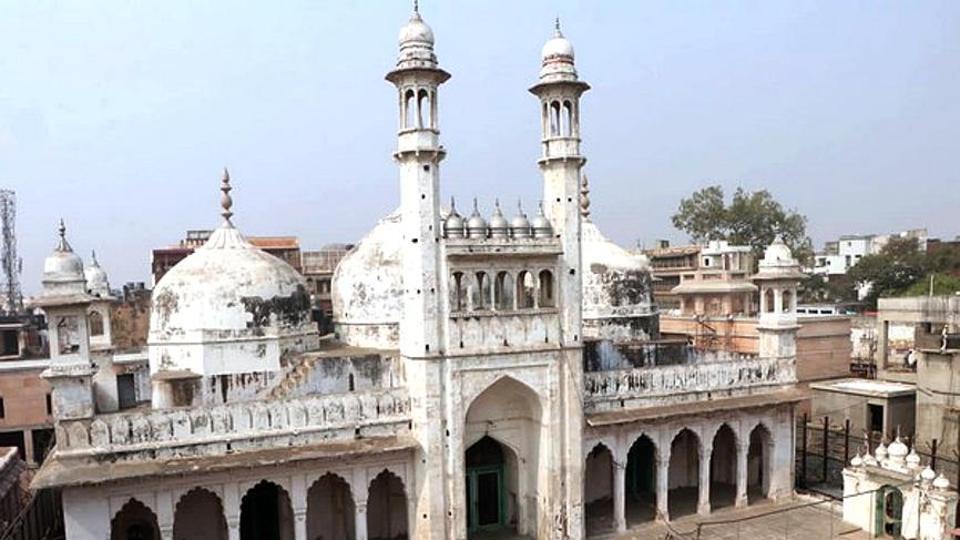
The Allahabad high court on Friday reserved its judgment on a civil revision petition filed by the Anjuman Intezamia Masjid Committee (AIMC) that has challenged a Varanasi court order turning down its objections to the maintainability of the suit filed by five Hindu women seeking permission to regularly worship Shringar Gauri and other deities in Varanasi’s Gyanvapi mosque compound.
Justice JJ Munir passed this order after hearing the counsel for the rival sides at length.
On Friday, the counsel for the petitioner, senior advocate SFA Naqvi, contended before the high court that the claim of the Hindu side that the devotees were restrained from worshipping Shringar Gauri and other deities on the outer wall of Gyanvapi in 1993 is an artificial claim and an example of clever drafting. According to him, no order was passed by the then state government in writing in 1993.
According to him, the aforesaid claim has been made only to avoid the application of the Places of Worship Act, 1991 (Act of 1991), which bars the filing of a suit for conversion of any religious place as existed on August 15, 1947.
According to Naqvi, the present suit is barred by the Act of 1991, Limitation Act and the Waqf Act.
In this backdrop, he pointed out that even if the claim of the Hindu side is accepted, why did they not file a suit in 1993 when they were so restrained or thereafter. Hence, this suit filed before the Varanasi court is barred under the Limitation Act, which bars filing of the suit for declaration after three years of an incident, he said.
His other plea was that in case of Deen Mohammad, the place where the Gyanvapi is located is a waqf property, hence in case of any grievance, the claim should be made before the Waqf Tribunal.
Earlier, at one stage the counsel representing the Hindu side had taken the plea that old maps showed the existence of Hindu deities on Gyanvapi mosque and the Hindu devotees were regularly worshipping Shringar Gauri and other deities on the outer wall of Gyanvapi since long and it was only in 1993 that the then government restrained regular worship and they are permitted to worship only once a month. Hence, the Act of 1991 is not applicable to them, the counsel had said. Further, they claimed that the place in dispute is not a waqf property.
Earlier, the petitioner AIMC, which manages the Gyanvapi mosque, had opposed the claim of the Hindu side on the plea that the suit before the court below is barred under the Places of Worship Act, 1991, which provides that no suit can be filed seeking conversion of any religious place as existed on August 15, 1947.
The Varanasi district judge had on September 12 dismissed the plea of AIMC filed under Order 7 Rule 11 of Civil Procedure Code (CPC), challenging the maintainability of the suit filed by the five Hindu plaintiffs.
While rejecting the AIMC’s plea, district judge Varanasi had observed that the suit of the plaintiffs (five Hindu women) is not barred by the Places of Worship (Special Provisions) Act, 1991, the Waqf Act 1995, and the U.P. Shri Kashi Vishwanath Temple Act, 1983 as was being claimed by AIMC.


