E-Paper



Uttar Pradesh government to promote flower farming with NBRI
The decision was taken at a meeting chaired by chief secretary Durga Shankar Mishra here after CSIR-NBRI director SK Barik spoke on the need and scope of promoting floriculture in UP. A director from the NBRI sought the state government’s support for its efforts.

 Prefer HTon Google


The Uttar Pradesh government has agreed to join hands with the CSIR-National Botanical Research Institute (NBRI) to prepare a roadmap for the promotion of flower farming in the state under the National Floriculture Mission launched by the Centre more than two years ago, people aware of the development said.
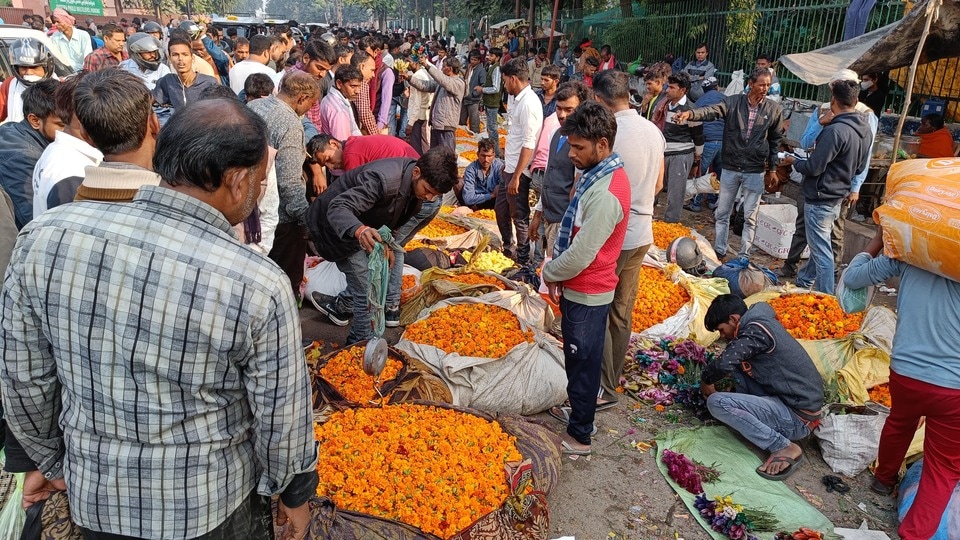
A decision in this regard, according to them, was taken in a meeting chaired by chief secretary Durga Shankar Mishra here after CSIR-NBRI director SK Barik made a presentation on the need and scope for the promotion of floriculture in UP. The NBRI director sought the state government’s support in its endeavours.
The CSIR-NBRI is the nodal body appointed by the Centre for the promotion of flower farming across the country.
“We, in association with the NBRI, will soon prepare a detailed project report (DPR) for the promotion of floriculture in the state and provide all the support the NBRI expects from us,” horticulture department director RK Tomar said when contacted.
He said currently the state government had no separate scheme for floriculture promotion.
The government may think of conversion of some ongoing schemes to promote floriculture, Tomar said.
The CSIR Floriculture Mission, founded in March 2021, aims to focus on commercial floral crops and the cultivation of flowers for honey bee rearing and wild ornamental plants to help farmers and industry prepare themselves to meet the export requirements.
“CSIR-Floriculture mission is a farm-based income generating enterprise having high potential to earn foreign exchange and generate employment for rural and urban youths,” NBRI director SK Barik said.
“There is an immense scope for the promotion of floriculture in UP which imports most of flowers to meet the domestic need from other states,” he said.
“For example, Varanasi is the main hub of flower markets but 30-40% of the city’s flower requirement is met by Kolkata,” he added.
The CSIR-NBRI, he said, needed the state government’s support for setting up cold chains, creating marketing facilities, reaching out to farmers even as the NBRI could give technical support and give demos.
“Work to set up two distillation units, one each in Banthara in Lucknow and in Kannauj under the Floriculture Mission, is already underway,” Barik said.
According to Barik’s presentation in the meeting with the chief secretary, India has only 0.61% contribution to the global floral trade. Indian floriculture industry comprises flowers such as rose, tuberose, anthuriums, carnations, marigold with cultivation being carried both in open fields and state-of-the-art poly and greenhouses.
Flowers, according to it, are now commercially cultivated in Andhra Pradesh, Tamil Nadu and Madhya Pradesh. These states have gone ahead of other flower producing states like Karnataka, West Bengal, Mizoram, Gujarat, Odisha, Jharkhand, Haryana, Assam and Chhattisgarh.
The presentation said that flower import to India in 2018 was ₹200 crore, and of ₹800 for the import of fragrance for odoriferous preparations, including agarbatti (incense sticks), the same year. Import of essential oils and resnoids in 2019 was to the tune of ₹8,000 crore while the import of industrial enzyme stood at ₹1,000 crore.