
 E-Paper



Mixed response to new education policy, Sisodia welcomes move to rename MHRD as ministry of education
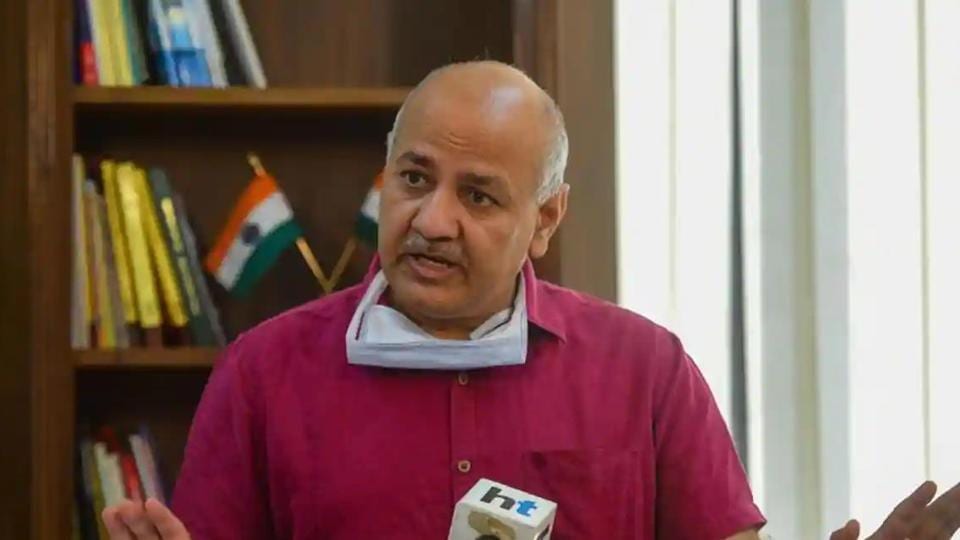
Delhi education minister Manish Sisodia, welcoming the Centre’s step to rename the Union HRD ministry as the ministry of education, said they will offer its opinion on Thursday.

 Prefer HTon Google


The reforms and policies announced under the National Education Policy (NEP) 2020 on Wednesday evoked mixed responses from the teaching community and educationists across the national capital while the Delhi government said it would study the changes in detail before offering its opinion, though it welcomed the step to rename the Union ministry of human resource development as the ministry of education.
The changes include increased focus on multidisciplinary courses, multilingual and digital learning, a revised curricular structure, reduced course load, and a pre-primary education curriculum.
Meeta Sengupta, an educationist, said she largely supports the NEP for its visionary and idealistic nature. “The revised policy challenges schools and teachers to step up to the future. However, in some areas, the policy hasn’t done enough,” she said. “While the multidisciplinary approach and multiple entry-exit points in higher education are a welcome step, more work could have been done with respect to class 10 and 12 board exams by allowing students multiple options. Increased attention towards foundational learning is also a good move,” she said.
“The focus on digital education, which comes amid a pandemic, also needs a robust implementation mechanism ensuring equity among all children,” Sengupta said, expressing concern over the usage of Artificial Intelligence to analyse inputs for the “holistic report card” proposed by the policy.
Delhi education minister Manish Sisodia, welcoming the Centre’s step to rename the Union HRD ministry as the ministry of education, said they will offer its opinion on Thursday, “National Education policy after so many years of wait is welcome step. But as I have said earlier, an education policy cannot be a compilation of all wishful thinking about education...Its important to say ‘what we’ll do’ but it’s more important to tell ‘how we’ll do that”.
“We are studying #NEP announced today in greater detail. Will express our opinions tomorrow...Edu. policy has to be the road map to fulfill those good wishes we already have about education.” he wrote on Twitter.
Earlier in the day, he said, “It is of utmost importance that education be about developing human beings rather than develop ‘human resources’. A much needed step in the right direction.”
Addressing privacy concerns, Jyoti Arora, principal of Mount Abu Public School in Rohini and governing body member of the Central Board of Secondary Education, said any new development will have its own challenges and authorities will work towards it.
“The policy seems to be progressive and it also promotes home language, Indian knowledge system, culture, and values. Focus on early childhood development is appreciable and the 5+3+3+4 schooling structure instead of the previous 10+2 system will ensure a strong base of early childhood care. Inclusion of 21st-century skills like coding for middle-school students and vocational courses is welcome since they are the need of the hour. However, the government must ensure that there is a standardised form of teaching and training across the nation,” she said.
Mary Jyotsna Minj, principal of a government school in Kondli, said, “Introducing vocational courses at an early stage will help students who may not perform well in subjects like Maths and Science and then get a compartment. Many of our students come with the idea of setting up a business to support their family and they often show a tendency of doing better in vocational subjects. An early introduction to these courses will help such students.”
In higher education, the major reforms include scrapping of MPhil course, the introduction of multiple entry-exit points in graduate courses, fees and charges to be fully disclosed, graded autonomy on the basis of performance, and multidisciplinary courses.
Jawaharlal Nehru University vice-chancellor Mamidala Jagadesh Kumar and Jamia Millia Islamia V-C Najma Akhtar called the new policy “a positive step forward” and “groundbreaking.”
The JNU students’ union, however, said the government used the pandemic to approve the objectionable policy. “Ever since the draft NEP was introduced last year, students across the country were on the warpath against it as it is another move in the neoliberal agenda to commercialise education,” it said in a statement.
The Delhi University Teachers’ Association also condemned the move to approve the policy amid a pandemic. “Our opposition to the draft NEP rested, among other things, on its proposal to dismember universities and hand over every higher educational institution to a Board of Governors...DUTA calls upon the government to desist from bulldozing changes and instead to engage in a dialogue with the academia,” DUTA president Rajib Ray said.


