
 E-Paper



13 heatwaves in Mumbai since 1977, over half of them since 2005
In Mumbai, days when the maximum temperature exceeds 37 degrees Celsius, or settles between 4.5 degrees Celsius to 6.4 degrees Celsius above normal, it is classified as a heatwave.


Mumbai: Based on an analysis of India Meteorological Department (IMD) data, the recently unveiled Mumbai Climate Action Plan (MCAP) shows that the city has experienced a total of 13 heatwaves since 1977. More than half of these (8) occurred in the last 15 years, in line with the rising annual temperatures in Mumbai. IMD data indicates that between 1973 and 2020, the city has grown warmer by 0.25 degrees Celsius each decade.
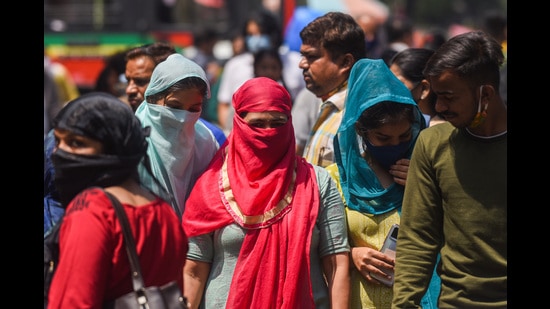
In Mumbai, days when the maximum temperature exceeds 37 degrees Celsius, or settles between 4.5 degrees Celsius to 6.4 degrees Celsius above normal, it is classified as a heatwave.
A severe, or extreme heatwave, occurs when the daytime maximum temperature settles at 6.5 degrees above normal or more. Though the MCAP does not provide the day-wise temperature readings, it notes that Mumbai saw heatwave events in 1977, 1981, 1985, 1989, 1995, 2005, 2009, 2013, 2014 and 2018. Severe heatwaves occurred in 2004, 2011, and now in March 2022.
In a first in 11 years, a ‘severe’ heatwave swept through the city on Monday with both IMD’s monitoring stations at Santacruz and Colaba recording significantly above normal temperatures during the day -- at 39.6 degrees Celsius and 39.4 degrees Celsius, respectively.
While the severity of the heatwave abated on Tuesday, the daytime temperatures remained above normal at both Santacruz and Colaba at 37.5 degrees Celsius and 34.8 degrees Celsius, respectively.
As per the IMD’s seven-day forecast for Mumbai, heatwave conditions will likely persist on Wednesday, March 16, after which there may be a brief respite from temperatures.The daytime maximum reading on March 21 is expected to be around 36 degrees Celsius at Santacruz, taken as representative of the Greater Mumbai region.
In fact, Mumbai’s average annual temperature has remained consistently above normal for the last 16 years, and data shows that the city is getting hotter. Between 1973 and 1998, the annual mean temperature of the city showed an average departure from normal of +0.004 degrees Celsius per year, which rose to +0.011 degrees Celsius per year between 1999 and 2008, and then further to +0.042 degrees Celsius/year between 2009 and 2020.
This shows that there has been a statistically significant shift in annual temperature, which is now consistently trending upward.
“One of the major projections of the recent IPCC sixth assessment report is that heat waves are going to rise, in Mumbai and across Maharashtra. Both urban and rural areas need to adapt to this. Increasing more air conditioning systems will contribute to higher greenhouse gas emissions, so must look at passive cooling technologies and scale up watershed management projects to protect from more heat waves in the near future,” said Dr Anjal Prakash, research director and adjunct associate professor at the Bharti Institute of Public Policy, Indian School of Business, and current author of IPCC’s 6th Assessment Report Working Group II.
According to projections by the American National Oceanic and Atmospheric Administration (NOAA), 60 percent of Mumbai’s year will comprise “high heat days” by 2040, with temperatures exceeding 32 degrees Celsius.
Moreover, Mumbai’s ‘Heat Index’ classification, which takes into consideration both air temperature and relative humidity to indicate how warm the human body feels, also shows a consistent increase in the number of ‘extreme caution’ days, when the Heat Index settles between 32.23 degrees Celsius and 39.45 degrees Celsius.
“Since the mid-nineties, a transition from caution to extreme caution events has been observed with over 200 days annually classified as extreme caution events,” the MCAP notes, stating that several factors, including urbanization and a warming trend observed in the post-monsoon months, could have triggered this transition.
“Any given day is more likely to be classified as extreme caution in 2020 compared to 1973, especially in the March-May and October-November period,” the MCAP notes.
While these larger annual trends are indicative of global warming, the MCAP has also identified more localised factors that may be influencing citizens’ exposure to heat, namely an increase in temperatures during the early mornings and late evenings, which are the coolest parts of the day.
“The overall air temperature trend highlights warming related to global climate change, whereas the trend of increase in late evening and night-time temperature points to a much more localized phenomenon associated with city-scale urbanization and development. The long-term trends of increasing night-time and evening temperatures correspond well with the concept of urban expansion, whereas the rise in post-monsoon and winter temperature trends point to the post-monsoon heat phenomenon,” the MCAP states, though the raw data has not been provided.
Heat stress is further exacerbated based on types of housing, availability of indoor light and ventilation, building materials, and extent of humidity. The interplay between these factors creates pockets of heat traps.
As the MCAP notes, “Poor communities living in poorly ventilated, dense housing types, with compromised access to essential services like affordable cooling options, remain most sensitive” to this phenomenon of heat stress.
M/East ward -- in Central Mumbai -- is the ward most vulnerable to heat stress, with over 40 percent of its population potentially exposed to a surface temperature greater than 35°C.
As per the MCAP, the BMC has devised an eight-year plan of action to deal with the growing risk of urban heat. The first step under this involves conducting “a comprehensive socio-economic vulnerability assessment at the ward level in response to reduction of heat-related risk” and implementing a “cooling plan” in vulnerable areas, which will include interventions like “cooling centres” and “strategic greening”.
Though the MCAP mentions that this is to be done by the year 2030, finer details have not yet been provided.
During the same time, the BMC has said it will mandate heat-resistant roof and wall materials in all new building structures, including in housing schemes for economically weaker sections, government offices and commercial buildings.
Stay updated with all the Breaking News and Latest News from Mumbai. Click here for comprehensive coverage of top Cities including Bengaluru, Delhi, Hyderabad, and more across India along with Stay informed on the latest happenings in World News.


