
 E-Paper



19th-century Bhoot Bangla, water treatment plant to get a facelift
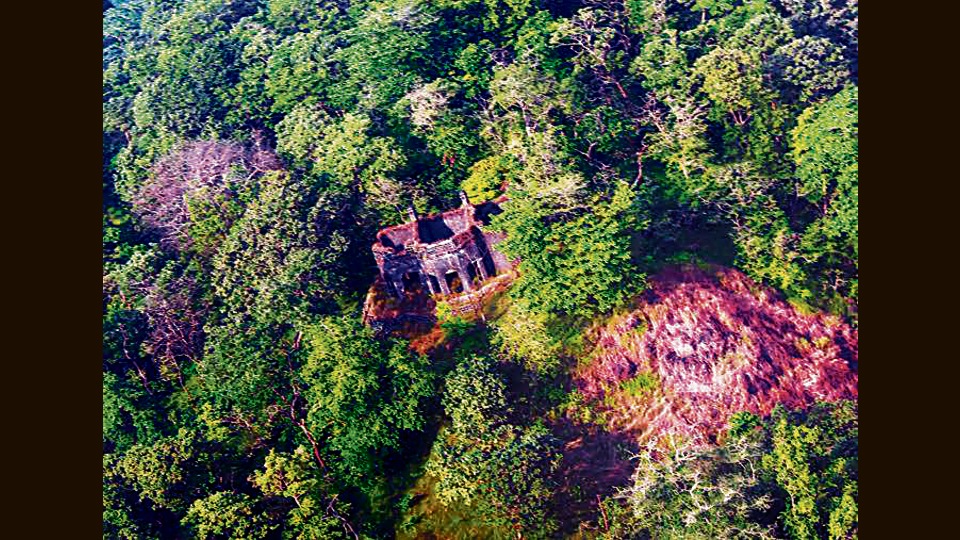
he Mumbai Heritage Conservation Committee (MHCC) has given a go-ahead to restore a deserted inspection bungalow – also officially known as Bhoot Bangla – constructed in 1860 and the water treatment plant at Tulsi lake constructed in 1879. Both structures are located in the core zone of the Sanjay Gandhi National Park

 Prefer HTon Google


Mumbai: The Mumbai Heritage Conservation Committee (MHCC) has given a go-ahead to restore a deserted inspection bungalow – also officially known as Bhoot Bangla – constructed in 1860 and the water treatment plant at Tulsi lake constructed in 1879. Both structures are located in the core zone of the Sanjay Gandhi National Park.
Tulsi lake was the second reservoir developed by the British. It had a direct connection with the Malabar hill area and water pipes passed through Senapati Bapat road (then called Tulsi Pipe road).
The project to restore both these sites was initiated by Praveen Pardeshi while he was the BMC commissioner.
Sanjay Adhav who works with the Heritage conservation cell of the BMC said, “We have got an in-principle okay from the MHCC and our additional commissioner. We will soon meet forest department officers for the final decision.’’
He added that restoration of the bungalow may cost over ₹1 crore.
“At present, it has just some walls. We will put roofs, doors, and windows and install solar panels,” said Adhav.
The bungalow was constructed by a British engineer called R Walton and it has a fireplace and a place to hitch horses. The bungalow and the water plant are structures protected under the heritage list of MHCC.
According to Adhav, there was a village called Tulsi before the dam was built at Tulsi and it was relocated by the British.
The bungalow overlooks three lakes of Tulsi, Vihar and Powai.
The restoration of the filtration plant will cost around ₹15 crores and the BMC plans to have a small museum inside the filtration plant.
A senior forest department official said that restoration of the bungalow can be permitted, but we will not allow any visitors as it is in the core zone of the SGNP which is a home to leopards, crocodiles, deer, sambar and many others.
Until 1991, visitors could access this place during day time, the official added. However, crimes like looting, rape, and murder increased in the core zone and there was an immense disturbance to wildlife.
The Bombay Natural History Society (BNHS) and some key environmentalists wrote to the then union minister of state for environment, Maneka Gandhi and in 1991, the forest department banned access to the core zone. Thereafter, visitors completely decreased.


