
 E-Paper



Aaditya Thackeray: Thermal power plants in Maharashtra to be audited for pollution control measures
This study is significant in light of statements made by Prime Minister Narendra Modi during the Conference of Parties (COP26) at Glasgow last year, to achieve net-zero by 2070 for the country

 Prefer HTon Google


Mumbai: Cabinet minister for environment and climate change, Aaditya Thackeray announced a slew of measures on Monday to ensure a “phasing down” of coal-fired power plants in the state including a comprehensive study, and to ensure that coal-based thermal power plants (TPP) comply with pollution control norms in the interim.
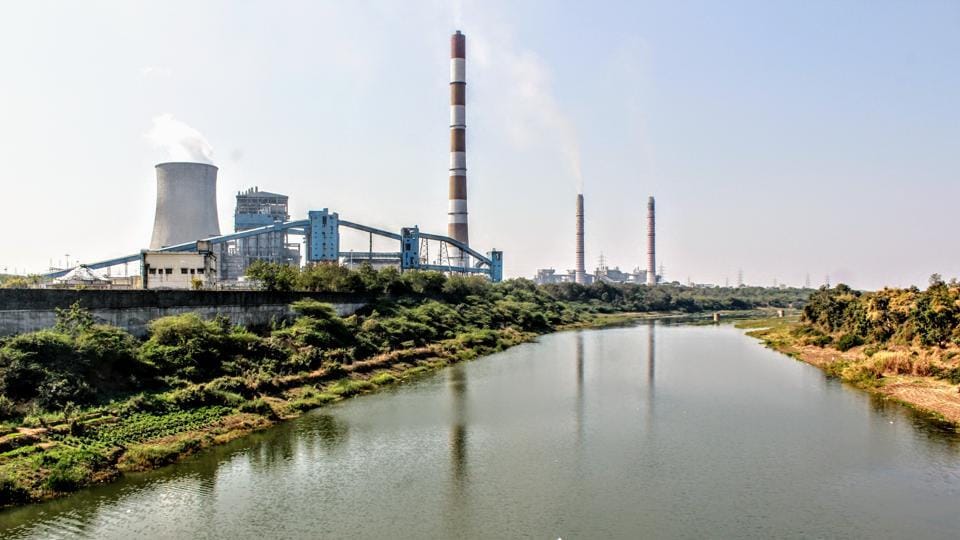
The announcement was made during Thackeray’s visit to the recently closed fly-ash pond at Nandgaon village near the Khaparkheda Thermal Power Station (KTPS) in Nagpur district.
This study is significant in light of statements made by Prime Minister Narendra Modi during the Conference of Parties (COP26) at Glasgow last year, to achieve net-zero by 2070 for the country.
Thackeray also met with communities in Nandgaon who have been adversely impacted by fly-ash pollution. “After receiving multiple complaints especially from women of Nandgaon and taking action, I decided to take stock of the ground situation. I have directed Nandgaon ash pond to be restored to its original state within the next 15 days. Nandgaon and even the Waregaon ash bunds will be permanently shut,” said Thackeray.
The announcement comes as a major relief for locals, whose health and livelihoods have been impacted by huge amounts of fly-ash (a toxic byproduct of coal combustion) being dumped in open spaces by the Koradi and Khaparkheda power plants, eventually entering their fields and water bodies.
Maharashtra will also be conducting a comprehensive study to determine how ageing and polluting coal-fired power plants can be phased down in a systematic manner.
“An audit of all power plants in Maharashtra for pollution control measures will be done. The power plants that are not meeting prescribed standards will face decisive action. A mitigation plan will be developed for this,” said Thackeray.
The state currently has an installed capacity of 13,602 MW of which coal-fired thermal power accounts for nearly 75% or 10,170 MW. State-owned thermal power stations include: Chandrapur, Koradi, Khaperkheda, Nashik, Parli, Bhusawal and Paras.
A thermal power station generates electricity by converting it from heat, which is used by households and industries. A fuel (primarily coal) is used to boil water in a pressurised vessel to produce steam, which is then used to drive a turbine that is connected to an alternator, a device which converts mechanical energy to electricity in the form of an alternating current. Thermal power can also be generated from other fuels, including natural gas, heating oil or biomass.
“I applaud the minister’s decision. But the Nandgaon ash bund often floods into our fields and community spaces. There is a lot of unemployment in the village because people whose farms are just outside the ash bund have been impacted,” said Sonali Manoj Varkhade, sarpanch, Nandgaon.
Thackeray also added that pollution control measures including installation of flue gas desulphurisation (FGD) for air pollution will be set up at all power plants across the state, starting with Koradi-Khaperkheda. “We will ensure 100% fly ash utilisation as per the centre’s norms. The fly ash will be used for infrastructure projects,” he said.
Leena Buddhe, founder of Centre for Sustainable Development, also supported the state government’s decision. CSD in November 2021 (along with environment groups Manthan Adhyayan Kendra and Asar) had published a report -- “Polluted power – How Koradi & Khaparkheda Thermal Power Stations are impacting the Environment” -- suggesting that all prior pollution-related harm be cleaned up under the supervision of a commission comprising local community and civil society members as well as independent experts.
The findings were presented to Thackeray last month. Out of the 21 villages surveyed in the area surrounding the two power plants, “a total of four villages reported health problems due to water being contaminated, either due to fly ash settling in water or due to other contamination of drinking water. At the same time, nine out of the 21 villages reported health problems that they attributed to air pollution due to fly ash, including difficulty in breathing (nine villages), respiratory diseases like bronchitis and asthma (five villages), frequent cough and cold and throat infection (four villages), and irritation in the eyes and eye infections (seven villages),” the report said.
Buddhe described the development as an “historic” example of environmental justice, seeing as no other minister has yet taken a strong stand against power plants. “The minister patiently heard the issues of the community. The land should now be restored and a detailed plan on the restoration should be chalked out by involving the villagers. We feel that the work has just begun and it’s a long way to go,” she said.


