
 E-Paper



CBI seeks Chandrakar’s custody to identify Chhattisgarh officials who received money
The CBI alleged that Chandrakar and associates secured the protection of police and administrative officials

 Prefer HTon Google


Custodial interrogation of Saurabh Chandrakar, the alleged mastermind of the ₹6,000-crore Mahadev online betting syndicate, is crucial to identify police and administrative officials in Chhattisgarh who allegedly received huge amounts as money to allow the illegal operations to continue, the Central Bureau of Investigation (CBI) told a special court.
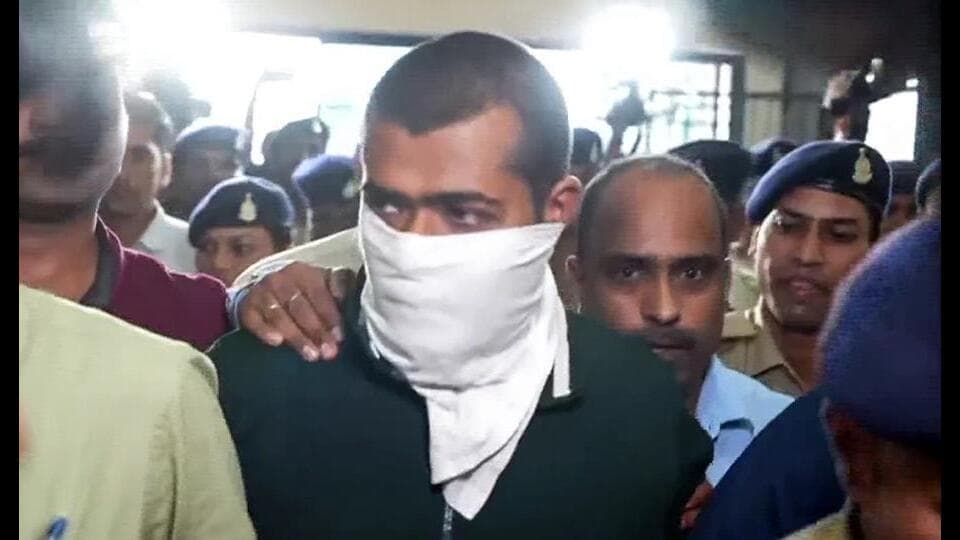
The CBI alleged that Chandrakar, other promoters and associates of Mahadev Book secured the protection of police and administrative officials and influential politicians by regularly paying them.
The special court in Raipur on Wednesday granted the CBI eight days of custody of Chandrakar, who was extradited from Oman on November 1. It permitted the agency to take him to Delhi for interrogation.
Deep Dive

The CBI said custodial questioning was necessary to identify other masterminds and beneficiaries of the alleged fraud, trace the channels through which the proceeds were collected, layered and transferred outside India, and identify assets created from the illegal earnings.
It sought Chandrakar’s interrogation to identify public servants in Chhattisgarh, who allegedly received or were receiving illegal financial benefits in return for allowing the betting syndicate to operate.
The CBI said hawala operators were used to arrange and distribute the alleged protection money. Police officers and employees were also allegedly engaged to channel these payments to police and administrative officials.
Investigations have indicated that Chandrakar, Ravi Uppal and their associates promoted the Mahadev Book app and ran online betting operations through an extensive network of panel and branch operators, the agency said.
The promoters allegedly retained 70-80% of the illegal earnings, while the remaining amount was distributed among panel operators. The CBI claimed that Chandrakar and other promoters were generating around ₹450 crore every month through online betting since the Covid-19 lockdown in 2020.
The accused allegedly arranged hundreds of bank accounts using forged documents to facilitate transactions involving the proceeds of crime. These accounts were operated on a commission basis, while betting proceeds were transferred by panel operators to Chandrakar and other promoters in the UAE through multiple bank accounts, the agency alleged.
A substantial portion of the illegal earnings was also allegedly spent on advertising betting websites and organising lavish annual events attended by celebrities. The agency claimed that celebrities were paid from the proceeds generated through online betting.
The CBI alleged that police and administrative officials and influential political persons misused their positions to obtain illegal financial benefits and subsequently acquired assets from such proceeds.
Chandrakar and other promoters operated the Mahadev Book syndicate from Dubai, which they referred to as their head office. Several youths from Chhattisgarh were allegedly employed as managers, supervisors and other staff to run the betting operations, the agency said.
According to the CBI, Chandrakar left India in 2022 to evade the process of law and deliberately remained abroad without joining the investigation.
Following his extradition from Oman, he was brought to Raipur in a private aircraft on Tuesday evening for production before the trial court.
The Enforcement Directorate (ED) has been separately investigating the alleged money laundering in the case, which came to light during the previous Congress government led by Bhupesh Baghel in Chhattisgarh.
After the BJP government came to power, the state’s Economic Offences Wing (EOW) registered an FIR in March 2024 on the basis of an ED report, invoking charges of criminal conspiracy, cheating and provisions of the Prevention of Corruption Act.
Baghel, Mahadev app promoters Ravi Uppal, Saurabh Chandrakar, Shubham Soni and Anil Kumar Agrawal, along with 14 others, were named as accused in the EOW FIR. Baghel termed the case against him politically motivated.
In August 2024, the state government transferred cases related to the alleged betting scam registered at various police stations, along with an EOW case, to the CBI.
The ED has estimated the proceeds of crime in the alleged scam at around ₹6,000 crore and attached several properties in India and abroad linked to the syndicate.
Chandrakar and Uppal are from Bhilai in Chhattisgarh’s Durg district. Uppal was arrested in the UAE, and India is pursuing his extradition, officials said.


