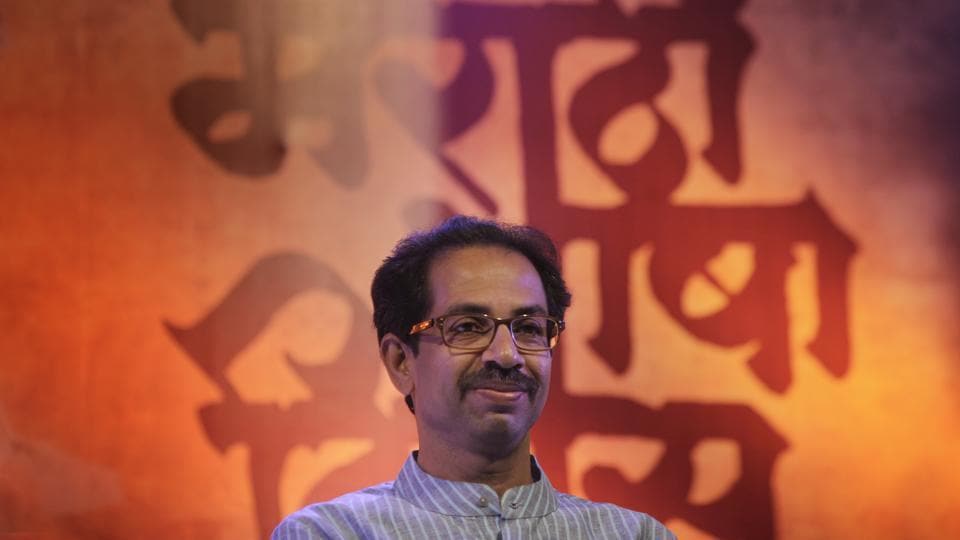
As Sena gears up to retain its bastion, the Marathi agenda takes centre-stage
The formation of Shiv Sena in 1966 was on the bedrock of safeguarding the interests of sons-of-the-soil and maintaining the pride of Maharashtra. This has continued now, even with its Hindutva agenda
Mumbai: In the last two weeks, the Maharashtra legislature cleared two bills making Marathi signboards in the Devnagari script compulsory for shops and establishments across the state and making Marathi mandatory for all official purposes in local bodies in the state. Besides the two bills, the Shiv Sena-led government has, since 2020, brought two other laws making Marathi the official language in administrative work in government offices. It also passed a bill making Marathi language a compulsory subject for classes 1 to 10, in all school boards.
Besides the two bills, the Shiv Sena-led government has, since 2020, brought two other laws making Marathi the official language in administrative work in government offices. (Kalpak Pathak/HT File Photo)
The push for the Marathi in the past two years by the Shiv Sena-led government is viewed as an attempt to consolidate the Marathi vote bank ahead of the Brihanmumbai Municipal Corporation (BMC) and other urban local body elections in Maharashtra, which are likely to be held in the next few months. Besides Mumbai, other neighbouring cities including Thane, Navi Mumbai, Kalyan-Dombivli, Vasai-Virar and some other municipalities in Mumbai Metropolitan Region (MMR) where the Marathi sentiment could be used by Sena.
Senior Sena leader Subhash Desai dismisses political calculations behind the decision by the Uddhav Thackeray led government. Desai, who is in the party since Sena founder late Bal Thackeray's time, holds the industries and Marathi language department portfolios, in the Uddhav Thackeray government, said that the decisions stem from the birth of Maharashtra and Sena in 1960 and 1966, respectively, adding that the Marathi language and Marathi manoos (folk) were inseparable from Maharashtra and Shiv Sena.
Marathi 'manoos' and nativist politics
Political analysts pointed out that the roots of nativist politics date back to the Samyukta Maharashtra Movement in 1955 — the movement demanding a separate state for Marathi-speaking people with Mumbai (then, Bombay) as its capital. Keshav Sitaram Thackeray, the father of Sena supremo Bal Thackeray, actively participated in the Samyukta Maharashtra Movement to make Maharashtra a state from Bombay Presidency.
Multicultural and multilingual societies along with the advent of migrants gave rise to nativist sentiment. Mumbai being a commercial and financial hub attracted migrants from different parts of India. The formation of Shiv Sena in 1966 was on the bedrock of safeguarding the interests of sons-of-the-soil and maintaining the pride of Maharashtra.
Even though the Sena moved to the Hindutva agenda to appeal to a wider audience, sons-of-the-soil remained at the core. It was also used to have an edge over the Bharatiya Janata Party (BJP), which has milked the Hindutva ideology more than Sena ever managed in the local elections.
"The birth of Maharashtra was due to our fight to protect its pride. While other states were carved out on linguistic lines, Maharashtra had to protest, struggle and many laid down their lives to get the state for Marathis. The Shiv Sena was formed by Balasaheb [Thackeray] to protect the rights of the Marathi manoos. So it (welfare of Marathis) is the core of our agenda," Desai said.
Political analyst Hemant Desai said that the Samyukta Maharashtra movement was at the core of the present-day Marathi identity politics in Maharashtra. "The movement played a major role after the creation of Maharashtra. At that time (the early 1960s), the perception was that Congress and [Jawaharlal] Nehru were not pro-Maharashtra. So, Bal Thackeray took the ideology of the movement and established the party," he said.
Political calculation
In 2014, when the Sena-BJP parted ways ahead of the assembly polls, the Sena's campaign revolved around the idea of sons-of-the-soil will not accept outsiders as rulers of the state. The Sena compared BJP leaders to Afzal Khan, the commander of the Adil Shahi dynasty, who was killed by Shivaji. Besides, all political parties, including Maharashtra Navnirman Sena (MNS) and the BJP, were quick to rouse nativist sentiments to secure the Marathi votes.
Later, in the 2017 Mumbai civic body elections, the Sena and BJP contested separately. Earlier, the alliance between the saffron parties helped the Sena get votes from the Gujarati and Marwadi voters and middle classes. These votes and its core vote bank of Marathis, got them across the line to rule the richest civic body in Asia. But with the BJP out of the fold, the Sena turned to its time-tested formula — the Marathi manoos agenda.
As per an estimation of the Marathi language department, the city's Marathi population is about 22% and the legislations around the Marathi language are a bid to reinforce its nativist ideology. The Sena intends to reinforce that they are the mascots of the Marathi people, political analysts said. Besides Shiv Sena, Raj Thackeray's MNS are also expected to seek votes on Marathi 'manoos' agenda, which in turn could cut into Sena's vote share. The MNS and Shiv Sena largely share the same vote base but the Mumbai pie has other factors. As per the census of 2011, Gujarati speaking population in Mumbai was 19%. In 2011, Mumbai's population was 12.4 million.
In the BJP-Sena duel in the BMC polls of 2017, the BJP gained several seats, while the Sena, with 84 seats, managed to retain its hold on the civic body. The BJP got 82 seats and pocketed seats in the western suburbs of the city, which is largely dominated by the non-Marathi population.
Subhash Desai dismissed that the party is looking at civic body polls in Mumbai and other major cities. "Should we turn a blind eye towards the welfare of the people just because elections are around the corner?" Desai asked. He further added, "When the state is created, its native language must be preserved and protected. Therefore, since the Thackeray government came to power, we have given priority to these issues. Shiv Sena was born to protect the rights of the Marathi people. Even if we have taken up Hindutva [agenda], Marathi manoos is at our core. Working for Marathis is a welfare agenda, not political."
Hemant Desai said, "The Marathi population in the city has declined over the years; it is under 30% now. However, it is still significant. The current legislation is definitely an attempt to consolidate Marathi's votes. Though the party has adopted Hindutva and an all-encompassing identity, the welfare of Marathi is their core vote base. They are riding on two horses. If they slip there, votes would be diverted to the MNS, while Hindu votes will go to the BJP."
In the past, the Sena has used the bogey of Mumbai being made a Union Territory (UT) and “taken away” from Maharashtra to consolidate the Marathi votes. "Shiv Sena cannot perform unless it creates an enemy against them. They have used Gujarati, South Indians, north Indians in the past elections. [Former Maharashtra CM] Vasantdada Patil had said that Mumbai could be made a UT, which helped Marathi vote consolidation for the Shiv Sena," said Desai.
In 2012, former chief minister Prithviraj Chavan had remarked that the Sena will become irrelevant after the BMC elections. The Sena used the statement to their advantage in the campaign, winning 75 seats in the 227-member civic body.
The Shiv Sena has been criticising the Centre over shifting International Financial Services Centre (IFSC) to Gujarat. The Sena has raked up the Maharashtra-Karnataka border dispute to corner the BJP, which is in power in the neighbouring state. The Sena is also pushing for Marathi to get the classical language state from the Centre.
Maharashtra BJP chief spokesperson Keshav Upadhye said that the legislations were mere symbolism. "The Shiv Sena does not believe in the welfare of Marathi people; they use them to get votes. The bills were a symbolic and emotional pitch. Several civic-run Marathi schools are shut in Mumbai, but they do not bother. Several questions were raised about Mumbai in the Assembly, but the chief minister (Uddhav Thackeray) did not respond to questions," Upadhye said.
Swapnil Rawal is Principal Correspondent with the Hindustan Times. He covers urban development and infrastructure. He had long stints with leading national dailies and has experience of over a decade in journalism.Read More

 E-Paper