
 E-Paper



BKC to lose its bicycle tracks to motorised vehicular traffic
MMRDA plans to convert underutilised cycle tracks in BKC into motor vehicle lanes to ease traffic congestion, aiming to reduce travel and waiting times.

 Prefer HTon Google


MUMBAI: With the ever-increasing traffic congestion in the Bandra-Kurla Complex, MMRDA is looking at possible solutions, one of which is the repurposing of its underutilised cycle tracks into lanes for motorised vehicles. The planning authority has drawn up a proposal in which the tracks will be converted and increased to 3+3 from the present 2+2, with a traffic capacity of 600 to 900 motorised vehicles per lane. Supporting infrastructure such as streetlights, signboards, trees, bus stops and landscaped elements will be relocated to the footpaths.
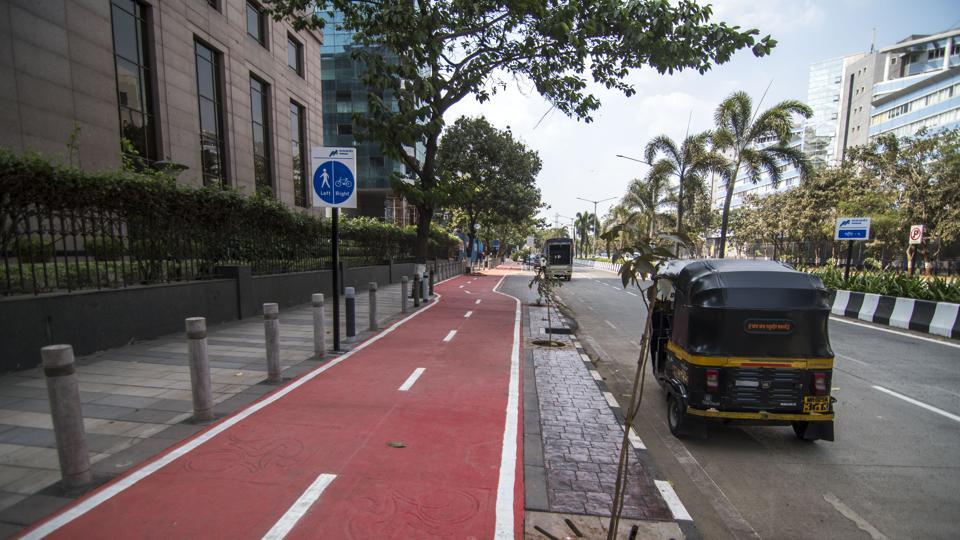
The cycle tracks were first introduced in 2011 and refurbished in 2021. An MMRDA official said they would be demolished at a cost of ₹25 crore, for which tenders have been called.
The other arrangement that MMRDA is looking at to streamline internal vehicular movement is a one-way traffic system, expected to significantly enhance traffic flow and reduce bottlenecks. Both the solutions are part of a detailed traffic management plan for BKC prepared by MMRDA, which was presented and approved in a meeting last month.
MMRDA authorities said the present problem stemmed from the shutdown of Sion bridge. “Most of the traffic from there has been diverted to the Bandra-Kurla Link Road,” said an MMRDA official. “While the BKC lanes are designed for smaller vehicles, heavy vehicles such as trucks and multi-capacity transporters are now being routed through this stretch, leading to increased congestion.” The traffic problem escalates between Kalanagar and the Diamond Bourse.
The proposed solutions are expected to reduce peak-hour travel time from 25 minutes to 15 minutes, which represents a 40% reduction in travel time. The average waiting time at signals or bottlenecks will decrease from 10 minutes to seven minutes, a 30% reduction in waiting time.
This reduction in idling time will also lower carbon emissions. Based on a petrol-run car emitting approximately 170 grams of CO₂ per kilometre, and considering a 2.3 km effective time-distance saving at an average speed of 40 km/h, CO₂ emissions during waiting time are expected to drop by 30%—from 1,133 grams to 793 grams per vehicle.
Approximately 200,000 office-goers and 400,000 visitors enter BKC daily, leading to unmanageable traffic, especially during peak hours. “We are enhancing BKC’s infrastructure by expanding roads and implementing a one-way traffic system. These measures will significantly reduce congestion, improve travel time, and make BKC more efficient and accessible for commuters,” said an MMRDA official.


Stay updated with all the Breaking News and Latest News from Mumbai. Click here for comprehensive coverage of top Cities including Bengaluru, Delhi, Hyderabad, and more across India along with Stay informed on the latest happenings in World News.


