
 E-Paper



Karn to Manto: A new dastangoi festival sweeps the arc of Indian bestsellers
In 1980, eminent Urdu writer and critic Shamsur Rahman Faruqi (also Farooqui’s uncle) began collecting dastans to be published in five volumes from 1998 to 2020. Farooqui read the first one in 2000, upon his return from the University of Oxford as a student of history

 Prefer HTon Google


MUMBAI The playbill of Mahmood Farooqui’s new dastangoi festival at Prithvi Theatre reads like a dastan-e-Hindustan. The six performances begin with a biography on Karn, the iconoclastic figure from the Mahabharata. Then, it moves to the adventures of Amir Hamza, an Islamic hero whose deeds of derring-do were loved even by Mughal emperor Akbar. It comes to a halt in 1919, to the events that stained the soil of Jallianwalla Bagh. Then, it brings to focus the writings of two pre-Independence novelists: Rajasthani folklorist Vijaydan Detha, and Saadat Hasan Manto, the dramatist with two fatherlands and no motherland. Finally, it ends with Shrilal Shukla’s ‘Raag Darbari’, a 55-year-old novel, which could have been written yesterday.
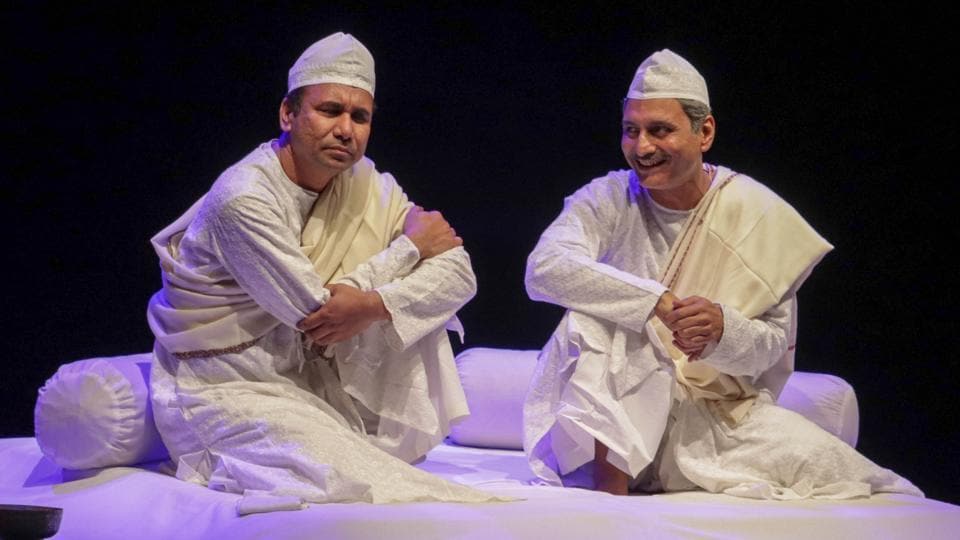
“‘Raag Darbari’ bears reading again and again,” says Farooqui, also co-director of ‘Peepli Live’ (2010). “It hasn’t dated at all. In a sense, we have refused to change. We have to tell the audiences before we begin our performance that everything he’s saying in the novel is actually about the Congress party. Because it sounds so contemporaneous. He even has a fake ‘mann ki baat’. That novel is central to any kind of dissection or understanding of development, urban-rural divide, politics, politics of Immanuel Kant, and hypocrisy. Wherever you turn, you find ‘Raag Darbari’ has been there before you.”
The origin story
The history of dastangoi usually takes up a few volumes, but Farooqui sums it up in a few words: “Dastangoi came to Urdu in the 18th century and achieved great prominence in the 19th century, when this oral storytelling tradition was converted into print. But, with the passing of the last great dastangoi, Mir Baqar Ali, in 1928, it died. Because there were other forms of entertainment (radio, gramophone, bioscope, cinema), and also because within Urdu literature, there was a turning away from it due to British influence.”
In 1980, eminent Urdu writer and critic Shamsur Rahman Faruqi (also Farooqui’s uncle) began collecting dastans to be published in five volumes from 1998 to 2020. Farooqui read the first one in 2000, upon his return from the University of Oxford as a student of history. “I was bowled over because I had no idea there were people who could compose stories on the spot and perform them. They were like one-man theatre companies. So, I began my research, and in 2005, I revived the form with the help of Faruqisaab.”
Since then, Farooqui has trained several dastangos, and composed and supervised dozens of modern stories. On a white gadda, between two gol takiyas, seated like ustads, two performers embroider a tale like a bedtime story. The men wear all-white topis, angarkhas, and long pyjamas; the women wear Chandni-like salwar-kameezes and big jhumkas.
For the first eight years, Farooqui and his troupe performed passages from the ‘Dastan-e-Amir Hamza’ exclusively. “Hamza’s antics are the mainstay of dastangoi in Urdu,” he says. Often compared to ‘The Thousand and One Nights’ for its action-packed tales and masala storytelling, it pitches love affairs, kidnappings and battles with sorcerers, demons and dragons. “It has all the nine rasas in various measures in all stories,” says Farooqui. “Urdu storytellers, unlike the Persian and Arabic tellers before them, had the advantage of being deeply familiar with other Indic stories, such as Betaal Pachisi, the Panchatantra, the Mahabharata, and the Ramayana.” So, several strands from Betaal Pachisi, yogic practices, Nath practices, Siddha practices get Ganga-Jamuna-ed into the ‘Dastan-e-Amir Hamza’.
Farooqui adopted a similar sponge approach for the Karn and Manto chapters in the festival as well, combining history, written text, living traditions, and chitchat. “I was fascinated with Karn as a young man, because he’s an angst-ridden outsider. All of Amitabh Bachchan’s characters from the 1970s are, in a sense, the Karn character. Deprived at birth, separated from his mother: whether you take ‘Trishul’ or ‘Muqaddar ka Sikandar’, the character of Karn is repeated right through.”
Manto, too, is quilted together from the writings of his friends and family. “Manto was one of our pioneering non-fiction writers, whose fiction is about himself and whose non-fiction is also about himself,” says Farooqui. “His life is actually quite dastanic, quite epic. The first half is all comedy and joy and sunshine. Then, after the Partition, it’s completely dark. Partition forced him to interrogate, in a more visceral manner than any other writer, nationalism, India, Pakistan, Islam, religion, and world politics. So, presenting his life was something I wanted to do. I wanted to bring it to Mumbai, because Bombay is Manto’s city. He used to say, ‘Main chalta-phirta Bambai hoon.’”
This multi-pronged method also serves to combine all of Farooqui’s serious pursuits into a single weave. “The advantage of dastangoi, whether we work on Gandhi, Ambedkar, Buddha, or Karn, is that it allows us to bring academic research and scholarship into the picture,” he says. “It allows us to write a verbal essay, something that no other form can give you. And, that is the most exciting thing that I’m trying to showcase in this festival.”


