
 E-Paper



Shirish Patel, engineer, planner who built Navi Mumbai and India’s 1st flyover, dies at 92
Shirish Patel, a key figure in Mumbai's urban planning, passed away at 92, remembered for his contributions to Navi Mumbai and heritage conservation.

 Prefer HTon Google


Shirish Patel, one of the pillars of urban planning in Mumbai, is perhaps best known as one of three authors, along with Charles Correa and Pravina Mehta, for their plan to develop Navi Mumbai across the harbour, and for coordinating the work of a multi-disciplinary team for the planning and construction of this new city.
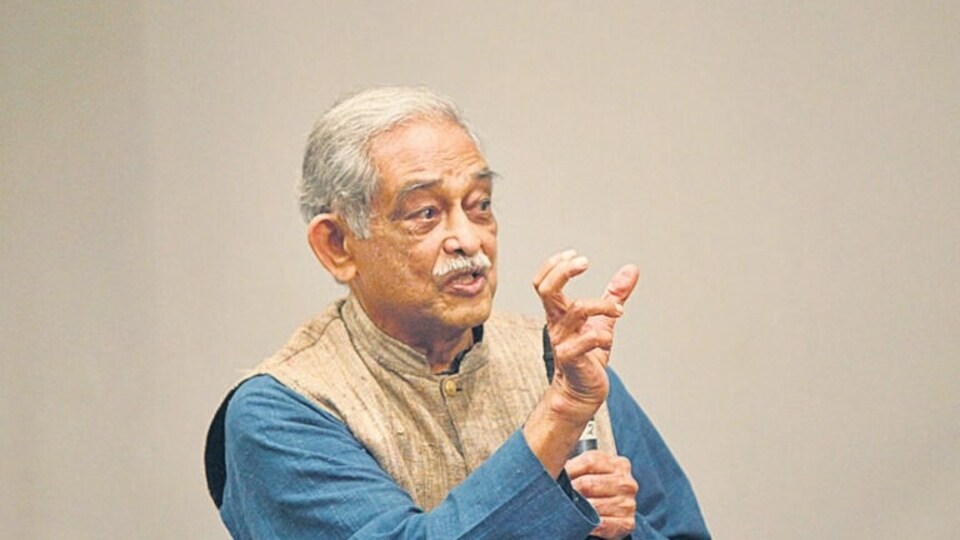
I first met Shirish Patel who died in Mumbai on Friday at 92, in the late 1990s when he was an integral part of the Mumbai Heritage Conservation Committee (MHCC), and later got to know him better when he was on the board of Mumbai Metropolitan Region Heritage Conservation Society (MMRHCS) and at the Urban Design Research Institute (UDRI) where he advised us on city and regional planning issues.
These interactions gave me a first-hand insight into his multi-disciplined persona. We worked relentlessly on several of Mumbai’s urban issues, and although our association of over two decades had a huge number of failures and also a few successes, our interactions fructified into lucid urban thought and language on critical problem-solving in the Mumbai Metropolitan Region.
One of our innovative recommendations to conserve and maintain Mumbai’s heritage fabric was to focus on providing ‘heritage incentives,’ and not just saddling people with heritage regulations which seemed burdensome to many.
We also studied Mumbai’s development control regulations, preparing a serious critique, especially on DCR 33 which doled out additional FSI for several categories, generated out of thin air. We facilitated the opening up of the Development Plan process to a decentralised rigorous public consultation and advocacy through agreed-upon values and principles. We drafted out copious documentation to use population density as a tool for creating good urban plans rather than the market-led FSI measure.
Shirish Patel was always keen on equitable housing distribution and we tried to create a housing policy for all which was closely entwined with public transport initiatives. We promoted self-redevelopment and rental housing management as an ideal alternative for affordable, appropriate and sustainable development as against developer-led redevelopment which did not provide any impetus to the city form or function. He was a huge promoter of Community Land Trust when dealing with mass large scale redevelopment, especially for indigenous and informal settlements.
In terms of long-term sustainability of Mumbai and the Metropolitan Region, public health, public open spaces and environment sustainability were considered as non-negotiable by us and were the true forerunners of good decentralised urban planning.
We also extensively critiqued the public transportation planning and expansion in Mumbai which included the ill-planned metro network, monorail and also mega-infrastructure projects such as the Coastal Road and Trans-Harbour Link which were planned without any thought to mass public transport provisions.
Through his conduct and practice, Shirish Patel provided many life teachings to urban professionals, some of which were also amusing. He would be on time, every time, everywhere. Even when he was in his late seventies, he would insist on walking uphill for kilometres to Matheran to personally check the laterite pedestrian pathway recommended by him, or personally climb the high-mast flood lights of Wankhede Stadium to confirm the Marine Drive Heritage Precinct height recommendation or get on to the UDRI building roof for recommending a second skin for waterproofing and insulation.
He always managed to surprise me by the extent and variedness of his personal interests and knowledge. They ranged from Hindustani classical music, history, economics, public administration, and I am not even getting into engineering which was his core subject. Through his life he enjoyed deep friendships with Kumar Gandharva, Romila Thapar, D R Gadgil, H T Parekh, J B D’Souza, B G Deshmukh and D M Sukthankar to name a few, all of whom, no doubt, fuelled his many interests.
Amongst his multiple skillsets, his inclination for learning languages always impressed me. I remember one instance where we were to host a group of French urban planners sent by the Government of France to understand urbanisation in India. Shirish Patel was to give a pivotal talk, and all the coordinators and translators were tense as these urban planners were fluent only in French. To our amazement, Shirish Patel gave the entire planning talk in flowing French, leaving all of us floored. I later found out that he had lived and worked in Paris for two years in the 1950’s and had learnt advanced French.
He thought of himself as a civil engineer with interests that extended not only to the engineering design of public works such as dams, bridges (he also built the Kemps’ Corner flyover which was India’s first) and marine structures, but also the planning of factories and other complexes, and of course, urban planning and urban affairs.
But, amongst the many reasons for which I admire him the best would be to say, Shirish Patel was a person with a “spine of steel.” It conjures up an image of a civil engineer, urban planner, inventor and an urban thinker who was not just strong or unyielding, but also a man with tremendous self-confidence, tireless passion and commitment to achieving urban equity and excellence.
(Pankaj Joshi, conservation architect has served as Member of Mumbai Heritage Conservation Committee, and on the Board of Mumbai Metropolitan Region Heritage Conservation Society. He is at present, principal director, Urban Centre, Mumbai.)


