
 E-Paper



First bullet train between Surat and Bilimoria in 2 years: Ashwini Vaishnaw
Railway minister Ashwini Vaishnaw satisfied with progress on Mumbai-Ahmedabad bullet train corridor, aiming to create a single economic zone.

 Prefer HTon Google


MUMBAI: Railway minister Ashwini Vaishnaw, during his visit to the bullet train stations of BKC and Vikhroli on Friday, expressed satisfaction with the progress made on the country’s first high-speed rail corridor between Mumbai and Ahmedabad. It has been almost a year since work began at the BKC station.
Single economic zone
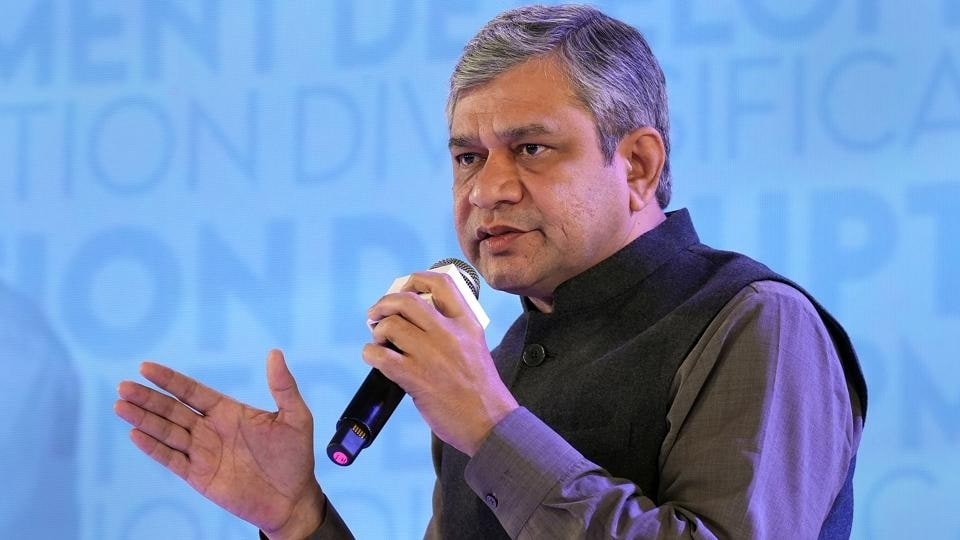
Vaishnaw told Hindustan Times that the high-speed rail corridor would not only revolutionise inter-city travel but also integrate the economies of Mumbai, Surat, Anand, Vadodara and Ahmedabad. Giving the example of the high-speed rail operating between Tokyo and Osaka, which created new economic zones as connectivity improved, he said that eventually Mumbai and Ahmedabad would become a single economic zone. He announced that the first bullet train would run between Surat and Bilimora stations by August 2026.
ALSO READ- First stretch of Mumbai-Ahmedabad high-speed train ready by 2026: Ashwini Vaishnaw
The minister also underlined the need for every kind of train in India, whether high-speed rail, Vande Bharat trains or Amrit Bharat trains. Indian Railways is already operating more than 40 semi-high speed Vande Bharat trains across the country while the new Vande Bharat sleeper trains are expected in a month or two.
The bullet train corridor will have trains running at speeds between 220 kmph and 320 kmph. It will connect Mumbai with Ahmedabad in 2.07 hours to 2.58 hours, depending on the type of train passengers take. The railways will also study the economic impact that the high-speed rail corridor will create. The National High Speed Rail Corporation Limited (NHSRCL) authorities have completed the laying of 284 km of elevated line in Gujarat for the bullet train route.
Sources said that discussions had begun on the production of the Shinkansen E5 series of trains that will run on the high-speed rail corridor. One of the major challenges is adjusting the air-conditioning inside the trains, as the ones running in Japan are accustomed to outside temperatures of around 20-25 degrees Celsius whereas in India the temperature goes up to 45 degrees Celsius.
Underground & undersea work
NHSRCL has begun work on the construction of the BKC bullet train station, coming up on 4.8 hectares of land. According to sources, the deepest level reached has been 14 metres below the earth after excavating two lakh cubic metres of earth. The station is being constructed in such a way that an International Finance Centre can be built on top of it.
At BKC, there are 774 workers at the site working on this one-km long stretch. Sources in NHSRCL said that to reach 32 metres below, an approximate volume of 18 lakh cubic metres would have to be excavated. Every day, 400 to 450 trips of dumpers will be required to ferry an average 6,000 cubic meters of excavated material. Railway engineers said that a ground support system had been constructed to prevent the soil from collapsing, for which 3,382 secant piles, each ranging from 17 to 21 metres in depth, had been constructed to safely carry out such deep excavations.
ALSO READ- Rajeev Chandrashekhar reacts to Google Gemini's objectionable answer, ‘bias’ against PM Modi
Sources said the secant piles would form the base for building a high-rise atop the BKC bullet train station. “This station is being built at a depth of 32 metres that is equivalent to 10 storeys below the surface,” said Vaishnaw. “On top of the station, there will be a provision to construct 30-storey high buildings as well. It is a complex project, and safety is our top priority. We are adopting various technologies like geo-mapping to understand the terrain for the tunnel.”
The railways are simultaneously carrying out excavation work at shafts (entry points for tunnel-boring machines) at BKC, Vikhroli and Sawli for tunnels, including a seven-km-long undersea tunnel. Authorities carried out the first blasting activity at the Vikhroli shaft on February 23, where the deepest point of the tunnel will be 56 metres. Railway officials said they had excavated to a depth of 10 metres, after which they hit rock. They will now start using explosives.


