E-Paper



Haji Ali pathway to be elevated for better access during high tide
The Haji Ali Improvement Plan aims to enhance safety and accessibility for pilgrims by reinforcing and beautifying the shrine's pathway, costing ₹20.10 crore

 Prefer HTon Google


MUMBAI: The Haji Ali Improvement Plan is poised to transform the accessibility and safety of one of Mumbai’s most revered pilgrimage sites. With both functional improvements and beautification measures in place, the plan will cater to the thousands of visitors who come to pay their respects at the shrine.
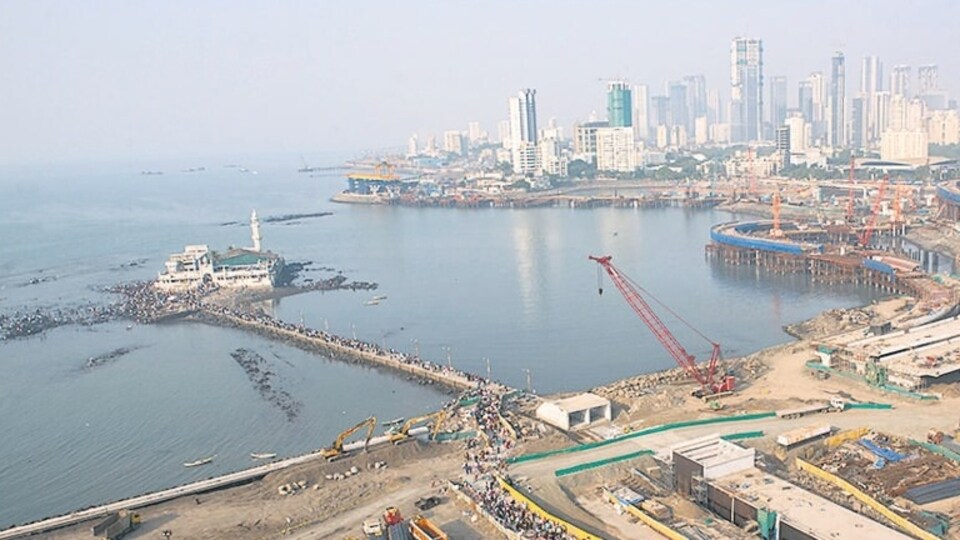
According to a PWD official, the plan is being handled by the harbour division of the department and will focus on reinforcing the existing pathway to the shrine, which is often rendered inaccessible during high tide. Phase 1 of the project is centred on improving the existing five-metre-high pathway that leads to the Haji Ali shrine. “The PWD is mainly concerned with strengthening the current pathway, which includes widening it and increasing its height by 1.5 m above the high tide level,” said the official.
Phase 1 will also involve stonework to reinforce the path’s structure, ensuring that it can withstand environmental pressures. Additionally, safety railings will be installed, and the pathway will be illuminated to enhance security and accessibility.
The entire Phase 1, estimated to cost ₹20.10 crore, has already seen tenders invited and a proposal submitted to the central ministry of environment, forest, and climate Change (MoEFCC) for coastal regulation zone (CRZ) clearance. The funds for this phase have been approved by the city collector, with a targeted completion deadline of twelve months.
While the PWD is focused on the structural aspects, the beautification of the area will be managed by the coastal road department of the BMC in collaboration with the Mumbai Metropolitan Region Development Authority (MMRDA). This effort will be part of the subsequent phases of the project.
“Phase 2 will concentrate on beautification, Phase 3 on parking improvements, and Phase 4 will reorganise and provide facilities for hawkers and pilgrims,” said the PWD official.
Conservation architect Abha Narain Lambah has been appointed as a consultant for the project. Her role includes overseeing design elements which ensure that the pathway not only meets functional requirements but also aligns with the historical and cultural significance of the site.
Lambah said that due to the construction of the coastal road, the Haji Ali pedestrian underpass is now at a higher level, necessitating an increase in the pathway height to maintain accessibility. “The entire pathway will be widened and raised to match the level of the underpass,” she said. “It will become an all-day pathway for pilgrims, unaffected by the tides. Previously, during high tide, pilgrims couldn’t access the shrine.”
Lambah’s design also includes provisions for visitor facilities along the pathway, with protective railings to ensure safety. The raised pathway, 95 feet in length, will ensure that devotees can comfortably reach the shrine at all times of the day, regardless of tide conditions.