
 E-Paper



HC asks deputy collector to issue caste certificate to single mother’s adopted child
The Bombay high court on Tuesday directed the deputy collector, Dharavi division, to issue a caste certificate within two weeks to the adopted son of a single mother, assigning him the same caste as that of his adoptive mother


The Bombay high court on Tuesday directed the deputy collector, Dharavi division, to issue a caste certificate within two weeks to the adopted son of a single mother, assigning him the same caste as that of his adoptive mother.
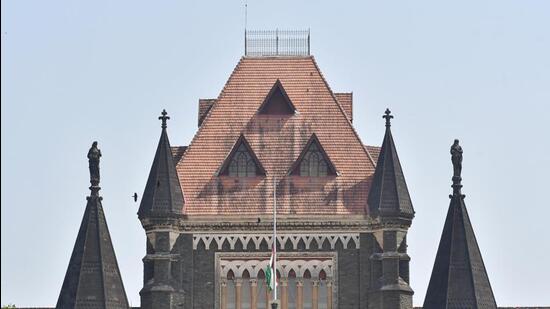
A division bench of justice Sunil Shukre and justice GA Sanap passed an operative order, allowing the petition filed by the 44-year-old doctor, a Borivali West resident. A detailed order is expected in due course.
In the petition, filed through advocate Pradeep Havnur, the woman said that she, though single, had adopted a boy and it was approved by the Bombay City Civil Court in October 2009.
She said she belonged to Hindu Mahyavanshi and in 2016, she had applied to the deputy collector for a caste certificate for her adopted son, assigning him the same caste, a scheduled caste.
The deputy collector had on September 3, 2016, rejected her plea, saying that her own documents could not be accepted for issuing a caste certificate to her adopted son, assigning him the same caste.
She moved the high court after the District Caste Scrutiny Committee for Mumbai city on November 30, 2017, rejected her appeal against the deputy collector’s order, citing absence of specific legal provisions covering adopted children.
Havnur said the petitioner had legitimately adopted the boy and therefore, the minor was entitled to all the benefits, advantages, and concessions that were legitimately available to her, being a member of the scheduled caste. Therefore, he could not have been denied a certificate, assigning him the case of his mother, the advocate said.
He also pointed out that the revenue authorities discriminated against her son only because of being an adopted child of a single mother and therefore, the orders were violative of the constitutional provisions extending cover of protection to the scheduled castes.
In support of his contentions, Havnur pointed to the 2012 judgement of the Supreme Court in Rameshbhai Naika’s case, holding that in case of a marriage between a tribal and a non-tribal, determination of the caste of the offspring is essentially a question of fact.
In this case, the apex court had further said that the presumption that the child had the caste of the father was rebuttable and it was open to the child to lead evidence to show that he/she was brought up by the mother who belonged to a scheduled caste/scheduled tribe and he did not have any advantageous start in life but on the contrary suffered the deprivations, indignities, humilities and handicaps like any other member of the community to which his/her mother belonged.
In this backdrop, Havnur submitted that the adopted child had spent over 12 years with the family of the petitioner and therefore, he was entitled to the certificate assigning him the same caste as that of the petitioner.
Stay updated with all the Breaking News and Latest News from Mumbai. Click here for comprehensive coverage of top Cities including Bengaluru, Delhi, Hyderabad, and more across India along with Stay informed on the latest happenings in World News.


