
 E-Paper



HC closes arguments on challenge to amended IT rules; verdict on Dec 1
The Bombay High Court concluded arguments on challenges to the constitutional validity of India's amended IT rules, which empower the government to set up a fact-checking unit to filter social media for fake news. The court will announce its verdict on December 1. The petitions claim that the rules infringe on freedom of speech and expression. The government argues that the objective is to create a balancing mechanism to tackle uncontrollable and uncontrolled social media.


The Bombay high court on Friday concluded arguments on a bunch of petitions challenging the constitutional validity of the amended information technology rules which empower the Central government to set up a fact-checking unit (FCO) to filter social media platforms for fake news or misleading information.
A division bench of justice Gautam Patel and justice Neela Gokhale said they would pronounce the verdict on December 1.
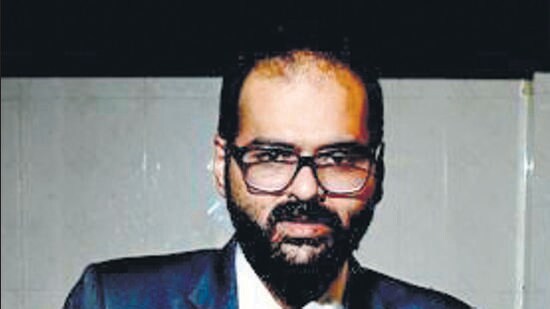
The petitions were filed by satirist Kunal Kamra, the Editors Guild of India, and the Association of Indian Magazines. They have challenged rule 3(i)(II)(A) and (C) of the Information Technology (Intermediary Guidelines and Digital Media Ethics Code) Amendment Rules 2023.
They have claimed that the amended IT rules cast an obligation upon intermediaries (social media platforms) to make “reasonable efforts to cause users to not publish, display, upload or share information in respect of business of the Central government that is identified as fake, false or misleading by such an FCO as the ministry (ministry of electronics and information technology) may specify”.
According to Kamra, the rules infringe the freedom of speech and expression, as the term ‘business’ is broad and vague. The vague term had been used to “create a chilling effect where intermediaries will take down any information flagged by the FCO rather than risk losing safe harbour”, his petition said.
The rules, the satirist further said, made the Central government the sole arbiter of truth in respect of its ‘business’ obliging private parties to impose that version of truth on all users. “This provision, therefore, makes the government the sole gatekeeper of the marketplace of ideas and constitutes a clear breach of Article 19(1)(a) (freedom of speech and expression).”
Responding to these contentions, solicitor general Tushar Mehta had argued on behalf of the Central government that the objective was not to curb free speech, opinion, criticism or satire against the government or even the prime minister but to create a balancing mechanism to tackle a medium that was “uncontrollable and uncontrolled”.
“The government is not trying to proscribe and prohibit any expression of opinion, criticism, or comparative analysis and in fact the government welcomes them, encourages them and learns from them. The IT rules only put a system in place,” Mehta had said.
The solicitor general had also said that the government was not doubting the intelligence of its citizens. People, he had said, could post anything they wanted and criticise the government, but fake, false and misleading facts would not be allowed.
Stay updated with all the Breaking News and Latest News from Mumbai. Click here for comprehensive coverage of top Cities including Bengaluru, Delhi, Hyderabad, and more across India along with Stay informed on the latest happenings in World News.


