
 E-Paper



‘Highest FDI outcome in 51 years’: MMRDA signs MoUs worth ₹20 lakh crore at WEF
Two of the MoUs – with the Tata Group and the Swiss Indian Chamber of Commerce, worth ₹1.01 lakh crore ($11 billion) and ₹1.37 lakh crore ($15 billion), respectively – were signed on Wednesday, the third day of the five-day event

 Prefer HTon Google


Mumbai: The Mumbai Metropolitan Region Development Authority (MMRDA) has signed 24 memorandums of understanding (MoUs) worth ₹20.76 lakh crore or $226.65 billion during the first three days of the World Economic Forum (WEF) at Davos, which are expected create around 1.6 million direct and indirect jobs in the Mumbai Metropolitan Region (MMR).
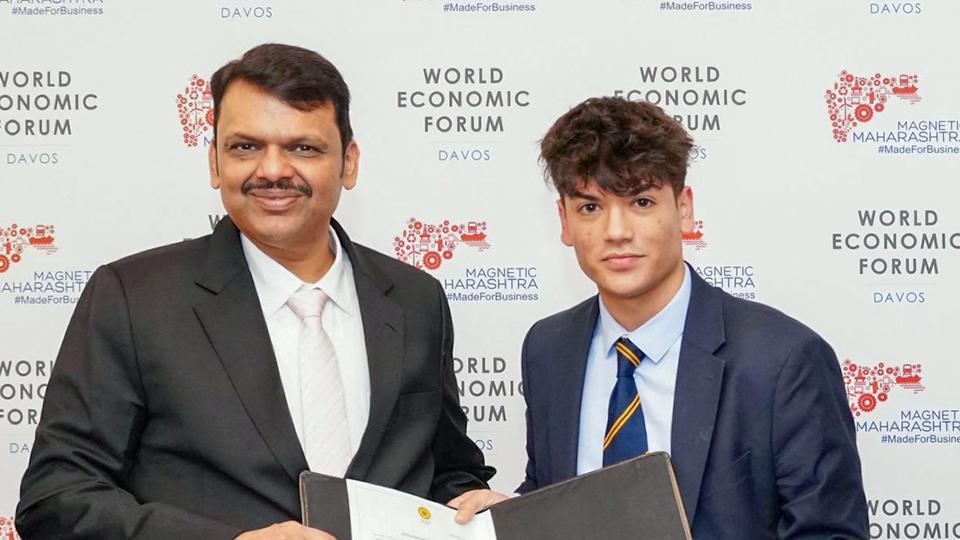
Two of the MoUs – with the Tata Group and the Swiss Indian Chamber of Commerce, worth ₹1.01 lakh crore ($11 billion) and ₹1.37 lakh crore ($15 billion), respectively – were signed on Wednesday, the third day of the five-day event.
“For the first time in the MMRDA’s 51-year history, the authority has achieved a record-breaking FDI outcome at the World Economic Forum,” MMRDA commissioner Sanjay Mukherjee said in a media statement issued on Thursday.
Last year, the MMRDA had signed 11 MoUs worth ₹3.5 lakh crore ($40 billion) at the World Economic Forum, with foreign companies like Brookfield Corporation, American Blackstone Inc, Sumitomo Realty & Development, Crossrail International, and Temasek Capital Management, and homegrown companies like K Raheja Corp and the Hiranandani Group; the validity of the MoUs ranged 3-5 years.
This year, the MMRDA inked 10 MoUs worth ₹8.7 lakh crore ($96 billion) on the first day of the forum. Companies with which the MoUs were signed included the Japan International Cooperation Agency (JICA), which has pledged to invest in urban mobility and infrastructure projects; Japan’s Sumitomo Realty and Development which has pledged to invest ₹72,800 crore ($8 billion) to develop business hubs and retail and lifestyle spaces.
On the second day of the event, the MMRDA signed 12 MoUs worth ₹9.52 lakh crore ($104.65 billion), in the fields of technology, research, healthcare, climate intelligence and urban governance.
These MoUs were primarily focussed on KSC Town or Mumbai 3.0, which the MMRDA plans develop, an MMRDA official familiar with the matter told HIndustan Times.
“The partnerships span critical domains shaping next-generation cities, such as fintech and digital infrastructure, logistics and manufacturing, healthcare and education, artificial intelligence, climate resilience, underground engineering, metropolitan planning, and global urban governance,” the official said, requesting not to be identified.
On the third day of the forum, MoUs were signed with the Tata Group and the Swiss Indian Chamber of Commerce.
“Today’s two agreements mark a decisive transition from standalone infrastructure projects to integrated, purpose-driven economic ecosystems,” said MMRDA commissioner Sanjay Mukherjee, as quoted in the media statement.
The partnership with the Swiss Indian Chamber of Commerce will embed Swiss innovation, sustainability, and global manufacturing best practices into advanced industrial development in the MMR, while the partnership with the Tata Group will establish a multidimensional investment framework spanning artificial intelligence, innovation, renewable energy, core industries, and tourism.
“Together, these initiatives will enable integrated industrial parks, logistics and trunk infrastructure, generate quality employment, and position the Mumbai Metropolitan Region as a globally competitive hub for sustainable growth and improved quality of life,” Mukherjee said.


Stay updated with all the Breaking News and Latest News from Mumbai. Click here for comprehensive coverage of top Cities including Bengaluru, Delhi, Hyderabad, and more across India along with Stay informed on the latest happenings in World News.


