
 E-Paper



How Bal Gangadhar Tilak shaped the structure of Mumbai police
The British government was forced to reorganise Mumbai police after being caught unprepared for mass strike in the city following Tilar’s arrest


Mumbai: ‘Lokmanya’ Bal Gangadhar Tilak was many things -- a fiery nationalist, the editor of the newspaper ‘Kesari’, a dauntless freedom fighter and the author of the famous quote “Swaraj is my birthright, and I shall have it”. But few know that Tilak indirectly shaped the contours of the modern-day Mumbai Police by catalysing the launch of the famed ‘Special Branch (SB)’ that gave it the reputation of being at par with Scotland Yard, establishment of modern-day police stations, and the introduction of an armed wing.
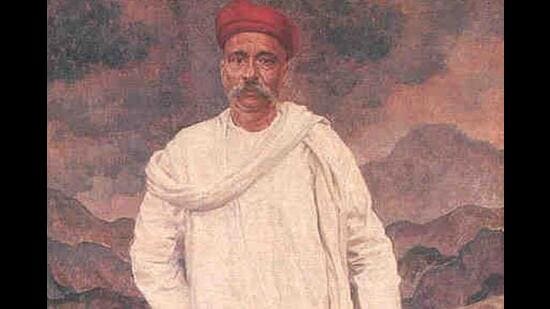
The presence of Tilak, described as ‘the father of the Indian unrest,’ lingers over the Bombay Police even a century after his demise. Incidentally, Tilak breathed his last exactly 102-years-ago at ‘Sardargruha’ opposite the office of the Commissioner of Police on August 1, 1920.
On July 22, 1908, Tilak (52), who had been arrested for his “seditious” writings in ‘Kesari’, was convicted and externed to Mandalay in Burma for six years by the Bombay high court. Tilak’s conviction led to around 4 lakh textile mill workers of Bombay going on a six-day flash strike (with each day marking a year of the sentence), bringing the city to a halt. The protests saw massive violence, forcing the deployment of the army.
The problems of the British were compounded by the belligerence of the pre-dominantly Maharashtrian constabulary, which was the backbone of the force. Secret documents indicate that the constables and staff of the Bombay Police, who hailed from the same class as the mill hands, harboured sympathies with them.
Most of the policemen (75% as per official records) hailed from coastal Ratnagiri district like the rioting mill workers and even Tilak, whose family belonged to Chikhalgaon in Ratnagiri. These policemen refused orders to fire at the protestors.
Rohidas Dusar, a retired deputy commissioner of police (DCP) and chronicler of the history of the Mumbai and Maharashtra Police, said that for those six days, the police had lost control over the city. Some terrified European officers took shelter in the lockup of the Jacob Circle police chowkie. It was evident that the police and the government had been caught napping.
C.J. Stevenson Moore, Officiating Director, Criminal Intelligence, wrote to Sir Harold Stuart, Officiating Secretary, Home Department, Government of India on 5 August 1908: “...I am compelled to say that the ignorance of the Bombay Police as to the agency and methods used for engineering the strike is nothing short of appalling.”
“The City Detective Department knows no more about the inner history of the business than my boot,” he wrote wryly.
In September 1908, Governor Sir George Clarke (Lord Sydenham) appointed a three-member committee of William Morison and S.M. Edwardes from the Indian Civil Service (ICS) and Pheroze H. Dastur, 2nd Presidency Magistrate to suggest a comprehensive reorganisation of the police. The committee submitted its report in October 1908-end and the scheme was eventually sanctioned in September 1910.
After submitting the report, Edwardes went to England on leave, where he was informed that the Bombay Government had decided to appoint him as the Commissioner of Police. He was asked to visit Scotland Yard to study the working of the Metropolitan Police. Edwardes took charge as the police commissioner in May 1909, becoming the first and only ICS officer to do so.
When Edwardes took over as the commissioner, the investigation of crimes was handicapped by a lack of properly-equipped police stations. Then, the city had small chowkies or sections which had no proper records of their cases or even a proper place to hold prisoners, who were kept on the staircase or the streets.
The committee stressed the need for “a definite number of properly-equipped stations in each division.” By 1910-end, a program for new police stations was sanctioned.
“Then, there were no police stations per se. The city was policed through sections or chowkies… the first modern police station came up at Byculla. This was followed by Colaba, Kalachowkie, Nagpada, Agripada, and Maharbaudi (V.P. Road),” noted Dusar.
By the end of 1916, a total of 13 out of the proposed 17 model police stations were started. “All police stations had a similar design. The senior inspector’s cabin was to the left of the entrance, and the charge room was exactly opposite his cabin to let him know what was happening under his watch… the senior inspector had his lodgings on the first floor in line with the Scotland Yard model. The staff was housed in police lines on the premises so that they could report for duty immediately in case of an eventuality. Until 1983, when a policeman was transferred from one police station to another, he also had to shift to a new accommodation there,” explained Dusar.
Another important recommendation of the committee pertained to the reorganisation of the old detective branch to surveil anti-British and seditious activity.
“It was evident that the lakhs of mill workers had not taken to the streets in an instant. The unrest was brewing but the police had failed to gauge this. This led to the establishment of the Special Branch in 1909 under DCP F.A.M.H. ‘Fatty’ Vincent, which gives the Mumbai Police its reputation of being next to Scotland Yard,” said Dusar.
An intelligent constable from every police station and chowkie was chosen to be a ‘mill-special’, a term that had outlived the textile mills. These constables would work undercover as servants in the mess where the workers had their meals or as petty labourers on the shop floor to pick up chatter from the ground. They would then report this to their inspectors. The SB also made confidential inquiries about political, religious and social movements.
Tilak had also catalysed the launch of the armed branch of the police in 1895. In August 1893, a massive communal riot erupted at the Hanuman Temple in Pydhonie. This had been preceded by communal violence at Prabhas Patan in the Junagadh state. Tilak sided with the Hindus and said that during the conflict between Hindus and Muslims, the British government should be impartial.
But though the Hindus had acted in self-defence, Governor Lord Harris blamed them. Thus, making it a dispute not just between Hindus and Muslims, but also involving the British government.
As Tilak’s biographer Sadanand More notes, though it seemed prima facie that Tilak was opposing the Muslims, his real fight was with the British, as he was challenging its ‘divide-and-rule’ politics.
In 1893-94, more riots occurred in Maharashtra. Then, Moharram was popular even among the Hindus in Maharashtra. Around 100 taboots were set up in Pune alone. The riots ended this synthesis. In 1894, Tilak promoted the celebration of Ganesh Utsav, which soon replaced Muharram in its popularity. These celebrations saw open anti-British propaganda.
Amidst the deteriorating situation, the police realised that they could not always summon the army for aid.
This, said Dusar, led to the introduction of the armed police in 1895. However, initially, only the European officers above the rank of sergeant (the equivalent of a head constable) were given firearms. Indians had to be initially content with lathis or swords.
Mumbai police historian Deepak Rao noted that the relationship between Tilak and the Bombay Police also had an upside to it. On 22 June 1897, W.C. Rand, the plague commissioner, and Lt C.E. Ayerst were assassinated in Pune by the Chapekar brothers, who were upset at the tyrannical tactics used by the British to tackle the bubonic plague epidemic.
Harry Bruin, then an inspector in the Bombay police, was deputed to probe the killing and the Chaphekars were eventually executed. “However, Bruin refused to indict Tilak in the assassination. When Bruin, then a superintendent of police, passed away (the early 1900s), Tilak wrote a piece that was front-paged in his ‘Kesari’: ‘Asa Police Adhikari Honar Naahi (Such a police officer will not be born again).’ It was exceptional for a European police officer to be eulogized on the front page of Kesari,” noted Rao.
Stay updated with all the Breaking News and Latest News from Mumbai. Click here for comprehensive coverage of top Cities including Bengaluru, Delhi, Hyderabad, and more across India along with Stay informed on the latest happenings in World News.


