
 E-Paper



How the Mumbai Metropolitan Region is getting future-ready
MMRDA and NITI Aayog are jointly working towards raising Mumbai’s gross domestic product from $140 billion to $300 billion by 2030


Mumbai: 6,328 sq. km. That’s how large metropolitan Mumbai is. Larger than at least 40 countries, including Singapore and Bahrain. But not large enough to keep up with the city’s rapid growth over the last few decades.
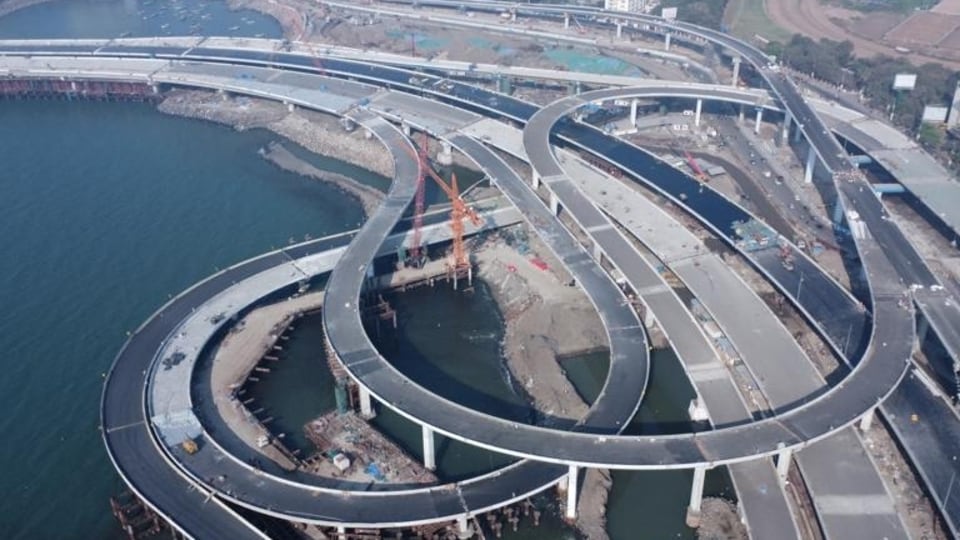
Transforming seven islands into a mass of land able to cater to an explosion in population — 23.6 million according to the 2011 census — was never going to be easy. According to some estimates, the overburdened metropolitan Mumbai needs at least ₹3 lakh crore to become a developed city.
That amount may be out of reach for now, but the Mumbai Metropolitan Region Development Authority (MMRDA) might finally have something to play with. In March, the Maharashtra government allowed the planning and infrastructure development agency to raise loans up to ₹60,000 crore from public institutions. It has also received a proposal to raise an additional ₹30,000 crore.
The money will be used to make metropolitan Mumbai future-ready, with the development of metro lines, road tunnels, solid waste management projects and enhanced rail systems, among others. MMRDA and the central government’s public policy think tank NITI Aayog are jointly working towards raising Mumbai’s gross domestic product from $140 billion to $300 billion by 2030.
Funding MMR
In March, MMRDA, which is responsible for the infrastructure development of nine municipal corporations and as many municipal councils, presented a budget of ₹39,453.04 crore for 2024-25, with expenditure estimated to be ₹46,921.29 crore. That’s when the state government decided to facilitate the agency raising a large quantum of loans.
“In the next couple of years, we will have to tie up with other financial institutions for loans to the extent of around ₹60,000 crore. At present, we have sufficient financial backing through loans from government institutions,” said an MMRDA official. The agency has already completed the construction of Metro rail lines worth ₹20,000 crore.
Out of the ₹60,000 crore, the state government has guaranteed loans up to ₹24,000 crore in two tranches for various infrastructure projects across the Mumbai metropolitan region. The Rural Electrification Corporation (REC) and Power Finance Corporation (PFC) are loaning ₹12,000 crore each under this guarantee, said MMRDA authorities. This is part of a long-term agreement wherein the two state-run entities will offer MMRDA loans of up to ₹30,593 crore and ₹50,301 crore, respectively.
Sources said the money would largely be used to fund six ongoing and proposed Metro rail lines — 9, 8, 7A, 6, 5 and 4 — covering the following corridors: Dahisar-Bhayandar-Uttan, Mumbai airport-Navi Mumbai airport, Gundavali-Mumbai Airport, Swami Samarth Nagar-JVLR-Vikhroli, Thane-Bhiwandi-Kalyan and Wadala-Kasarvadavali. In total, 14 metro rail lines will cover a distance of 337 km.
The money will also be used to fund other infrastructure projects such as the Thane-Borivali twin tube tunnel road, an underground tunnel road from Orange Gate to Marine Drive that will connect to the Mumbai Coastal Road, and the Thane Coastal Road.
“The quantum of loans sought by MMRDA is quite promising for MMR. The government authorities should ensure that the bulk of funds are utilised to develop regions beyond Mumbai and strengthen their infrastructure so as to attract both residential and commercial sectors. This is the only way to create and amplify growth centres in MMR,” said AV Shenoy, transportation and urban infrastructure expert and member of the Mumbai Mobility Forum.
The Maharashtra cabinet had in March also cleared a ₹850 crore loan and a ₹19 crore grant for MMRDA from Germany-based KfW Development Bank, which would be used to provide urban infrastructure amenities for solid waste management projects and division of solid and liquid waste in Ambarnath, Kulgaon-Badlapur, and Ulhasnagar.
Townships in the offing
In a city where real estate is more valuable than gold, MMRDA also hopes the overall development of the Mumbai metropolitan region will ease the burden on the real estate market.
According to real estate experts, several areas in the region have experienced significant growth in recent years. The upcoming Navi Mumbai International Airport has led to a considerable rise in residential and commercial property development in Vashi and Panvel. The Eastern Express Highway and the presence of IT parks on the Thane-Belapur road have made the city of lakes a desirable location for real estate investments.
Raj Kumar Singh, senior director, residential sales, at ANAROCK Property Consultants, said, “These neighbourhoods have benefited from a variety of infrastructural initiatives, including metro lines, highways, and enhanced rail systems, all of which improve access to Mumbai. This development trajectory is projected to continue as the city expands.”
The Maharashtra government has also proposed the development of a “third Mumbai”, a new city on either side of the Mumbai Trans Harbour Link or Atal Setu. This will include parts of Ulwe, Pen, Panvel, Uran, Karjat and surrounding regions. The city will have residential properties, commercial complexes, data centres, hubs for multinational companies and banks, and large knowledge parks, backed by a robust public transportation network.
Plans are also afoot to develop a 150-hectare central business district like Bandra Kurla Complex in Kharghar. Other projects MMRDA has proposed include a Kalyan ring road, beautification of the Masunda Lake in Thane, and the construction of creek bridges from Kolshet to Kalher in Bhiwandi and from Kasarvadavali to Kharbav.
“Homebuyer sentiment in MMR continues to be upbeat, with expectations of a 5-10% increase in property prices over the next year,” said Abhishek Bhadra, head of research at property portal MagicBricks. “Customers are notably optimistic about infrastructure development in the region and the launch of new projects, which is bolstering demand for real estate in the city. Our research also observes that the sentiment was particularly high among customers seeking under-construction luxury properties.”

Stay updated with all the Breaking News and Latest News from Mumbai. Click here for comprehensive coverage of top Cities including Bengaluru, Delhi, Hyderabad, and more across India along with Stay informed on the latest happenings in World News.


