
 E-Paper



It took BMC 50 hrs to repair burst pipeline
The Brihanmumbai Municipal Corporation (BMC) took 50 hours to repair a burst water pipeline in Mumbai, which caused low water pressure and intermittent cuts in several areas. The pipeline was damaged during drilling work for a metro project, and the BMC plans to recover the cost of repairs from the contractor. Citizens reported a shortage of packaged drinking water and unavailability of water tankers during the repairs. The BMC blamed the delay on technical challenges and the risk of loose soil collapsing.


MUMBAI:
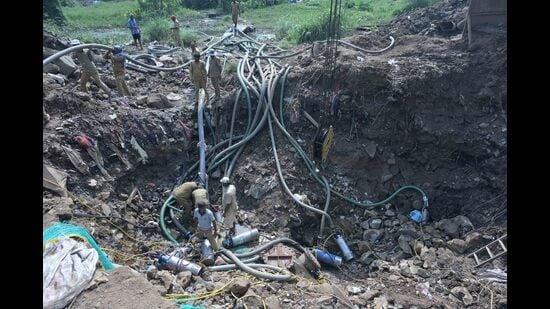
After the main water pipeline, with a diameter of 1800 mm, running through Andheri East burst on November 30, the Brihanmumbai Municipal Corporation (BMC) investigated the leaks and promised to fix it in 24 hours on December 2. However, it took a 50-hour operation with 100 civic employees to repair the pipeline; the task was complete only on Monday afternoon.
According to BMC, the pipeline was damaged during a drilling work carried out for the metro project. BMC will slap a notice on the contractor in-charge, and recover the cost of repairs and levy penalty for the wasted water.
Meanwhile, the rupture in the water pipeline impacted citizens residing within the periphery of the K West ward -- Jogeshwari West, Andheri West and Vile Parle West – along with other areas such as Bandra, Khar and Ghatkopar, which experienced low pressure and intermittent cuts.
Those residing in Oshiwara, Andheri, Khar, Juhu Koliwada and Vile Parle reported that 20-litre packaged water cans went off the market due to heavy demand, while water tankers were also unavailable.
Dhaval Shah, founder, Lokhandwala Oshiwara Citizen’s Association, dwelled on how the crisis hit people’s budgets, especially as “drinking water cans were being sold in black”. People were forced to use packaged water for daily ablutions as well. “Water cans priced at ₹80 were going for ₹150. And yet, they were off the market,” said Shah.
BMC officials blamed the protracted timeline for the repairs on technical challenges and the risk of loose soil collapsing due to the continuous leakage. Purushottam Malwade, BMC’s hydraulic engineer, said, “All the contractors are well informed about the underground pipelines, but their negligence caused the damage, leading to inconvenience for citizens.”
“After repairs, we had to shut all the valves in the pipeline to charge the reservoir again which took around six hours. The supply resumed only after this,” Malwade said.
The pipeline could not be repaired from the inside, due to the continuous flow. It was plugged from the outside. “There were multiple leakages nearly six meters below the ground. This impacted supply to four reservoirs -- Veravali 1, 2, 3 and the Ghatkopar reservoir,” he said, adding BMC had serviced the area with nearly 246 water tankers.
Rajesh Thakur, secretary of Mumbai’s water tanker association, said, “The areas between Bandra and Jogeshwari were on ventilator-support. We supplied around 800 tankers in two days, which included requests made by BMC.”
Deepa Agrawal, a managing committee member of a housing society with 230 flats in Oshiwara said, “The supply was off without any warning. We did not have enough even to wash our hands. All the shops in our area ran out of packaged drinking water. The flats housing senior citizens have been the worst affected.”

Stay updated with all the Breaking News and Latest News from Mumbai. Click here for comprehensive coverage of top Cities including Bengaluru, Delhi, Hyderabad, and more across India along with Stay informed on the latest happenings in World News.


