
 E-Paper



Maharashtra eases language policy amid backlash
Emphasis while teaching the third language in Classes 1-2 will be only on spoken skills, while written assessments will begin only from Class 3 onward

 Prefer HTon Google


Mumbai: Facing strong opposition from educationists, political parties and civil society groups, the Maharashtra government has softened its stance on its controversial decision to make Hindi the default third language in state board schools from Class 1.
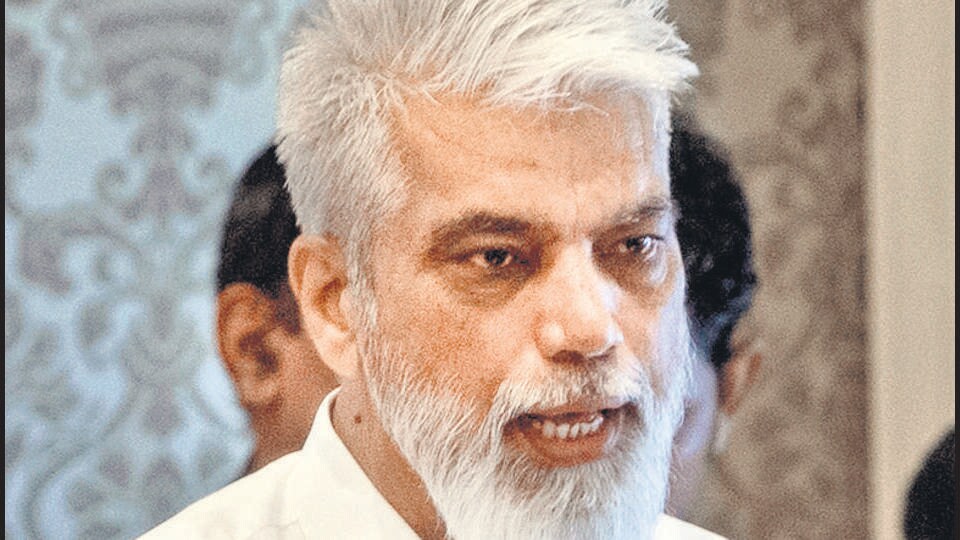
On a day when cousins Raj and Uddhav Thackeray both attacked the state government over the decision, school education minister Dada Bhuse on Thursday assured that Hindi would not be imposed. He added that the emphasis while teaching the third language in Classes 1-2 will be only on spoken skills, while written assessments will begin only from Class 3 onward.
“There is no compulsion to learn Hindi as a third language. Students can choose any of the 22 Indian languages,” said Bhuse, addressing a press conference at Mantralaya. “The provision of at least 20 students [needed per class to opt for an alternate third language] is only for the administrative purpose of appointing a teacher for that subject. If fewer than 20 students want to study a language other than Hindi, the school can make arrangements through online platforms.”
Bhuse’s clarification comes over a week after a revised government resolution (GR) issued on June 17 reignited criticism that the Mahayuti government was attempting to indirectly enforce Hindi, especially in Marathi-medium schools. The GR stated that Hindi will “in general” be the third language for Classes 1-5. Schools may choose an alternative Indian language as the third language, provided that at least 20 students in a class opt for it, the GR added.
The decision was criticised by educationists and opposition leaders, saying it was in effect a backdoor entry of the government’s order in April proposing the inclusion of Hindi as a third language from Class 1.
To ease tensions, Bhuse said, “From Class 1 to 2, third-language education will focus only on listening and speaking skills. Written components will be introduced from Classes 3 to 5.” He added that schools would have autonomy in selecting the third language, provided there is sufficient student interest.
Currently, in Maharashtra’s Marathi- and English-medium schools, Hindi is introduced from Class 5. The state has not printed new textbooks for Hindi or other languages beyond the existing curriculum, Bhuse confirmed. In keeping with the National Education Policy (NEP), the three-language formula, typically including a mother tongue—Marathi—and English, is already in practice in several schools. Many states are adopting this model, which aims to promote multilingualism through the inclusion of two Indian languages and one foreign language, usually English.
Bhuse also highlighted scientific support for early language learning, “Neuroscience and child psychology suggest that children between ages 2 and 8 have the greatest capacity to learn languages. Teaching third languages from Class 1 aligns with this understanding.”
He further explained that under the forthcoming Academic Bank of Credit (ABC) system, students will earn points for the subjects and skills they study, including languages. “By the time students reach Class 6, they will already have developed basic skills in a third language. This will eventually help them accumulate academic credits. In the next eight to 10 years, the benefits of this trilingual formula will be visible in Maharashtra’s students,” Bhuse added.
Expert consultation
The backlash against the three-language formula over the past week forced the state government to reconsider its approach. Earlier this week, chief minister Devendra Fadnavis chaired a high-level meeting where it was decided that the implementation of the three-language formula will proceed only after thorough consultation with language experts, educationists, political leaders, and other stakeholders.
Bhuse confirmed that the education department has begun preparing a presentation for these consultations. “Within the next eight days, we will conduct meetings with stakeholders to discuss the plan in detail,” he said.
An official from the education department said an internal survey had revealed there is growing demand for at least 15 different Indian languages among students. “At present, we are equipped to offer study material in 10 of these languages, and we have ready course content available for different grade levels. For the remaining languages that show rising demand, we will gradually develop and introduce the curriculum as needed,” the official said.
On Thursday, Bhuse also met with MNS chief Raj Thackeray, who has publicly opposed the inclusion of Hindi as a default third language. When asked whether he plans to meet Shiv Sena (UBT) chief Uddhav Thackeray as well, Bhuse declined to comment. “Through the media, I am trying to directly reach the people of Maharashtra,” he said.
Stay updated with all the Breaking News and Latest News from Mumbai. Click here for comprehensive coverage of top Cities including Bengaluru, Delhi, Hyderabad, and more across India along with Stay informed on the latest happenings in World News.


