E-Paper



Mumbai Metro 3 day one: Tepid start, but numbers grow despite ticketing glitch
Mumbai's Aqua Line Metro3 began operations, attracting 15,700 passengers on day one, easing commutes despite initial ticketing issues

 Prefer HTon Google


Mumbai: Mumbai’s first underground metro corridor, the spiffy Aqua Line, or Metro3, finally started commercial operations on Monday – that is, phase one, from Bandra-Kurla Complex to Aarey-JVLR. Promising to transform the daily commute of millions in this teeming city, the first service was flagged off at 11am. So how did the new Metro3 fare?
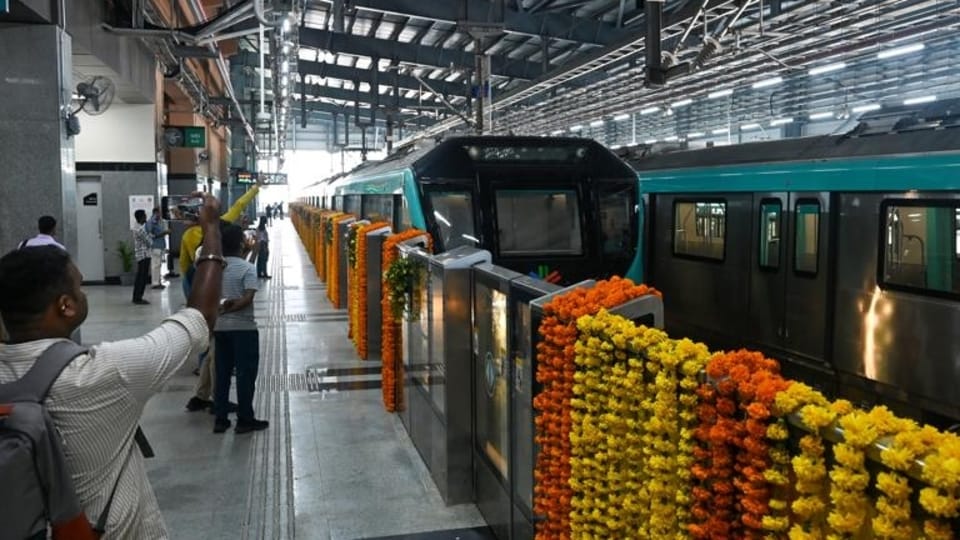
From 11am to 6pm, over 8,500 passengers patronised Metro3. Upto 9pm, the numbers hit around 15,700. And with that, Mumbai’s newest metro line saw its first peak hour traffic – 7,000 commuters in just 3 hours.
Metro3 got off to a tepid start, but as the day progressed, the number of commuters grew. The last service was at 10.30pm. The Mumbai Metro Rail Corporation says that with services starting at 6.30am on October 8, the metro line will experience its first morning peak hour traffic. The numbers, they say, should steadily grow.
* Off the blocks: The metro trains departed on time at 11am from both Aarey and BKC stations. While the metro from Aarey carried barely any passengers, the one from BKC showed better patronage. This was, perhaps, because the Aarey JVLR station is 10-15 minutes from the Western Express Highway via the Jogeshwari Vikhroli Link Road.
* Teething problems: At the Aarey JVLR Metro-3 station, tickets were available against cash or through the ‘Metro Connect 3’ mobile app. But the ticket vending machines were accepting only small denomination notes and the facility to scan debit and credit cards was not working. The metro trains too had teething problems, with the metro staff admitting that some rakes were being sent to the yard for maintenance.
* Finishing touches: The stations are large compared to those on other metro lines in the city, and since this is an underground line, it is fitted with escalators. Work is still underway at some metro stations. For instance, work on elevators and automatic ticket vending machines was observed at a few stations.
* Time is of the essence: There are 9 metro rakes operating 96 trips daily, with a headway of 6.50 minutes on this 12.69-km route. The entire journey was completed in less than 20 minutes, a commute that traditionally takes between 40 minutes and 70 minutes by road, depending on the time of day.
* Thumbs-up at BKC: Peak evening hours saw many relieved faces on Metro3. As office hours ended, a steady flow of working people was witnessed at the BKC metro station. There are at least three entry/exit points at BKC, whose metro station is centrally located. “Travelling to and from Kurla railway station and BKC can be a nightmare due to traffic congestion and other problems. By taking Metro3, I avoid all these hassles, then I switch to the Versova-Ghatkopar line, and take a suburban local train at Ghatkopar,” said Pankaj Dwivedi, a Bhandup resident.
* Marol Naka a pivotal station: Marol Naka metro station is emerging as a crucial and a popular interchange for commuters from SEEPZ and MIDC. It will also be patronised by commuters from BKC travelling to this station to switch to Metro 1. At Marol Naka station of Metro 1, an increase of over 1,300 passengers was witnessed during the evening peak hour. The usual weekday ridership from Marol Naka is around 17,000. Mumbai Metro One Private Limited expects the additional ridership to more than double on October 8.
Among the 10 stations on the first phase of the Aqua Line, Marol Naka was busiest on day one. It services office-goers from SEEPZ, MIDC and JVLR at the northern end of the line, and Bandra-Kurla Complex at the southern end.
Three metro stations – Chhatrapati Shivaji Maharaj International Airport (CSMIA)-T1, Sahar Road and CSMIA-T2 remained largely empty on day one.