
 E-Paper



Metro 7A found to breach funnel zone, construction halted
An air funnel zone is a flight path, similar to road lanes, in which an aircraft is supposed to be airborne. A funnel zone is defined for safety, hence any impediments to it can potentially endanger aviation safety

 Prefer HTon Google


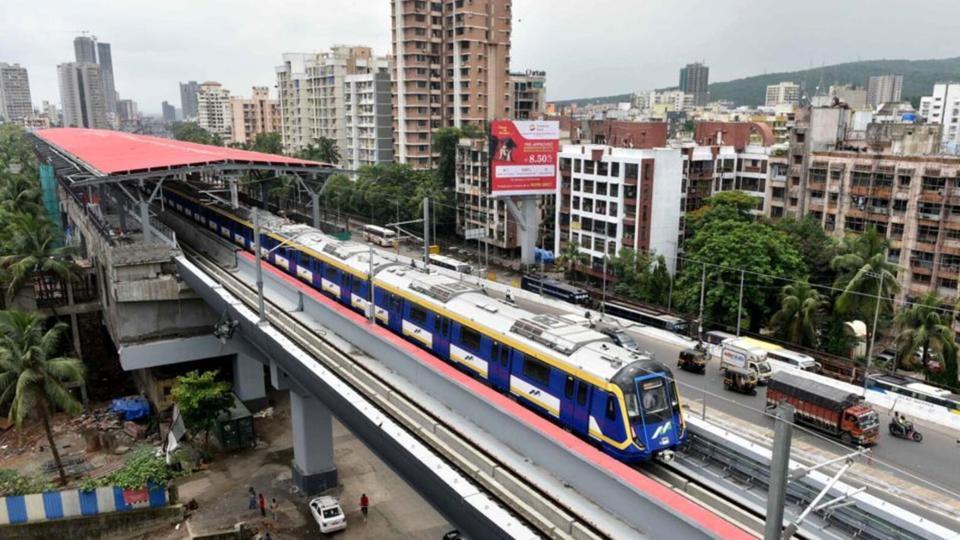
MUMBAI: The fate of Mumbai Metro 7A or the Gundavali-Chhatrapati Shivaji Maharaj International Airport line is hanging in the air. During the construction of the line, the Mumbai Metropolitan Region Development Authority (MMRDA) discovered that the Airport Authority of India’s (AAI) permission on the air funnel zone had been breached by a general consultant, and a revised nod has now been sought.
An air funnel zone is a flight path, similar to road lanes, in which an aircraft is supposed to be airborne. A funnel zone is defined for safety, hence any impediments to it can potentially endanger aviation safety.
The 3.42-km Metro 7A corridor, partially elevated and partially underground, is being constructed by J Kumar Infraprojects Ltd. For the general consultancy service, Systra India and Consulting Engineers Group Ltd have formed a consortium called Systra MVA Consulting.
In November 2023, MMRDA applied for AAI’s clearance to construct the Airport Colony station and ramp area, which came in on January 2, 2024. The clearance received was 2.9 metres lower than the project’s design requirement.
“This restriction immediately caused delays, as construction could not proceed in this section of the project without compliance with the height limitation. MMRDA was forced to halt work in the affected areas, which began to disrupt the overall project timeline,” states an internal document accessed by Hindustan Times.
Subsequently, on January 31, 2024, another height clearance was sought for the viaduct between the Airport Colony station and the ramp. However, the situation deteriorated further on March 18, 2024 when another No Objection Certificate issued by AAI had another set of height restrictions. This one limited the height of the viaduct in the 0.53-metres-to-2.75-metre range. This is lower than the required height for safe operation of the metro system. Therefore, the work once again came to a standstill.
Once again, MMRDA requested AAI for a relaxation, reasoning that altering the metro line’s height was not possible due to the engineering challenges of maintaining a certain gradient of the ramp. According to a senior MMRDA official, the wait to secure a revised approval continues.
“The station was designed without referring to the contents of the NOC, and the drawings were also issued with higher height...The initial failure was on the General Consultant’s part, as the permissible limits issued by AAI were to be referred to by the experts of the General Consultant before finalising of the Airport Colony station architectural design,” the internal note states.
This has led to a substantial impact on the project’s timeline and costs, apart from causing inconvenience to airport-bound passengers. Initially, the project was scheduled to be ready by 2021, but the deadline continues to be regularly revised, the latest one being December 2026 at an estimated cost of ₹812 crore. While Mumbai Metro 3 has reached the airport, the last-mile connectivity remains a sore point, with passengers complaining about the long detour to the terminal and back. Metro 7A is being built between the Aqua line and Terminal 2.
A questionnaire sent to Systra India’s Managing Director Hari Kumar Somalraju did not receive a response.

Stay updated with all the Breaking News and Latest News from Mumbai. Click here for comprehensive coverage of top Cities including Bengaluru, Delhi, Hyderabad, and more across India along with Stay informed on the latest happenings in World News.


